Flocage (flock printing): what the word really means
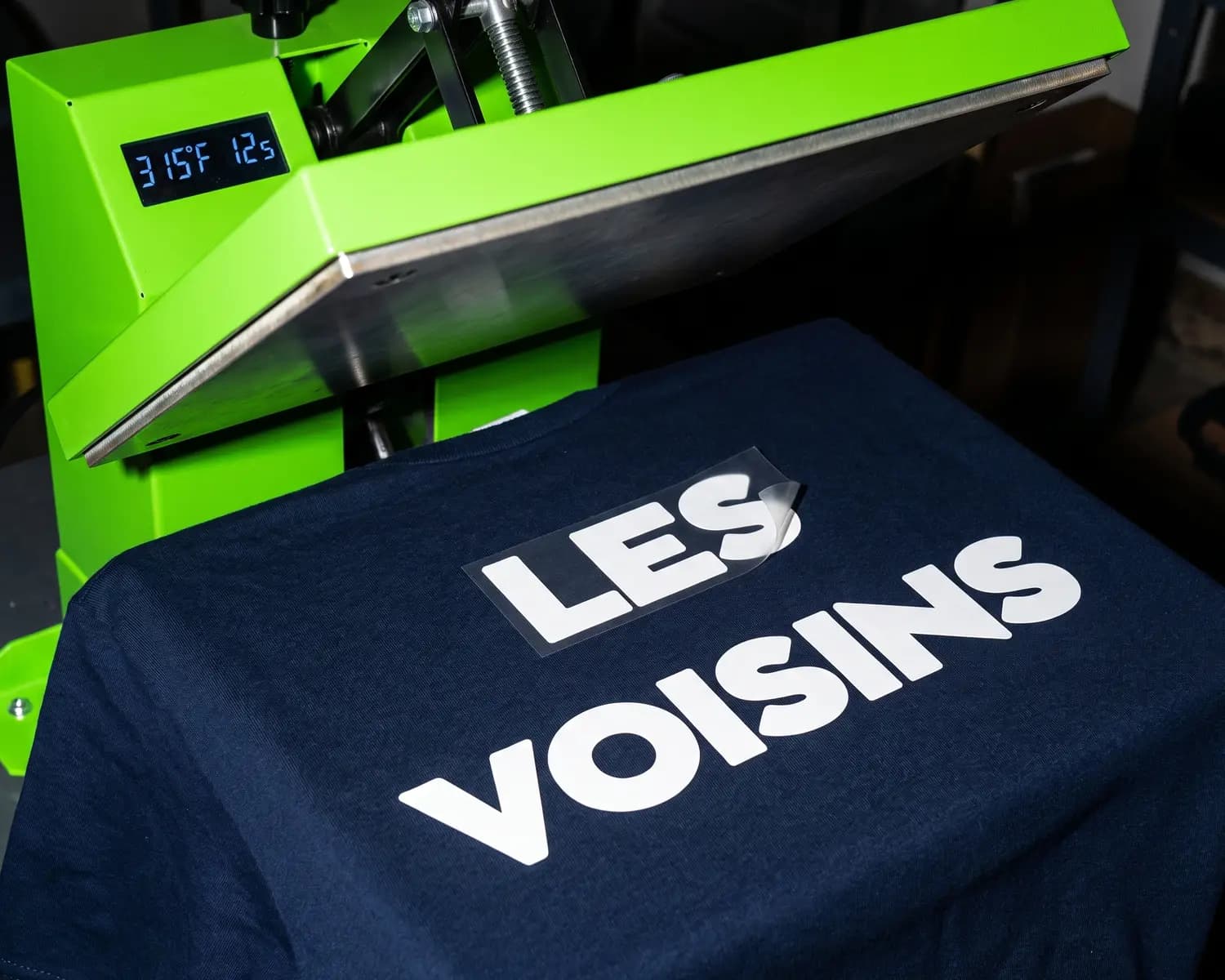
In French textile decoration, "flocage" today means, in most cases, a heat-transfer vinyl: a vinyl film cut to the shape of the artwork, then heat-pressed onto the garment. Originally, the term referred to a different technique (true flock, a velvet-like material bonded to the fabric), still in use but rarer.
Flocage in practice: two techniques, one word
The word comes from the real historical technique: bonding fine synthetic fibres (the "flock") onto a heat-activated adhesive, for a raised, velvety finish. It is the technique you still find on some textured, high-end logos.
But in everyday decoration language today, "flocage" almost always means something else: a heat-transfer vinyl, a vinyl film cut to the exact shape of the artwork, then heat-pressed. That confusion is worth knowing before you ask for a quote: if a print shop talks about "flocage", ask which technique they actually mean, because the finish and the budget are not the same.
What to remember
- "True" flocage bonds raised synthetic fibres (the flock); today the word almost always means a heat-transfer vinyl (a vinyl film cut, then pressed).
- Custom merch "in flocage" is therefore, most of the time, a heat-transfer vinyl, not the historical technique.
- When a quote mentions "flocage", asking for the precise technique avoids bad surprises on the finish and the price.
Veelgestelde vragen
Flocage or DTF: what's the difference?
Flocage (vinyl) cuts a vinyl film to the exact shape of the artwork, one colour per cut: perfect for text or a simple logo, limited on multi-colour artwork or a gradient. DTF digitally prints every colour at once onto a film, without that outline limit.
Uw project, binnen 24 uur geprijsd.
Beschrijf uw kledingstukken, de bedrukking en de gewenste aantallen: u ontvangt binnen 24 werkuren een gedetailleerde offerte, inclusief bedrukking.