Festival merch: your second box office
A ticket only sells once; a festival's merch sells before the event and gets worn during and after it, provided it's run as a real revenue channel. The method that works: a pre-sale campaign on the tknp.io Store as soon as the festival is announced, and only the reserved quantity goes into production.
The essentials in 5 points:
- The real problem with festival merch isn't knowing what to sell, it's knowing how much: an improvised stand forces you to guess a quantity before a single ticket has even sold.
- The fix: open a pre-sale campaign on your Store as soon as the festival is announced, alongside ticket sales. Every garment reserved is already paid for, and only the reserved quantity is produced.
- A tight collection (3 to 5 strong items around a signature visual) works better than a full catalog: a personalized t-shirt, a tote bag, a cap are enough to carry the event's identity.
- You set the sale price; the difference with our price at the volume reached fills the festival's kitty, paid out after delivery.
- Staff and volunteers are ordered separately, in a colour the public can't buy, so they stand out in the crowd.
Festival merch, a second ticket line too often left on the table
Most festivals treat merch as an afterthought: a stand set up on site, a handful of items picked at the last minute, and a quantity guessed for fear of running short or being left with too much. The result is almost always the same: boxes of unsold t-shirts sitting in storage after the event, or a sellout on day one while demand keeps going.
Merch deserves better than that. A festival has a strong visual identity, a community that looks forward to it every year, and a precise peak of excitement, the lineup announcement, then the gates opening. That's exactly the moment a community is ready to buy before even seeing the product. Treating merch as a second ticket line, opened at the same time as the first, changes the equation completely. Other venues already run on this same mechanic, a city turning its identity into a brand for instance: your festival just runs on a shorter, more intense calendar.
The real problem: selling without knowing how much to make
A physical stand imposes a constraint nobody really chooses: you have to show up with stock already made, meaning you guess a quantity weeks before knowing whether people will actually buy. Guessing right is close to impossible: weather, the final lineup, real turnout all change the picture from one edition to the next.
That quantity bet is what costs the most, in either direction. Ordering too much means stock sitting on your hands, tying up cash without ever selling. Ordering too little means an empty stand by Friday night while the festival runs through Sunday, and a community leaving without the souvenir they wanted.
The method: pre-order as soon as tickets open, zero stock to guess
For festival merch, the fix comes down to one simple idea: stop producing before you sell. The tknp.io Store works through a pre-sale campaign that runs for 7 to 21 days, during which your community reserves online and pays right away, then everything goes into production in a single run, at the price of the volume reached. No stock to advance, no quantity to guess blind.
The right timeline for a festival is simple: open the campaign the moment you open ticket sales, or as soon as the lineup is announced if the excitement starts there. Delivery comes about three weeks after the campaign ends: to have the merch before the gates open, close the campaign at least a month before the festival. The campaign link shares exactly like a ticketing link, on your social channels, in your newsletter, on the poster itself. Part of your audience buys their merch before they've even picked their outfit for the weekend.
This flips the physical-stand problem on its head. You no longer need to guess a quantity in advance: the reservations set the quantity, and everything is produced in one go.
What to put in the collection: fewer items, stronger ones
A festival isn't a general store, it's a moment. A tight collection built around one signature visual (the edition's poster art, a motif unique to the event) works better than a diluted ten-item catalog. The pattern that shows up across organizers who sell their merch well: a handful of items people genuinely want to wear beats a long list nobody commits to. For a festival, that limited edition has a name, the capsule collection, and our capsule collection guide explains how to launch one with no stock.
Three families, drawn from the tknp catalog, cover most of what a personalized festival merch collection needs:
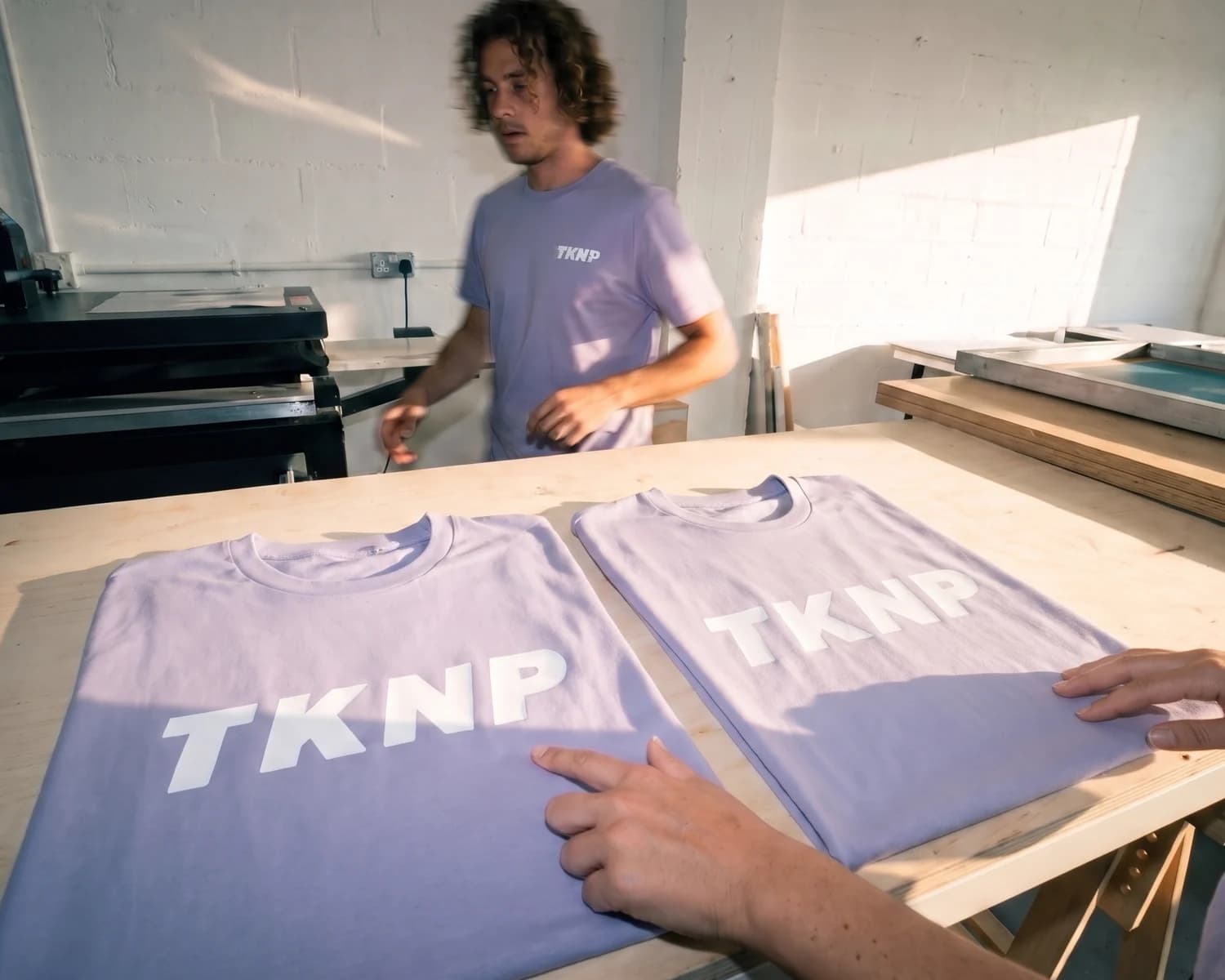
- The t-shirt, the impulse buy: decided on quickly, worn during the event, and kept in circulation long after.
- The tote bag, the useful item: handy on site (carrying things, flyers, souvenirs) and it easily outlives the weekend in everyday use.
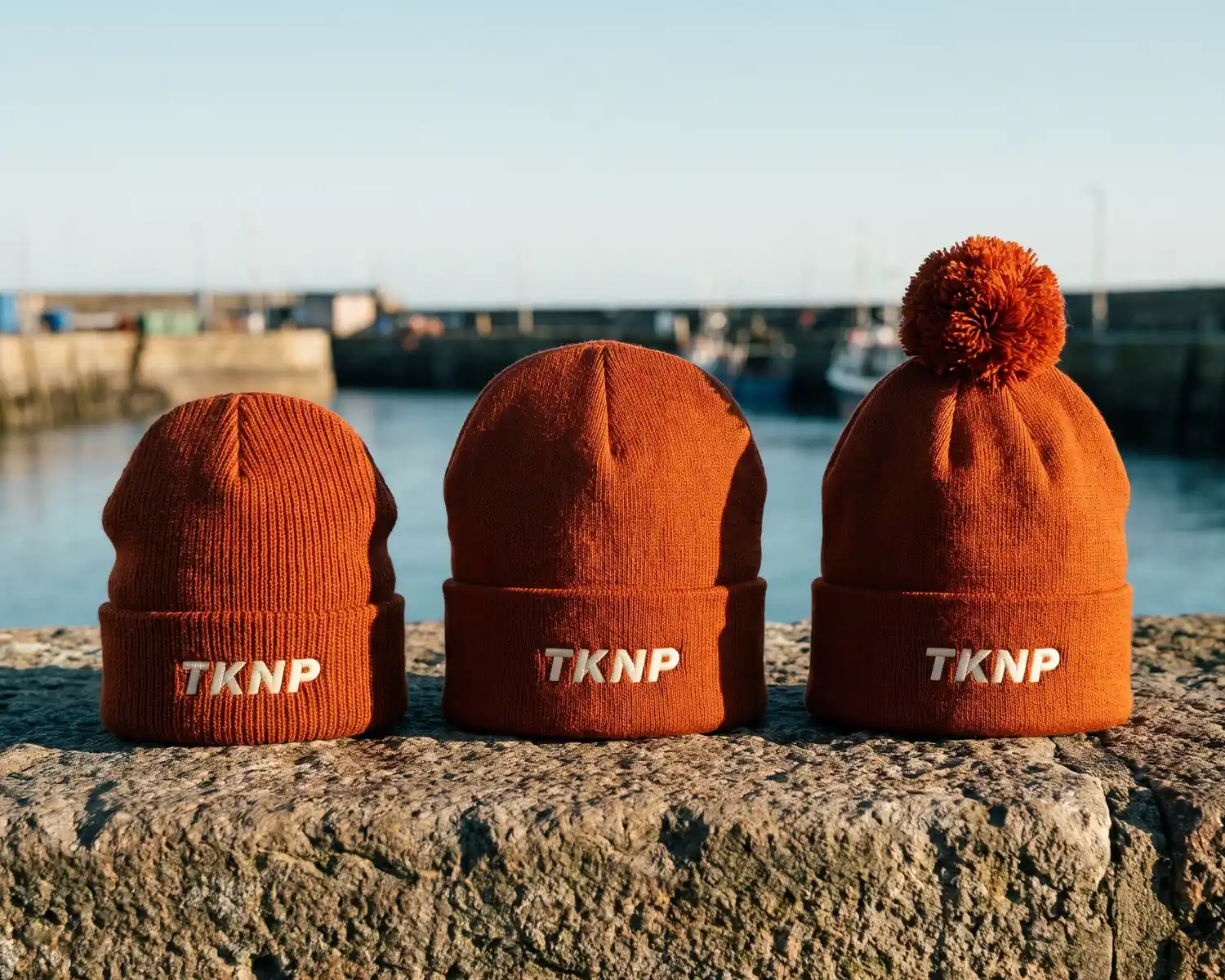
- The cap, the one that reads from a distance, useful outdoors and instantly recognizable in a crowd.
A simple visual on a single marking zone holds up better over time than a busy motif spread across several zones, and it is also the cheapest to print.
Alongside the garments, a sticker carrying the edition's artwork can be handed out at ticket control or sold at the merch stand, and goes home in every festivalgoer's pocket. Outdoors, vinyl is the better choice, as it stands up to UV and water according to Sticker en Ligne: this Nantes-based printer makes its stickers in its own workshop and delivers throughout Europe.
T-shirts for staff and volunteers
A festival's staff and volunteers are ordered separately from the merch you sell: the festival pays, in a single volume order, and the t-shirt has to make the team easy to spot in the crowd. Choose a colour the public can't buy at the stand, with the festival logo on the front and a large STAFF on the back. The back can also carry a QR code leading to the programme or the site map, as long as it is sized to scan from a distance.
For a big volunteer team, the #E150 from B&C, screen printed in a single colour on a single position, costs €3.54 excluding VAT each for 100 t-shirts and €2.93 excluding VAT for 500, shipping extra, in the base colour: some colours and the larger sizes cost a little more, and the product page shows the extra. The printed back is a second position that adds to the price: our guide to logo placement prices that extra. For the core team, who will wear it all season, the denser #E190 costs €4.36 excluding VAT each for 100, with the same one-colour screen print on a single position, shipping extra, in the base colour; our guide to company t-shirts compares these models. These are our prices, read on the product pages of these two t-shirts on 20 October 2026 at the standard lead time, for guidance only: they may change.
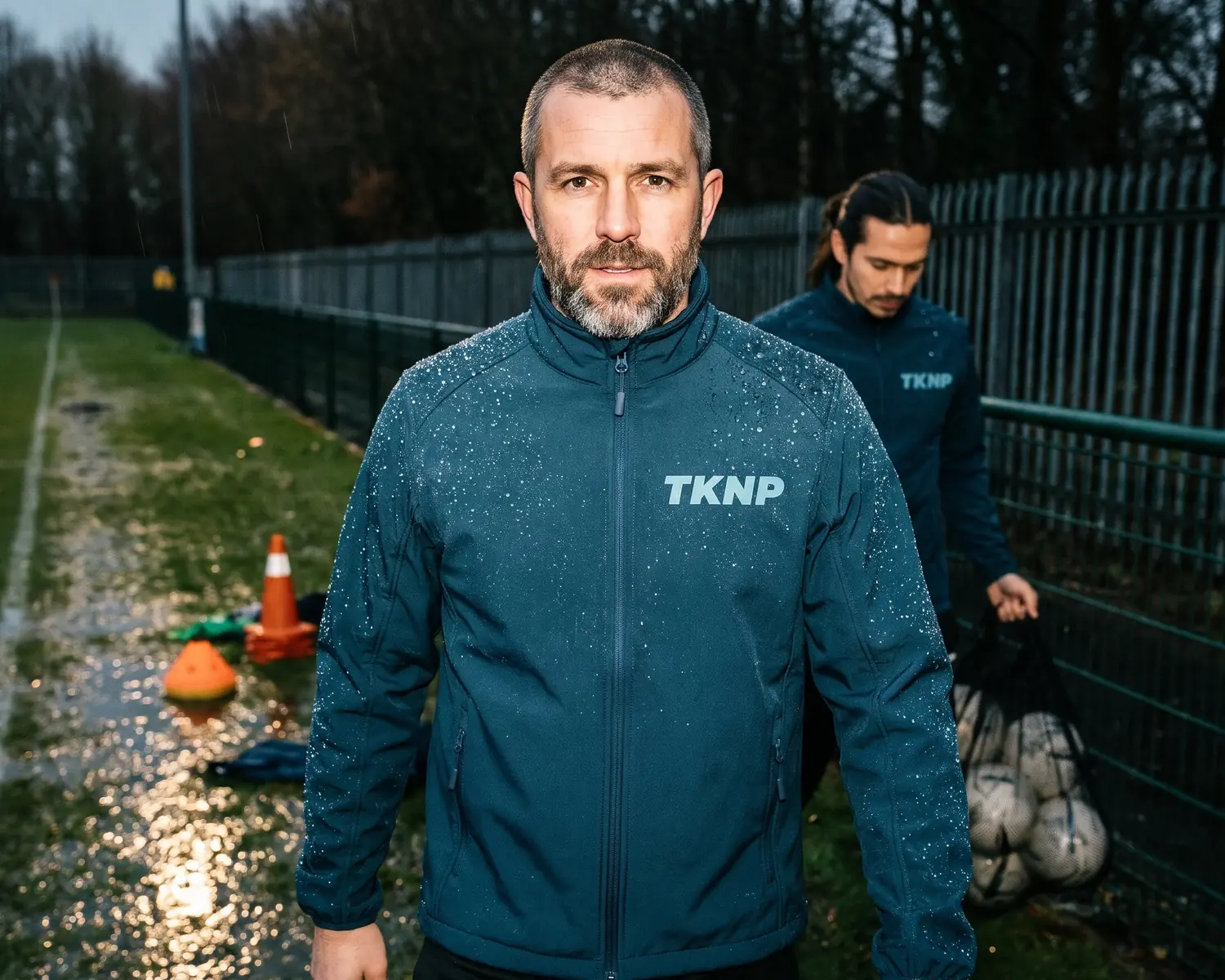
Festival nights get cool: plan a hoodie or a windbreaker for the evening crews, just as for the outdoor stands in our trade show merch guide. Place the order at least a month ahead: on the standard schedule, customising and shipping take 10 working days, then come delivery and handing out the sizes.
Pricing: you set it, the kitty comes back to you
In a campaign, the sale price of each garment stays your call: the page lays out our price and your margin at every tier. The more your audience reserves, the lower our price, and the difference fills the festival's kitty, paid by bank transfer after delivery. Merch stops being an organizing expense and becomes a real revenue line, on the same footing as ticketing or on-site catering.
Within the campaign, every garment has a threshold of its own, set so that your price covers production. If it isn't reached, the garment is produced with another technique at the same price when possible; otherwise its reservations are refunded in full. Since reservations fix the quantity before production, you know your tier before the run starts, not after.
After the festival: a campaign for the souvenir
The Store doesn't sell continuously: it works in pre-sale campaigns. Once the event is over, nothing stops you from opening another one a few weeks later, for those who missed the stand or want a souvenir of the edition. Each campaign starts again with no stock, using the same reservation mechanism. Touring bands live by the same calendar: our concert merch guide tells their version.
What to remember
Festival merch doesn't have to be an improvised stand and a risky bet on quantities. By opening pre-orders as soon as the festival is announced, with a tight collection built around a strong visual, you turn an organizing expense into a second revenue line, without ever advancing stock or guessing a quantity. And unlike the ticket, merch is still worn well after the gates have closed. The staff, for their part, are ordered separately, in a colour the public can't buy.
Häufig gestellte Fragen
When should you open pre-orders for your festival's merch?
As early as possible, ideally at the same time ticket sales open or as soon as the lineup is announced. That's when your community's excitement peaks, and that excitement is what sells merch before the event has even happened. Close the campaign at least a month before the festival: delivery follows roughly three weeks after it ends.
Do you still need a physical stand on the day?
Nothing stops you from having one, but it no longer has to carry the full risk of selling: most of the quantity has already been sold and secured through pre-orders, so the stand becomes a pickup point and a bonus sales spot rather than a bet on unsold boxes.
How many items should a festival collection include?
Three to five strong items are plenty: a t-shirt, a tote bag, a cap, built around one signature visual. A tight collection gets decided on faster than a wide catalog, and it carries the event's identity better.
What if the festival only happens once (a one-off edition, a charity festival)?
The mechanism stays the same: a campaign before the event, production limited to what's reserved, and, if you wish, a second campaign after the event for the memory of that one-off edition, without ever having advanced any stock.
What t-shirt for festival staff?
A t-shirt in a colour the public can't buy, with the festival logo on the front and STAFF on the back. At tknp.io, for a B&C #E150 carrying a one-colour screen-printed logo on the front, our prices as of 20 October 2026 are €3.54 excluding VAT each for 100 and €2.93 excluding VAT for 500, shipping extra, in the base colour, for guidance only; some colours and the larger sizes cost a little more, and the printed back adds to the price.
Ihr Projekt, in 24 Stunden kalkuliert.
Beschreiben Sie uns Ihre Teile, Ihre Veredelung und Ihre Mengen: Sie erhalten innerhalb von 24 Werkstunden ein detailliertes Angebot inklusive Veredelung.