Chenille embroidery: maximum impact on your brand image
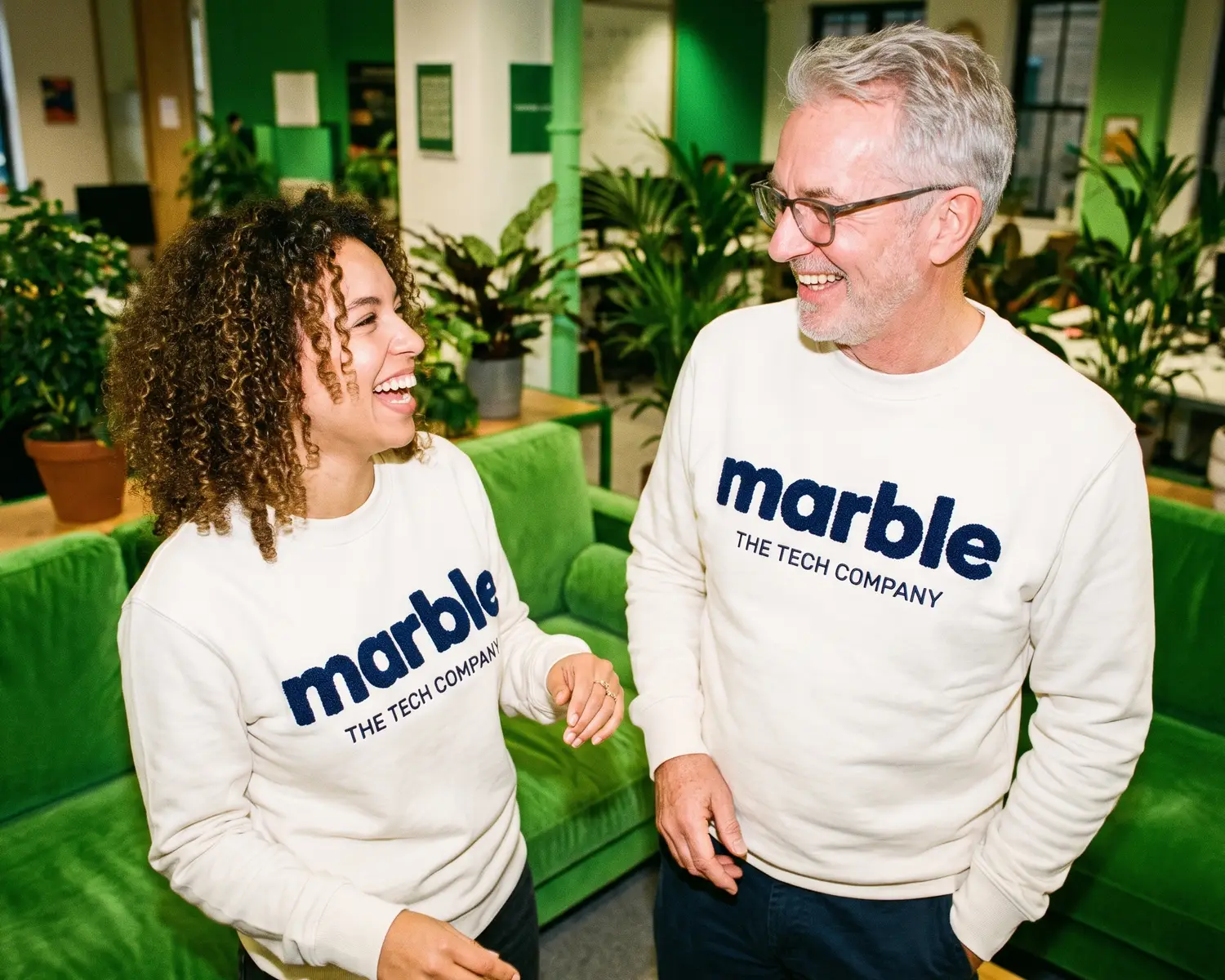
Chenille embroidery forms a raised pattern from a thick looped thread stitched onto the fabric surface, left slack rather than pulled tight. The result directly recalls the embroidered letters of American varsity jackets: a soft, textured finish that turns a logo from forgettable into a piece people notice. It is the marking technique most associated with brand image in the merch industry.
The essentials in 4 points:
- The finish: a thick thread looped stitch by stitch, forming a dense, plush surface visible and touchable from a distance.
- The aesthetic: the varsity/collegiate look, now sought after in streetwear and premium merch.
- The constraint: limited to simple shapes (letters, numbers, silhouettes) and heavy fabrics able to carry the thread's weight.
- The price: from 3.81 euros per piece at high volume, quoted on request, 10-piece minimum.
Why this technique elevates brand image
A flat screen-printed logo is seen. A chenille-embroidered logo gets noticed, touched, talked about. It is the only marking technique that gives real material relief, not a printed effect: the thread forms a surface you can make out from a distance and want to feel up close.
That texture is not neutral: it carries a precise aesthetic reference, that of the embroidered letters on American varsity jackets and letterman teddys. That reference has long outgrown its origin: premium merch and streetwear now use it deliberately as a signal of quality, not a retro wink. A chenille patch on a sweatshirt or teddy says "this garment was designed", where a plain printed logo can go unnoticed.
The tknp catalog also works classic embroidery at volume for more detailed logos: the two techniques complement each other rather than compete, depending on the effect you want.
Where it has the most impact
Chenille embroidery is not universal: it needs a fabric thick enough to carry the thread's weight without warping. It finds its natural place on heavy sweatshirts and hoodies, jackets and teddys, and beanies. On a thin t-shirt, the thread can pull the fabric and distort the knit: not its turf.
On the right supports, it works best as a signature piece: a chevron, a letter, a small motif on the chest or sleeve, rather than a full design. It is a technique of punctuation, not fill.
Chenille embroidery versus classic techniques
| Chenille embroidery | Screen printing | DTF transfer | |
|---|---|---|---|
| Tactile relief | Yes, pronounced | No | No |
| Gradients and photos | No | No | Yes |
| Wash durability | Excellent | Excellent | Very good |
| Minimum quantity | 10 pieces | 50 pieces | 10 pieces |
| Supports | Jackets, heavy sweatshirts, wool | Any flat textile | Cotton, polyester, blends |
Screen printing and DTF transfer win on versatility (colors, gradients, any fabric). Chenille embroidery wins on a single ground that nobody else occupies: relief you can see and feel.
The price, no detours
On the tknp catalog, chenille embroidery is priced by motif size and quantity, tiered like other techniques:
| Format | 10 pcs | 100 pcs | 1000 pcs |
|---|---|---|---|
| 8 × 10 cm | 6.03 € | 4.70 € | 3.81 € |
| 15 × 15 cm | 16.88 € | 9.71 € | 8.57 € |
| 20 × 20 cm | 25.34 € | 14.64 € | 12.29 € |
1,233 catalog references are compatible, across sweatshirts and hoodies, jackets and outerwear, and beanies. The technique is quoted on request: the price shown covers the marking alone, the garment is added on top.
What to remember
Chenille embroidery doesn't replace screen printing or DTF: it occupies ground nobody else covers, the relief you can see and feel, tied to the varsity aesthetic of premium merch. It needs a heavy fabric and a simple motif, but on the right support, it is the technique that turns a logo into a piece worn with pride rather than obligation.
Frequently asked questions
What is chenille embroidery (broderie bouclette)?
A textile marking technique that forms a raised pattern from a thick thread looped onto the fabric surface, left slack rather than pulled tight as in classic embroidery. The result is a dense, plush, textured surface.
Why does chenille embroidery recall varsity jackets?
Because it is historically the technique used for the embroidered letters on American varsity jackets and letterman teddys. That aesthetic reference remains strong today: premium merch and streetwear deliberately reuse it as a signal of quality.
Does chenille embroidery need a heavy garment?
Yes: the thread is heavy and needs a fabric able to carry its weight without warping, like a thick sweatshirt, a jacket, or a beanie. On a thin t-shirt, the fabric can pull around the motif: not its turf.
Chenille or classic embroidery: which to choose?
Classic embroidery suits detailed logos in flat thread. Chenille embroidery aims for the opposite effect: less detail, more relief and presence. The choice comes down to the look you want, not quality: both techniques hold up equally well over time.
Your project, quoted within 24 hours.
Describe your garments, your decoration and your quantities: you receive a detailed quote, decoration included, within one business day.