Tone-on-tone embroidery: the trend that reads as premium
Tone-on-tone embroidery uses thread in the same shade as the fabric: the logo shows through the stitch relief and the shadow the light casts on it, never through color contrast. A finish that reads as high-end, without ever speaking louder than the garment wearing it.
The essentials in 4 points:
- Tone-on-tone embroidery uses thread in the same shade family as the fabric: the design shows through relief and light, never through color contrast.
- It follows the standard embroidery price grid, available from 10 pieces: choosing a tone-on-tone thread adds no surcharge, unlike 3D embroidery or chenille embroidery, which change the stitch construction itself.
- It works best on a solid-color fabric, with a subtle tonal contrast rather than an identical color down to the pixel.
- Its discreet finish makes it a natural choice for a polished professional image: hospitality, brands, and companies that welcome the public.
From a distance, a tone-on-tone polo shirt looks plain. Step closer, shift your angle under the light, and the logo appears, embroidered in the same shade as the fabric. That moment of reveal, almost a secret between the garment and whoever looks closely, is why discretion has become a mark of quality.
How tone-on-tone embroidery actually works
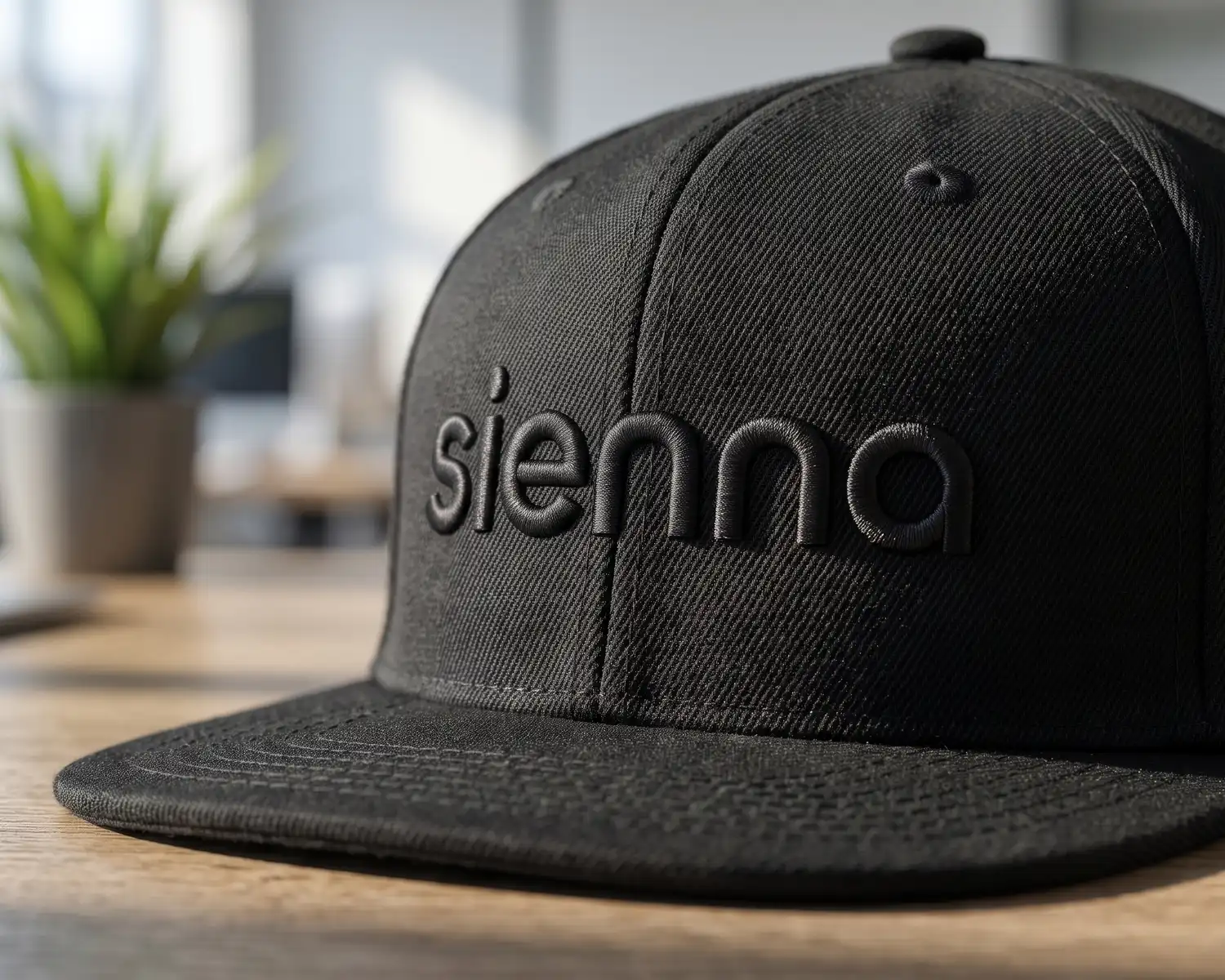
Technically, the process is the same as regular embroidery: the logo is digitized into a stitch program, then the machine embroiders thread by thread, directly into the fabric, without adding a surface layer. The difference lies entirely in the thread chosen. Regular embroidery uses a contrasting thread, visible from a distance. Tone-on-tone embroidery chooses a thread in the same shade family as the fabric, a close tone rather than an identical one down to the pixel: black on charcoal, off-white on ecru. The design doesn't disappear, it reads through the stitch relief and the shadow the light casts on it, never through a color contrast that jumps out.
Unlike 3D embroidery or chenille embroidery, which change the stitch construction itself (and the price), tone-on-tone embroidery stays regular embroidery from start to finish: only the thread color changes. The embroidery price grid is read by format and quantity, never by thread color (see the full grid on the embroidery page): available from 10 pieces, with a price that drops to €1.43 per piece on larger volumes.
Why this discretion reads as premium
A logo that's too visible immediately reads as a uniform or a promotional item, the exact opposite of what a brand, a hotel, or a company that cares about its image wants. Tone-on-tone embroidery solves that problem at the source: the logo is genuinely there, fully legible up close, but it never dominates the garment. For a front-of-house team, hospitality staff, or a capsule collection, it's the choice that says "quality" without needing to raise its voice.
TKNP even has a ready-made collection built on this exact principle: Tone on Tone, a heavyweight hoodie embroidered at the chest in black-on-black thread, 50 pieces recommended, designed for hotels, bars, restaurants, and brands that welcome the public. Real proof that the finish delivers at the scale of an actual collection, not just on a single logo.
The same logic, applied to other contexts, runs through our guides on city souvenir shops and corporate end-of-year gifts: a logo that stays discreet rather than loud, so it stays on the side of the garment people actually wear.
Which fabric and color work best
Tonal contrast is what makes or breaks the effect. Too big a gap between thread and fabric falls back into regular embroidery; a gap of zero makes the logo invisible even up close. The zone that works is narrow: a neighboring shade, in the same color family, with a slight difference in sheen or texture between thread and fabric so the relief catches the light.
A solid-color fabric is the best base: a print, a stripe, or a heathered fabric blur the relief and break the effect. On the garment side, polo shirts and caps are the supports that carry this finish best, for the same reason regular embroidery already excels on them: a flat, stable surface that lets the stitch sit cleanly.
Tone-on-tone embroidery or puff print: two opposite ways to create relief
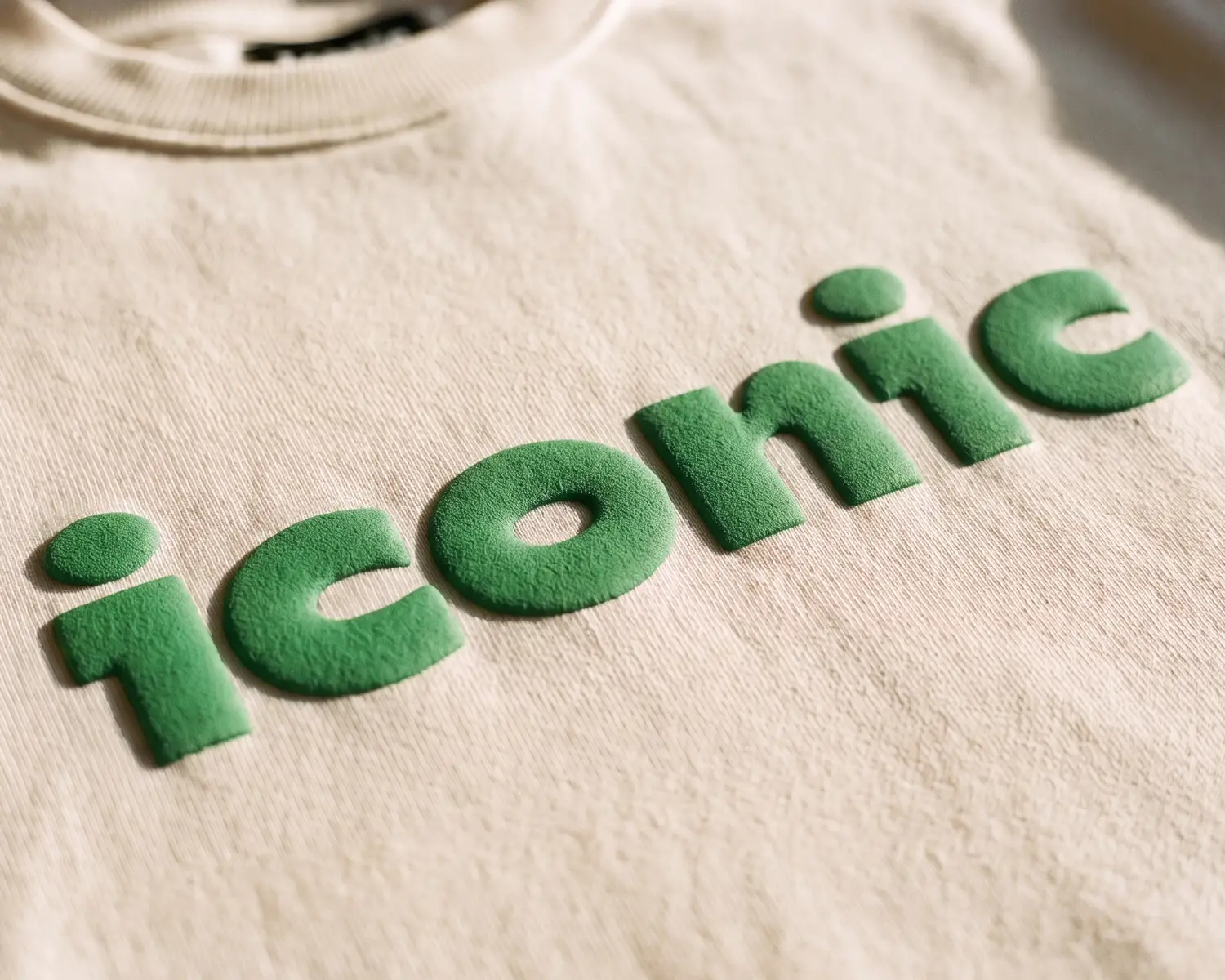
Relief is the one thing the two techniques share: each one puts it to an opposite purpose. Puff print puffs up an ink into a thick, colorful relief, built to be noticed from a distance, on a sweatshirt or a streetwear cap. Tone-on-tone embroidery aims the other way: a fine relief, in a color that blends into the fabric, built to reveal itself only up close.
The choice comes down entirely to the effect you're after. A collection that wants to assert a bold logo and a sportswear look should go for puff print. A brand, a hotel, or a company that wants a sober, professional finish should go for tone-on-tone.
What to remember
Tone-on-tone embroidery doesn't change the stitch construction at all: it stays regular embroidery, with its standard price grid, where only the thread color changes. Thread in the same shade family as the fabric, a relief that only reads when light hits it, and a finish that says "quality" without ever raising its voice. The natural choice for merch that needs to convince first, never shout.
Frequently asked questions
What is tone-on-tone embroidery?
It's regular embroidery where the thread is chosen in the same shade family as the fabric, instead of a contrasting thread. The logo shows through the stitch relief and the shadow the light casts on it, never through a color contrast that jumps out.
Embroidery or printed tone-on-tone, what's the difference?
Both play on the same idea of a color matched to the fabric, but the material changes everything. A printed tone-on-tone finish, screen-printed or transferred, stays flat and nearly invisible even up close. Tone-on-tone embroidery keeps the thread's relief: it's that relief, not the color, that makes the logo legible. On a support where relief matters, like a polo shirt or a cap, embroidery holds that promise better.
How much does tone-on-tone embroidery cost?
The price follows the standard embroidery grid, by format and quantity, never by thread color: available from 10 pieces, with a price that drops to €1.43 per piece on larger volumes. Choosing tone-on-tone adds no surcharge over regular embroidery.
Which garment does it work best on?
A solid-color fabric is the best base, on a flat, stable support like a polo shirt or a cap. A printed, striped, or heathered fabric blurs the relief and breaks the intended effect.
Your project, quoted within 24 hours.
Describe your garments, your decoration and your quantities: you receive a detailed quote, decoration included, within one business day.