
Concert merch: create and sell your band's own
Concert merch is the line of garments and objects an artist sells to their audience, at the stand during the tour and online between dates. On-demand production lets a band launch its own with no unsold stock to finance, from a single digitally printed piece.
This guide is for the artist, the band, the production company that wants to create and sell its own merch. If you're on the event organizer side, the festival merch guide answers that question.
Merch, a vital income of live music
The music economy has flipped: records no longer fund the tour, the stage is what artists live on, and merch weighs more in it every year. Les Échos told the story in spring 2026: the t-shirt bought on the way out of a show is no longer a postcard, it's a social code fans wear to say "I was there".
That double status is what makes concert merch so effective. Fans don't buy a garment, they buy the night they just lived. And the t-shirt keeps working after the show: every fan who wears it carries the band's name where no poster ever goes.
What sells at the merch table
The wardrobe of a concert stand is surprisingly stable from one stage to another:
- The tour t-shirt: the king of the table, the one the crowd comes for. Artwork on the chest or as a big back print, tour dates listed on the back.
- The hoodie: fewer sales than the t-shirt, but the best margin on the stand: it's what makes a cold date profitable.
- The tote bag: low price, high volume, and it carries the rest of the purchases.
- The cap: the one that gets worn all year, long after the tour.
- Stickers and posters: the entry ticket for the younger crowd, the ones without 30 euros who still want to leave with something.
The rule that makes the difference is specific to concerts: the line doesn't wait. A table gets read in a few seconds, in the dark, between two crowd movements: two or three models readable from afar sell themselves, where an overloaded stand makes people hesitate, and every hesitation slows the whole line. Every extra model also means extra sizes to manage in the bins.
The codes of the tour t-shirt
Concert merch has its own graphic codes, and they exist because they work:
- Artwork before logo. The album or tour visual writ large, the band name readable from afar. Fans want the image of that era of the band, not a corporate polo.
- Dates on the back. The list of tour cities as a big back print turns the t-shirt into a dated edition: when the tour ends, it becomes impossible to find, therefore precious. That's natural scarcity, no gimmick.
- A garment with real weight. The memory has to survive the washing machine: pilling is the enemy of the cheap tour t-shirt, and the heavyweight tee became the standard of serious merch precisely for that.
- The limited edition, owned. One special model per tour, even per date for big productions, keeps the desire alive. It's the same mechanic as a capsule collection: a short window, one strong idea.
Producing without turning the van into a warehouse
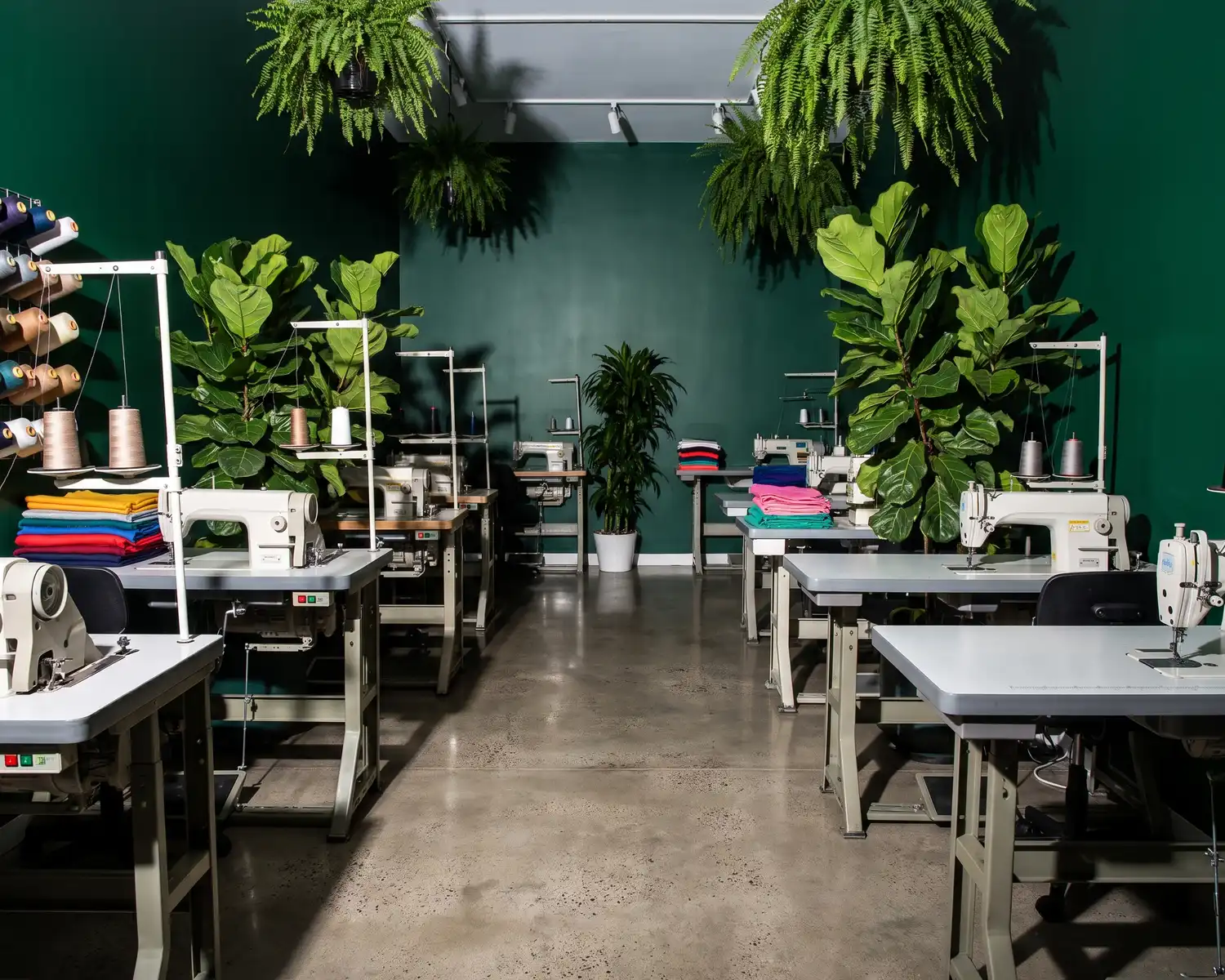
The historic trap of band merch: order 300 t-shirts to get a good price, sell 180, and haul the remaining boxes from date to date until you dump them at a discount. On-demand production flipped that problem: manufacturing only starts once the quantity is known. The threshold depends on the technique: digital printing starts from one piece, embroidery from 10, screen printing from 25.
Concretely, for a band, that changes three things:
- See the real result first. A screen preview shows neither the drape of the cotton nor how the ink comes out: digital printing lets you hold a real sample in hand before committing the whole tour's production.
- A run cut to size. A first production calibrated on the first dates, then a restock between two tour weekends. Allow about two weeks between launching a production and delivery: that's the lead time to fit into your calendar of dates, not the other way around.
- Zero unsold stock to finance. A starting band's cash goes into the road and the sound. On-demand production keeps it out of boxes nobody knows the fate of.
One point of discipline: the concert date won't move for you. Merch gets prepared when the tour is announced, not the week of the first show.
Selling at the stand, then keeping it going
A few merch-table rules, learned by everyone who has ever run one:
- Round prices. At 25 or 30 euros a piece, the line moves; at 27.50, it does math. Mobile payment has become essential: the crowd doesn't carry cash anymore.
- Sizes as a pyramid. M and L always go first. Planning the size split at production time avoids a bin full of XS at the end of the tour.
- The stand facing the flow. Fans buy in the heat of the moment, before or right after the set: a stand visible from the entrance captures that moment, a stand hidden by the cloakroom lets it pass.
And the table is only half the revenue: between two dates, the merch sells online through your own channels, and smooths income from one tour to the next while the band writes.
What to remember
- Concert merch has become a central income of live music: fans buy a memory and a social code, not just a garment.
- A short, dated wardrobe (the tour t-shirt up front, the hoodie for the margin) sells fast in a line that doesn't wait.
- On-demand production removes the unsold stock to finance: one real sample to validate, a run cut to size, restocks between dates.
Frequently asked questions
What price for a merch t-shirt at a concert?
Prices observed at shows commonly run from 20 to 40 euros for a t-shirt depending on the artist's fame and the quality of the garment, higher on international stadium tours. Two rules of thumb: a round price keeps the line moving, and a quality garment justifies the top of the range.
Are you allowed to sell your own band's merch?
Yes: your name, your logo and your visuals belong to you, and selling them on custom textiles requires no particular authorization. Consider registering the trademark when the project grows. Reproducing the name or artwork of an artist whose rights you don't hold, however, is illegal, even for a few pieces.
Why do tour dates on the back sell so well?
Because they turn a t-shirt into a dated object: it only exists for that tour, it proves its wearer was there, and it becomes impossible to find afterwards. It's a limited edition by nature, with no artificial sales mechanic.
Your project, quoted within 24 hours.
Describe your garments, your decoration and your quantities: you receive a detailed quote, decoration included, within one business day.