Recycled polyester
Recycled polyester, or rPET, is a fiber made by remelting plastic that already exists, most often bottles, to spin it into new polyester. In use, it behaves like regular polyester; what changes happens upstream: not a drop of new petroleum goes into the fiber.
Recycled polyester in practice
The making of it is a short chain: PET bottles collected, washed, ground into flakes, then remelted and drawn into yarn. That journey is what the initials rPET, for recycled PET, sum up. On the composition label, it comes with a percentage, 50%, 70% or 100%: the share of recycled fibers varies from one reference to another, and a garment can blend recycled and regular yarn.
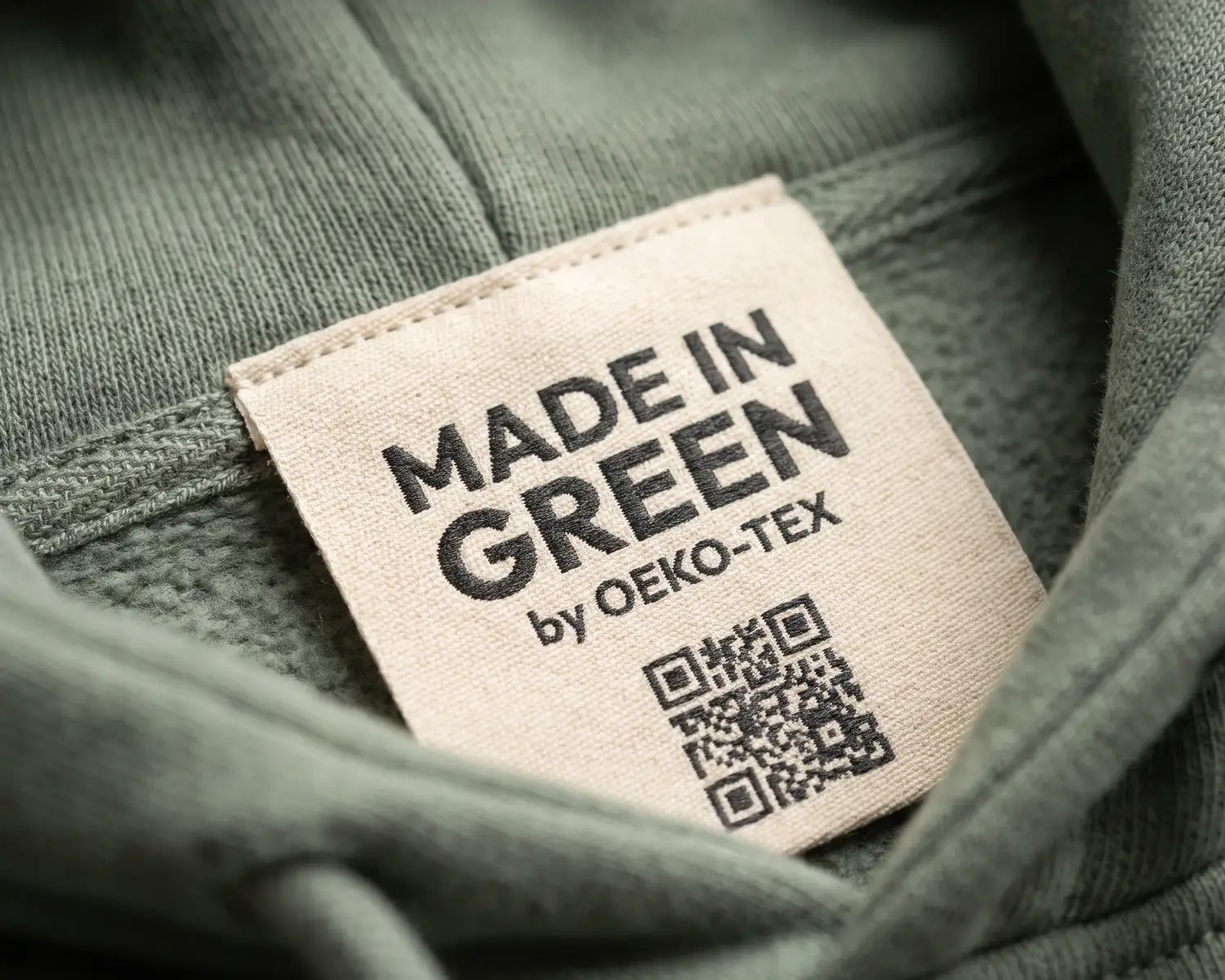
That percentage, precisely, can't be checked by eye. That's the job of the GRS label, which certifies both the recycled content and the production chain that assembles it; its cousin RCS (Recycled Claim Standard) traces the content alone. Without one of the two, the displayed figure remains declarative.
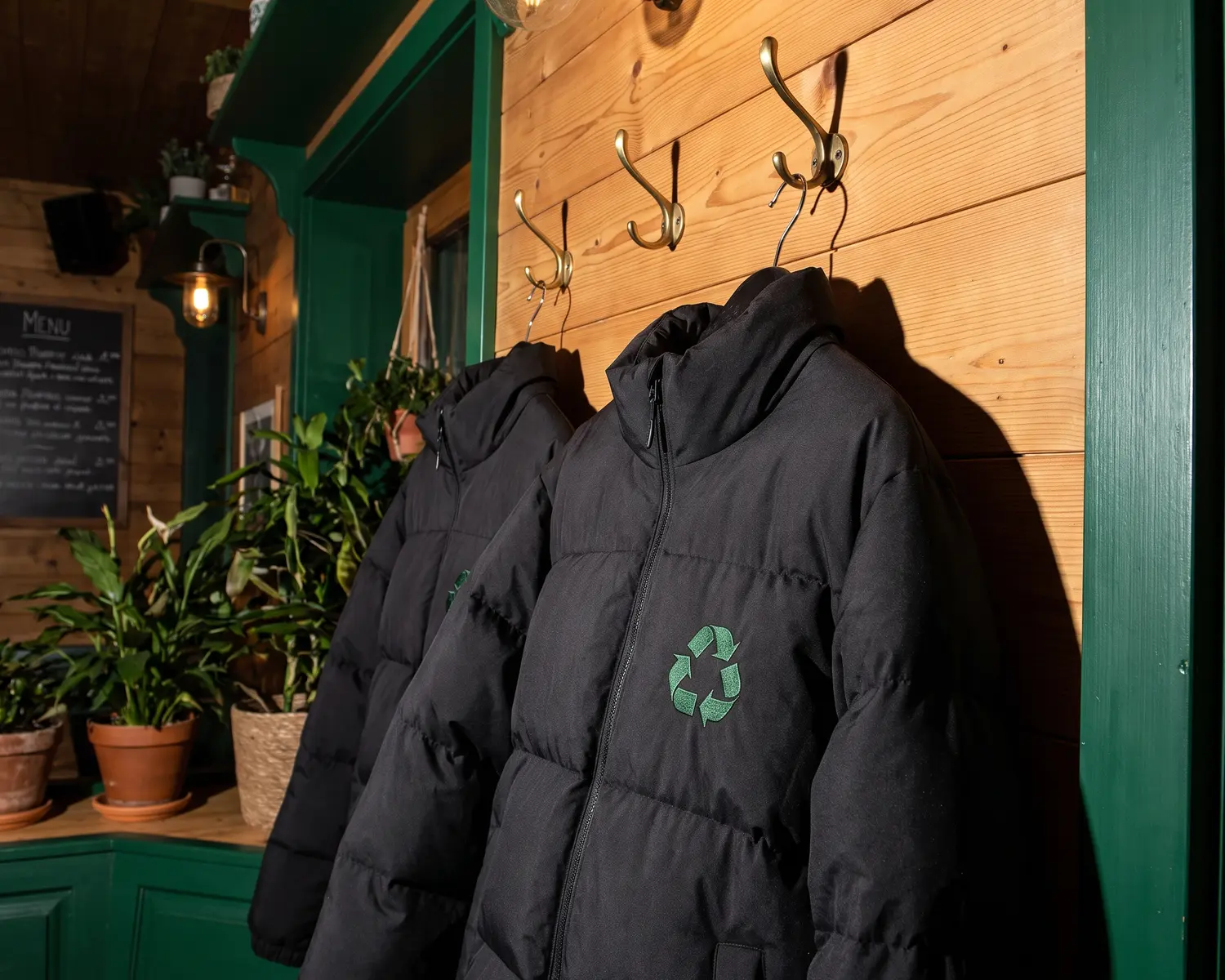
On customizable textiles, the fiber lives where polyester excels: fleeces, many of which are now mostly recycled, softshells, linings and activewear; fleece has even become the showcase of rPET in team merch. Its limits deserve to be said: recycling the fiber reduces its starting footprint, but changes neither the microfibers released in the wash nor the garment's end of life. And it doesn't turn a synthetic into an organic material: recycled speaks to the fiber's origin, organic to the farming of a natural fiber; the two logics complete the reading grid of polyester without merging.
What to remember
- rPET remelts existing plastic, bottles first, into polyester fiber that behaves in use like the regular one.
- The recycled percentage is verified through the GRS label (certified content and chain), not by the label alone.
- It reduces the fiber's starting footprint, not wash-time microfibers or end of life: progress, not a free pass.
Frequently asked questions
Is recycled polyester as strong as regular polyester?
Yes. Once remelted and spun, recycled fibers offer the same strength, the same quick drying and the same durability as regular polyester: it's the same polymer. A garment's quality comes down to its reference and construction, not to whether its fiber is recycled or not.
Your project, quoted within 24 hours.
Describe your garments, your decoration and your quantities: you receive a detailed quote, decoration included, within one business day.