Puff print and raised textures: the trend explained
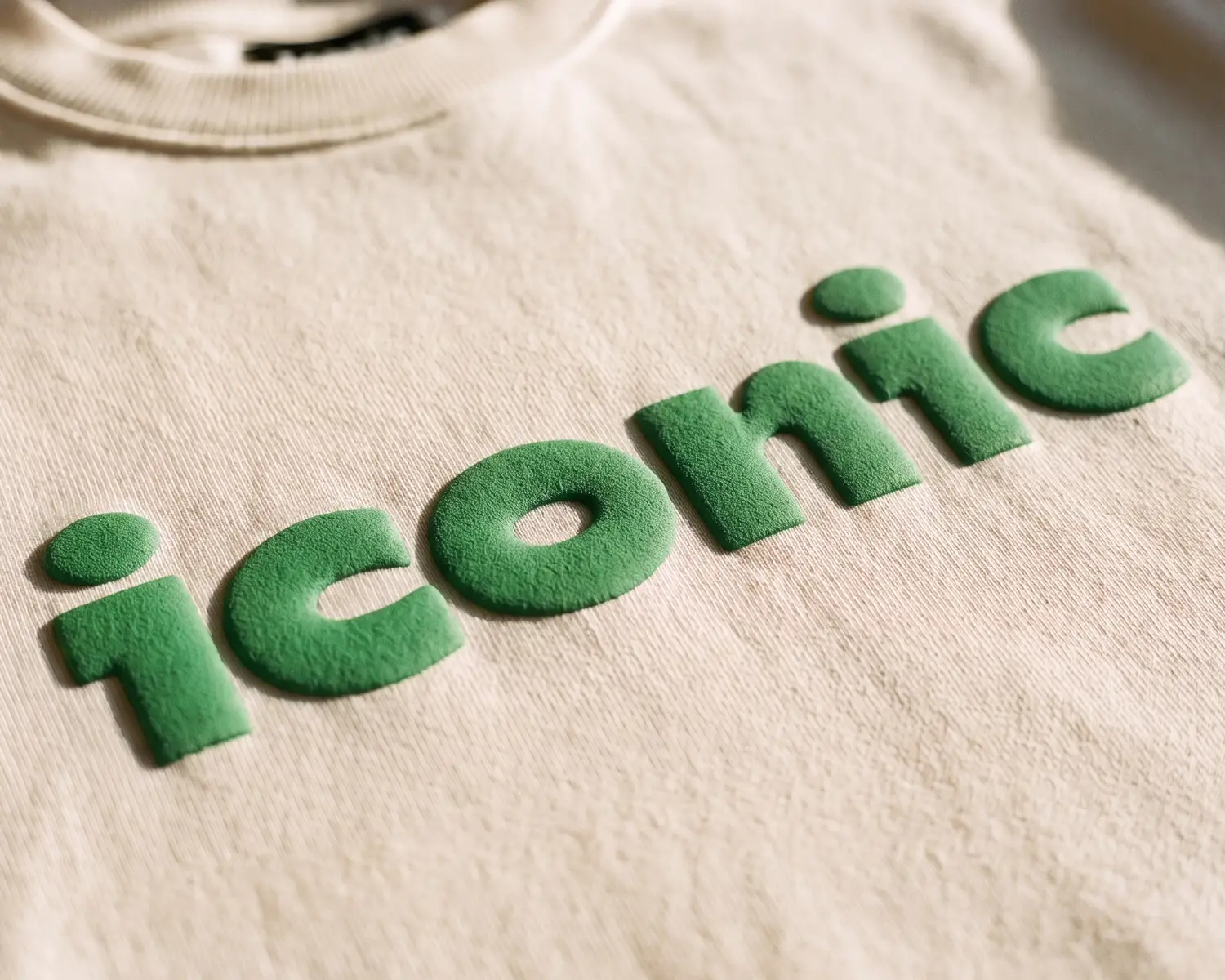
Puff print is a special screen-printing ink that puffs up when cured, forming a foam-like relief on the fabric instead of a flat solid. The effect also exists in a heat-transfer vinyl version. A tactile, eye-catching finish, best suited to simple shapes and uncluttered designs.
The essentials in 4 points:
- Puff print is a screen-printing ink with a puffing additive that rises during curing, creating a foam relief instead of a flat solid.
- A vinyl (heat-transfer) version exists too: the same puffed-up effect, without going through ink.
- It works best as a small touch, not a full design: a number, a monogram, a small symbol on a cap or on the chest of a hoodie.
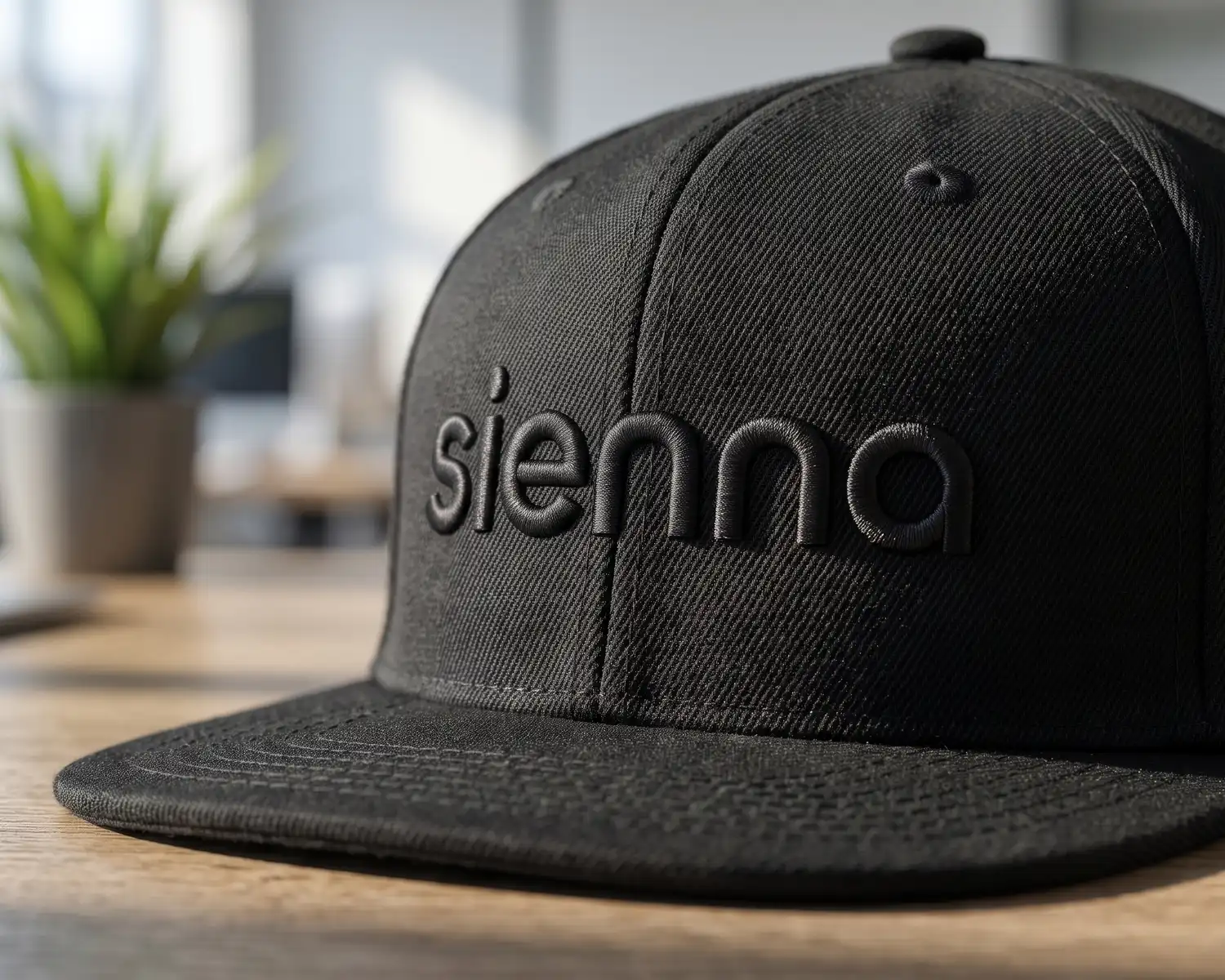
- A comparable feel, different mechanism: 3D embroidery builds its relief with thread instead of foam.
Run your hand over a puff-printed logo before you even look at it, and you understand why the trend is back: the relief is felt first, seen second. That small detail, almost trivial on paper, is what turns a merch item you look at into one you want to touch, and therefore keep.
How puff print actually works
It starts as a regular screen-printing ink, mixed with a puffing additive. Flat, before curing, it looks like any other ink. Curing is where everything changes: under heat, the additive reacts and the ink rises, going from a thin deposit to a foam relief several millimeters thick. The design keeps its shape but gains real thickness.
There is a second way to get the same effect: puff flex, a heat-transfer vinyl film that already contains the puffing agent. Applied with a heat press, it rises at the moment of application rather than during curing. The visual result is close, but the underlying technique differs: ink for one, heat-transfer film for the other.
Why this effect is trending right now
A flat printed logo gets seen. A puff-printed logo gets noticed, touched, talked about: that extra tactile layer explains its comeback, carried by the sportswear and streetwear look where a thick raised finish echoes the bold embroidered lettering of American team gear, without going through embroidery. A number on the sleeve, a small puffed symbol on the chest: these are the details that make a collection feel considered, where a plain flat print blends into the background.
The other reason for its success: it's one of the few finishes that makes a personalized garment recognizable by touch alone, in a bag or a pile of clothes, before you even check the label. On a collection launch or a limited drop, that kind of detail becomes an argument in itself, something people show off by saying "feel this".
How to work it into a collection
The rule that works best: one strong touch, never a full design. Puff print is built to punctuate, not to fill. A few placements that work well on sweats and hoodies and headwear from the catalog: a number or initial on the sleeve, a small symbol or founding year on the chest, a monogram on the front of a cap. Three simple placements that let the relief breathe instead of drowning it in the rest of the design.
On color, the relief plays with light: a solid tone that contrasts with the fabric brings out the natural shadow the puffing creates, while a color too close to the fabric risks burying the effect. It's a detail many people discover too late, once the garment is already in hand.
Where it works (and where it doesn't)
Puff print has a specific sweet spot. It excels on bold, simple shapes: a number, a capital letter, a thick symbol, a clean outline. The bigger and more open the shape, the better the relief reads.
It loses all its appeal on anything fine or tight: small text, close-set details, a gradient. As the ink puffs up, it fills the empty spaces between fine elements, turning the design into a blurry blob instead of staying legible. The simple rule to remember: if a design would read well very large, it stands a good chance of rendering well in puff print; if it needs to stay fine to remain legible, this isn't the right technique for it.
Puff print or 3D embroidery: two reliefs, not the same finish
Both techniques give a relief you can feel, but they get there differently and for a different result. Puff print puffs up an ink: the finish is matte, foam-like, with clean edges on a printed design's outline. 3D embroidery builds its relief with dense thread, in multiple passes: the finish is more textured, closer to an embroidered patch, and it has historically held up better under daily wear like a cap worn every day.
For personalized merch, it mostly comes down to the item and the result you're after: puff print suits a printed design that needs to stay crisp and colorful, 3D embroidery suits a small motif that needs to survive daily wear.
What to remember
Puff print turns a regular screen-printing ink into a relief thanks to an additive that puffs up under heat, with a heat-transfer vinyl variant. It works best as a small touch on a simple shape, never a full design, and differs from 3D embroidery in its material (foam versus thread) as much as in its use case. A detail that gets felt before it gets seen, and that's often enough to make someone keep a piece of merch instead of putting it away.
Frequently asked questions
Does puff print hold up as well as regular printing?
The relief can flatten over time with intensive wear and washing, much like any textile relief. For occasional use (a drop, an event), durability is more than enough; for a garment worn daily for years, 3D embroidery holds up better over time.
Can puff print be done in several colors?
Yes, the constraint is the same as regular screen printing: each color adds a step. The difference is that the puffed effect works best with few colors and simple shapes, so one or two-color designs stay the most effective.
Puff print or 3D embroidery, which to choose for a cap?
Both look good on a cap. Puff print suits a printed design that needs to stay crisp and colorful; 3D embroidery, denser, holds up better under intensive daily wear. The choice mostly comes down to the look you want: matte and colorful for one, textured and structured for the other.
Where on the garment should a puff print motif go?
A small space is enough: the sleeve, the chest, the front of a cap. Puff print is a punctuation effect, not a filler: it stands out most when it's alone on its placement, surrounded by plain fabric.
Your project, quoted within 24 hours.
Describe your garments, your decoration and your quantities: you receive a detailed quote, decoration included, within one business day.