Sublimation printing on textile: how it works, and its real limit
Sublimation turns ink into a gas under heat to fuse it directly into the fabric's fibers. It produces edge-to-edge prints with no color limit, but only works on light-colored polyester.
Sublimation printing in practice
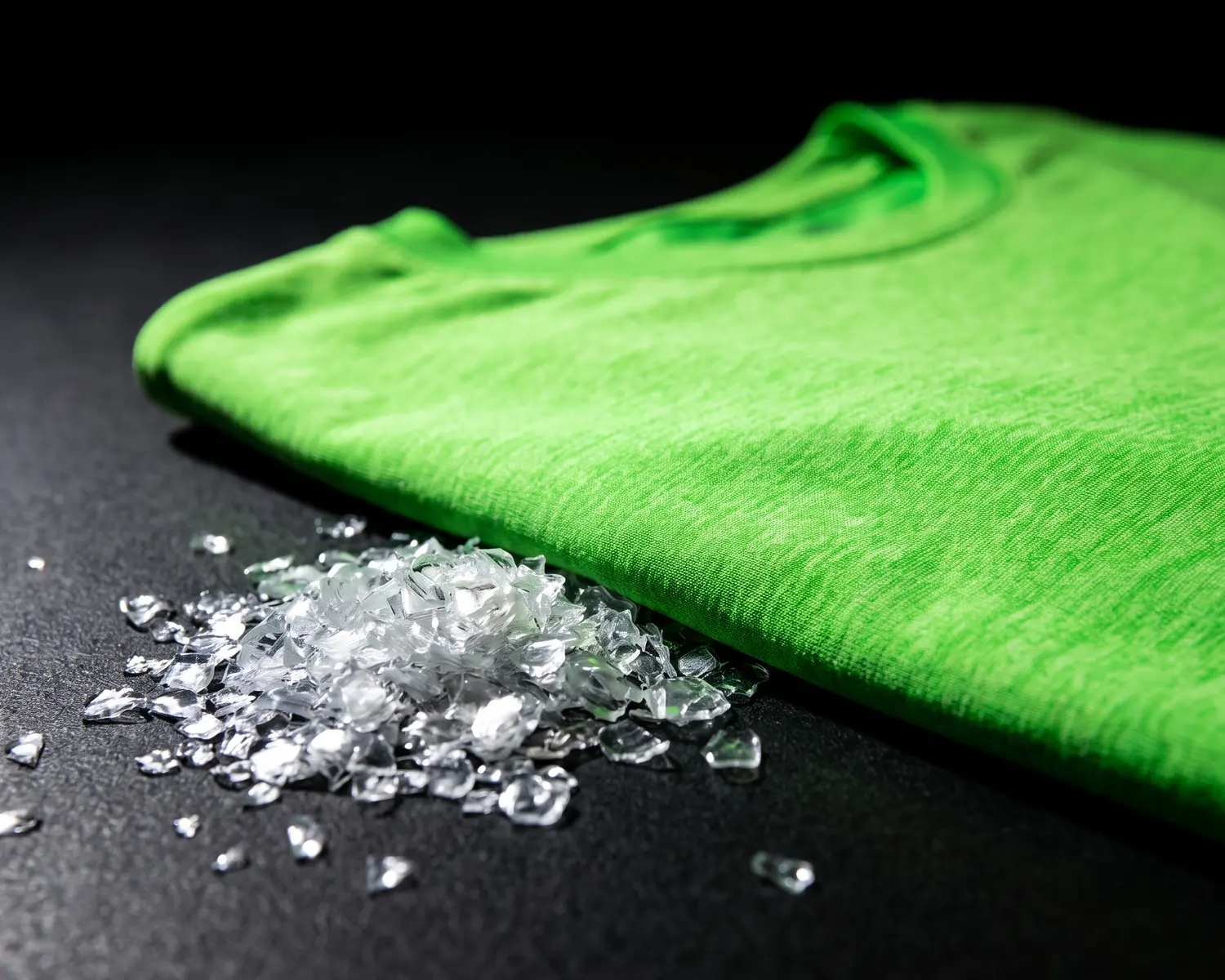
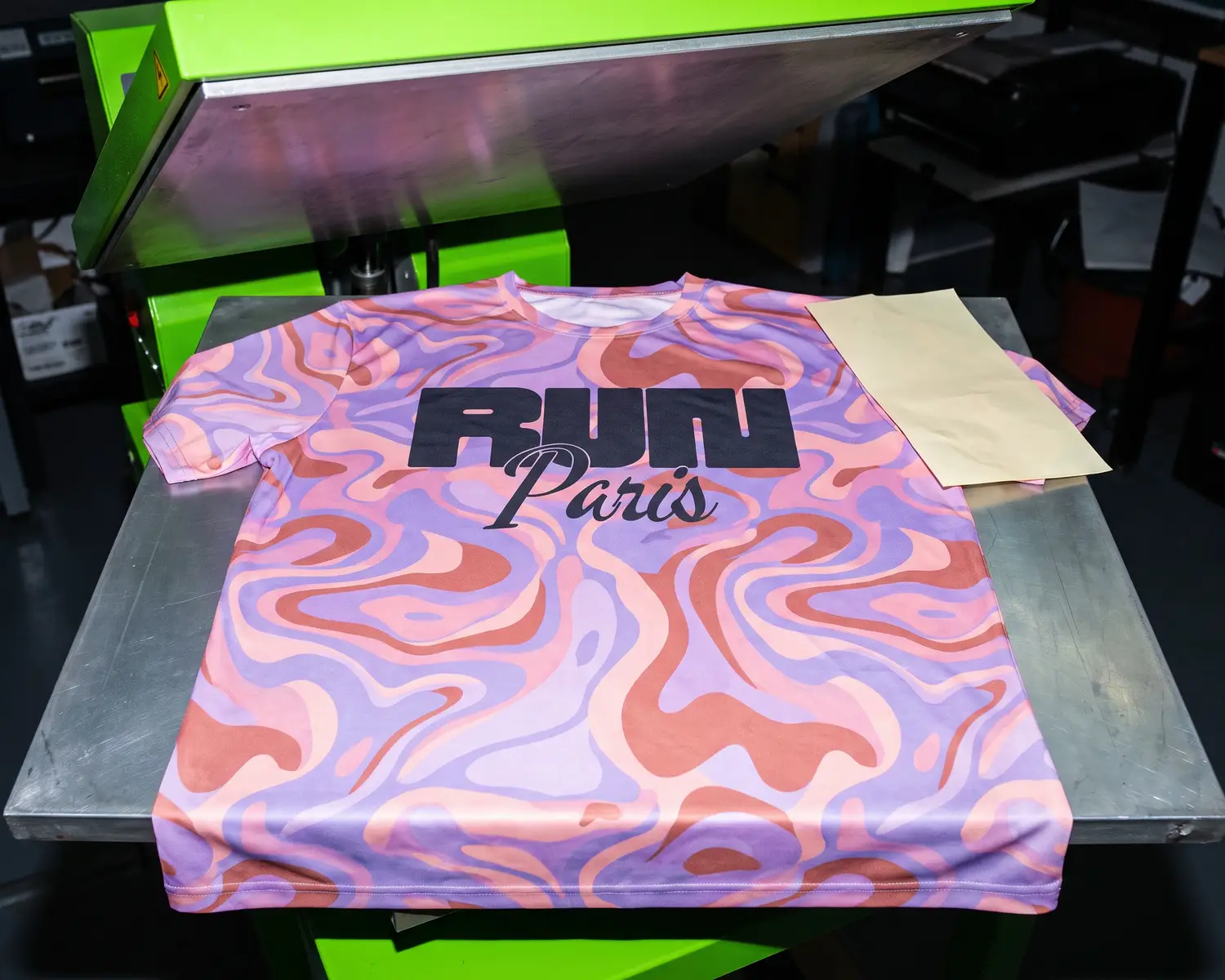
The principle: the ink passes from a solid straight to a gas without ever becoming liquid (hence the name), and bonds into the synthetic fibers under combined heat and pressure. Unlike a marking laid onto the fabric, the ink becomes part of the fiber itself: zero added thickness, zero cracking risk in the wash.
This fusion into the fiber is exactly what explains its real limit: it requires a fabric that's mostly polyester and light in color, ideally white. On cotton or dark fabric, the fibers won't take the gaseous ink and the color doesn't come through. It's also what makes true edge-to-edge printing possible on a custom sport or event garment: with zero added thickness, the design can cover the entire surface, seams included, in a way no other marking technique matches.
What to remember
- Sublimation turns ink into a gas that fuses into the fiber: flat, durable result, no color limit.
- It requires a light-colored or white polyester fabric: it doesn't work on cotton or dark fabric.
- It's the only technique that prints edge-to-edge across the entire garment: jerseys, sportswear and event merch above all.
Frequently asked questions
Sublimation or DTF, what's the difference?
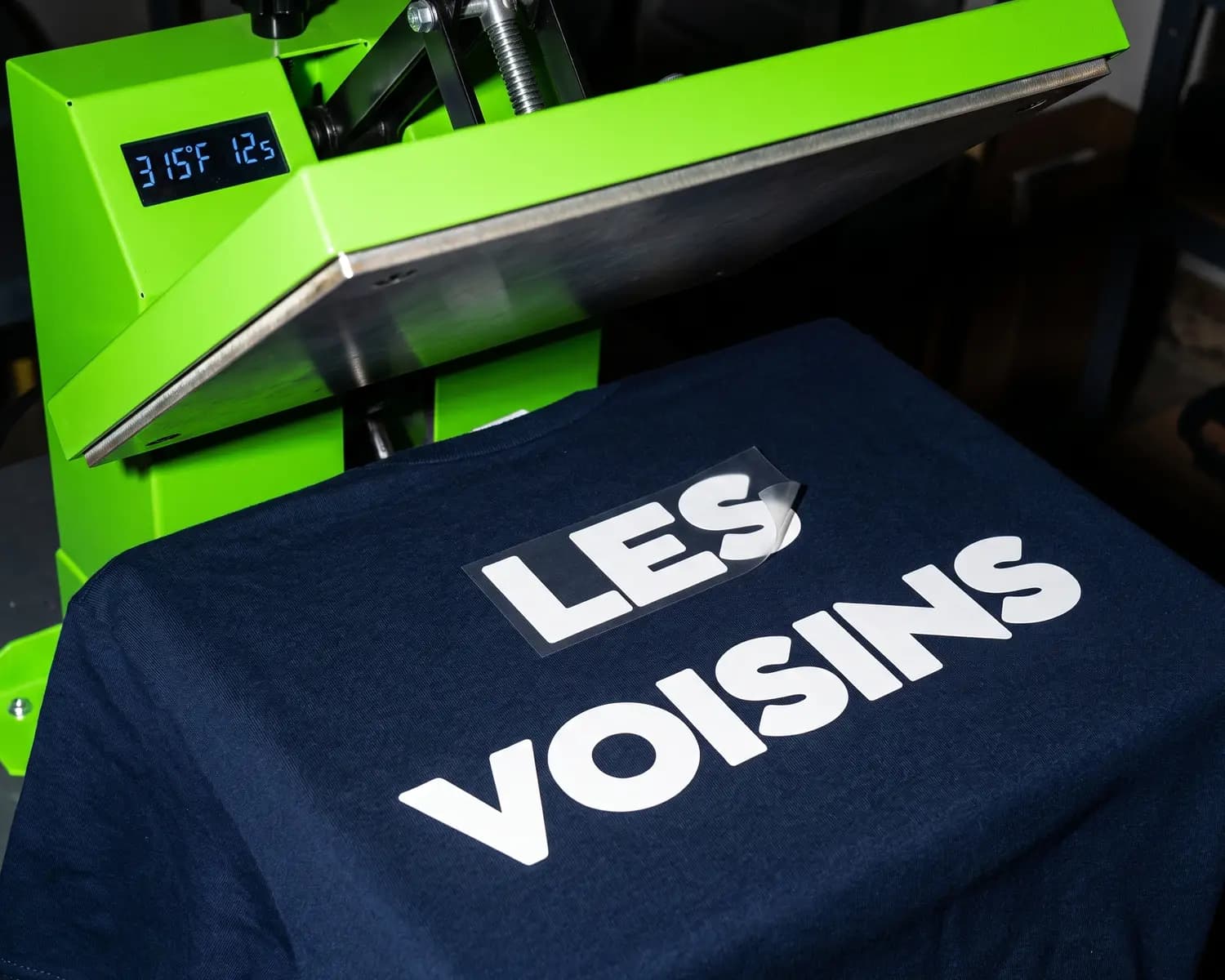
Sublimation fuses the ink into the fabric's fibers, but only on light-colored polyester. DTF works differently: the design is printed on a transfer film first, and only afterward pressed onto the garment with heat, which is why it works on cotton, polyester and most fabrics, whatever the color.
Your project, quoted within 24 hours.
Describe your garments, your decoration and your quantities: you receive a detailed quote, decoration included, within one business day.