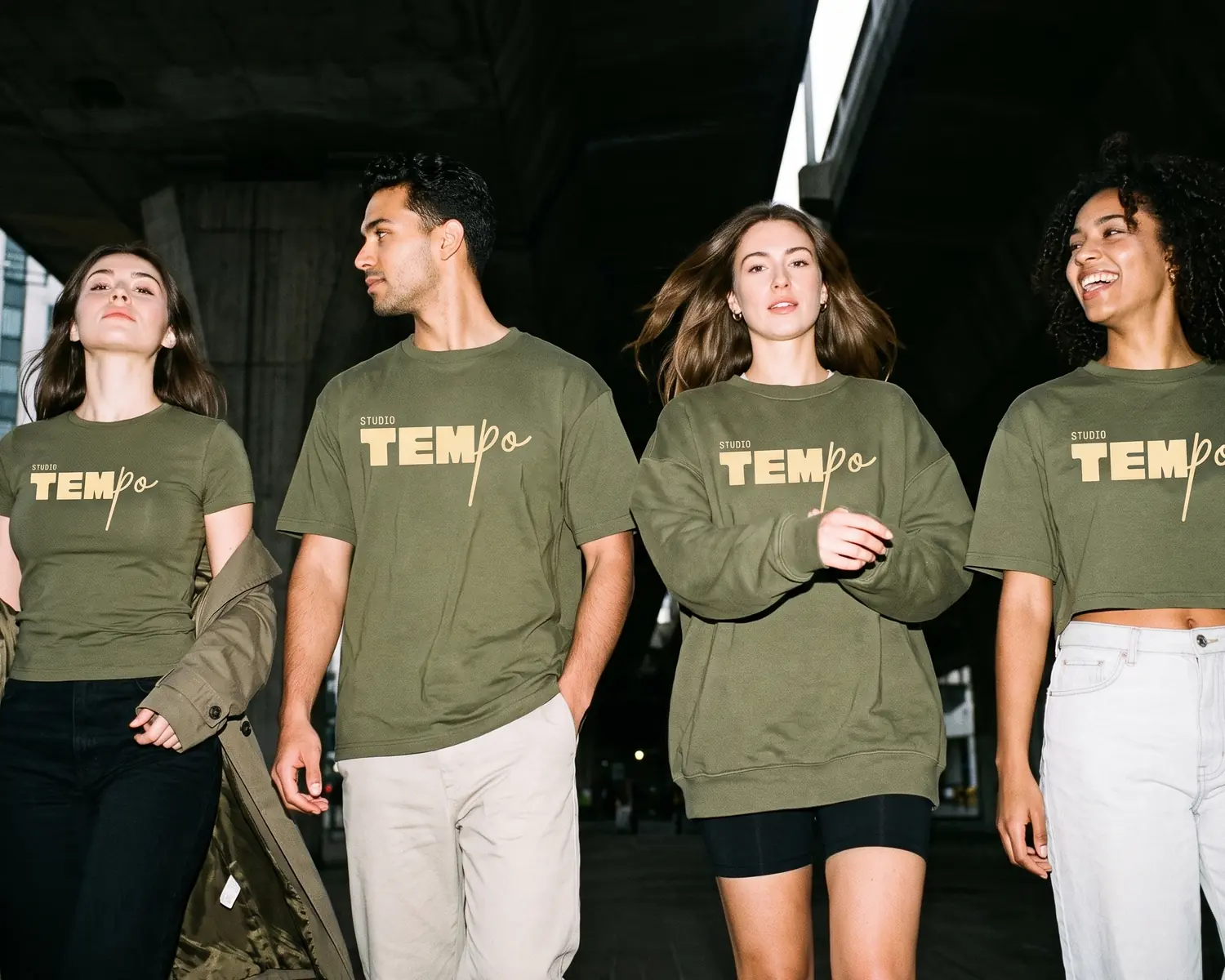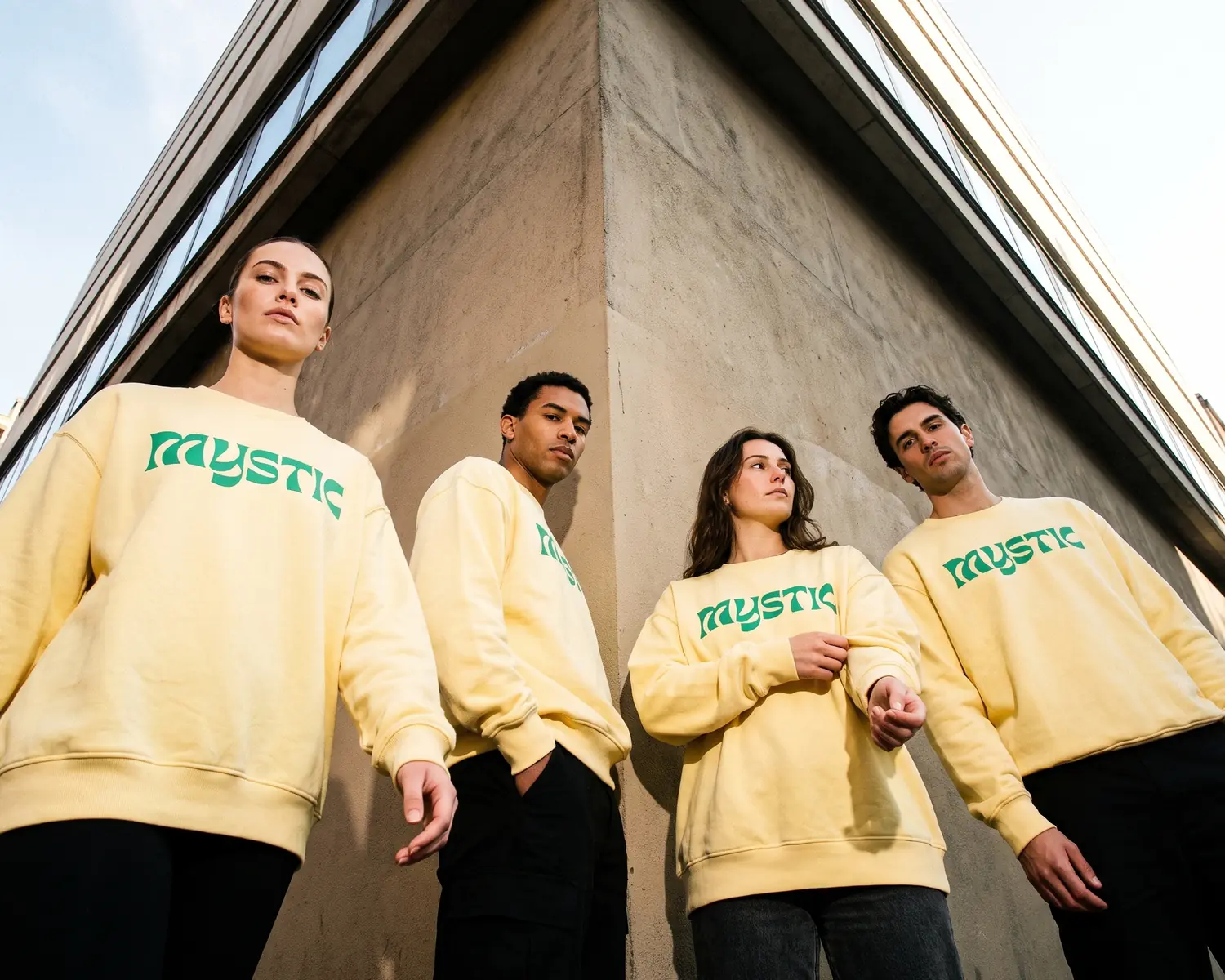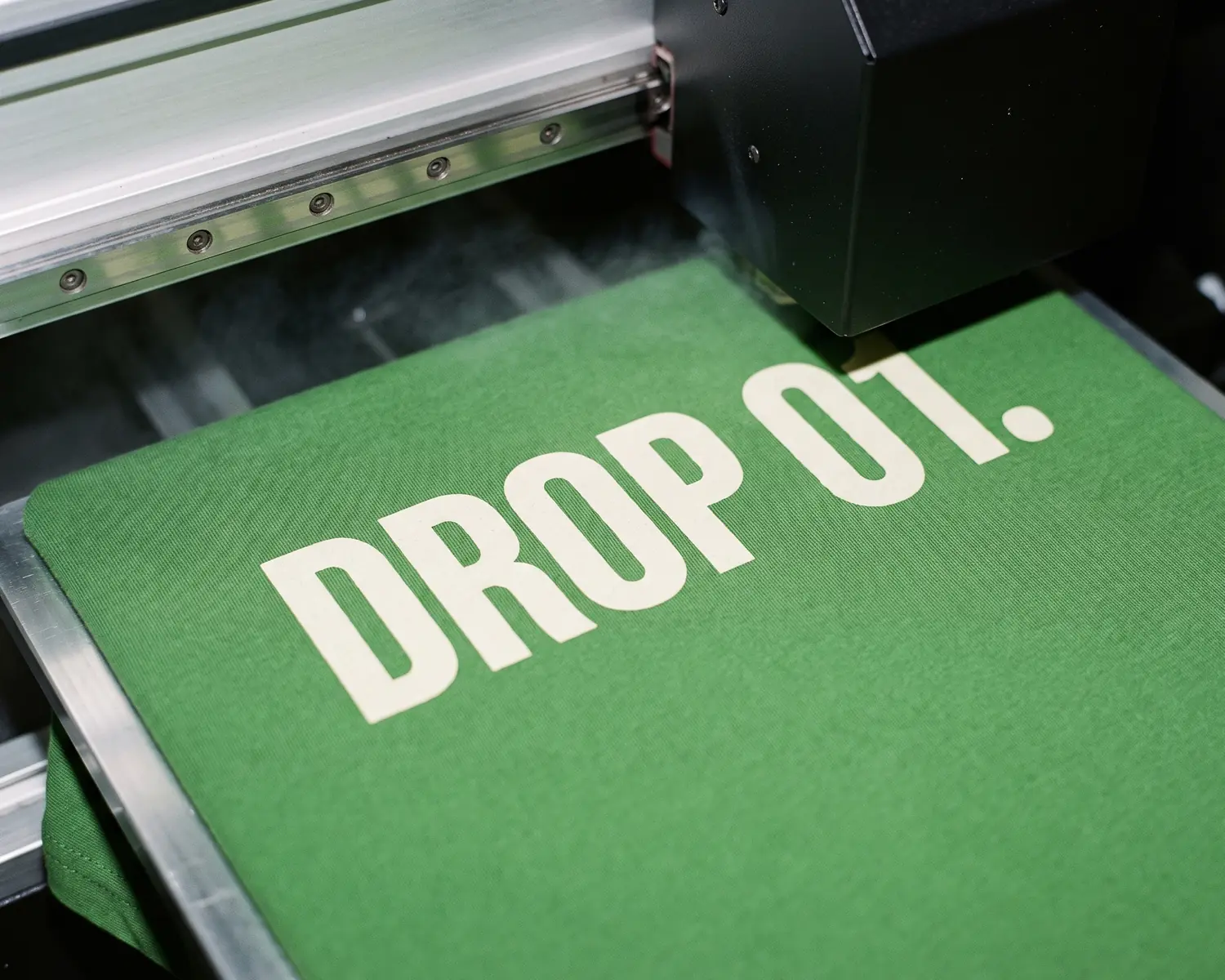
A heavyweight t-shirt weighs at least 200 grams per square metre, against 130 to 160 for a light basic. The fabric holds its shape better, resists washing better, and embroidery as well as printing render better on it. That is why it became the standard for a collection meant to last.
The essentials in 4 points:
- Heaviness is measured in fabric weight (g/m2): light under 160, standard between 160 and 200, heavyweight above 200.
- A heavy fabric deforms less, shrinks less in the wash, and keeps its cut after dozens of machine cycles.
- The print holds up better: embroidery anchors into a dense fabric without puckering it, digital printing sits on a more stable surface.
- A heavyweight t-shirt costs more than a light basic, but for a garment worn a full season or a full year, it is the most profitable gap in the catalogue.
Search for a heavyweight t-shirt on Google and you land on fashion boutiques selling the weight as a style argument: structured cut, premium feel, a drape that does not move. True, but it says nothing about what actually matters if you are dressing a team, a club or a community: does this fabric hold up over fifty washes, and how does it behave under a logo?
What heavyweight actually means
Fabric weight is measured in grams per square metre (g/m2): the higher the number, the denser the fabric. Three benchmarks are enough to navigate it.
- Light, under 160 g/m2: layering, warm season, the everyday basic.
- Standard, between 160 and 200 g/m2: everyday use, the comfort-price compromise.
- Heavyweight, above 200 g/m2: a cut that does not move, a fabric you can feel the moment you touch it.
The entry reference in this segment is the Heavy Cotton Adult T-Shirt from Gildan, a benchmark known across the industry. Higher up, the Unisex Heavyweight Washed Tee from Bella+Canvas adds a wash that breaks the brand-new look from the first wear. And for a genuinely structured garment, the Authentic Heavyweight T from Russell goes up another notch.
What fabric weight changes over time
A thin fabric pills quickly, deforms when drying and loses its collar shape after about twenty washes. A heavy fabric resists these three kinds of wear much better: more fibres per square centimetre, a structure that copes better with the washing machine, and a garment that keeps its cut months after purchase.
For a team outfit worn all year, that is the difference between a t-shirt that stays presentable after one season and a t-shirt quietly pulled from the drawer. Quality that lasts is not a marketing line: it is literally a matter of fabric weight.
What nobody says: fabric weight changes how the print renders
This is the point fashion boutiques have no reason to raise, and the one guide that actually covers the topic, Printful's, only skims.
Embroidery anchors better into a dense fabric. On a thin cotton, embroidery stitches pull on the fabric and can slightly pucker it around the motif. On a heavy fabric, the structure absorbs the thread tension without deforming: the result stays flat and clean, wash after wash.
Digital printing sits on a more stable surface. A thin cotton moves under the machine and can slightly shift a large-format artwork. A heavy fabric stays taut, which helps get an even flat colour across the whole surface.
Two house rules worth remembering, whatever weight you choose: never more than two print positions on the same garment, and one technique per garment. The fit guide explains why mixing embroidery and printing on the same garment is not recommended.
Price: what the gap actually buys
A heavyweight t-shirt costs more than a light basic, logically: more fabric, a denser weave, more weight to produce. The gap pays for itself over time, not on a single purchase.
On an outfit worn a full season or renewed yearly for a team, the gap of a few euros per garment pays back quickly: fewer garments to replace early, fewer complaints about a fabric that pilled, an image that stays clean over time. As with any bulk order, prices drop in quantity tiers: it is the specific reference, not the weight alone, that sets the exact price.
Who should choose heavyweight, who can stay on standard
Choose heavyweight if the outfit has to last a full season or a full year, if the print is the central point of the artwork, or if the collection's image has to stay clean after dozens of washes.
Stay on a standard weight if the budget is tight for a one-off event, or if the garment will only be worn a few times before being replaced. Both are valid: the choice depends on the lifespan you expect from the garment, not an absolute hierarchy of quality.
Frequently asked questions
From what weight is a t-shirt genuinely heavyweight?
The common threshold sits around 200 g/m2. Below that, it is standard weight; above it, the fabric is noticeable to the touch and holds up noticeably better over time.
Does a heavyweight t-shirt resist washing better?
Yes. A denser fabric structure deforms less, shrinks less and keeps its cut longer than a light fabric, wash after wash.
Does embroidery hold up better on a heavy fabric?
Yes. A dense fabric absorbs the tension of embroidery stitches better without puckering around the motif: the result stays clean longer than on a thin cotton.
Is a heavyweight t-shirt necessarily more expensive?
Yes, at equal quality, because it needs more fabric and a denser weave. The gap pays off on a garment worn for a long time, less so on a one-off use.
Can heavyweight and light t-shirts be mixed in the same collection?
Yes, with no technical issue. The only thing to plan for is the budget: each reference has its own quantity discount tiers, which do not combine across different cuts or weights.
Your project, quoted within 24 hours.
Describe your garments, your decoration and your quantities: you receive a detailed quote, decoration included, within one business day.