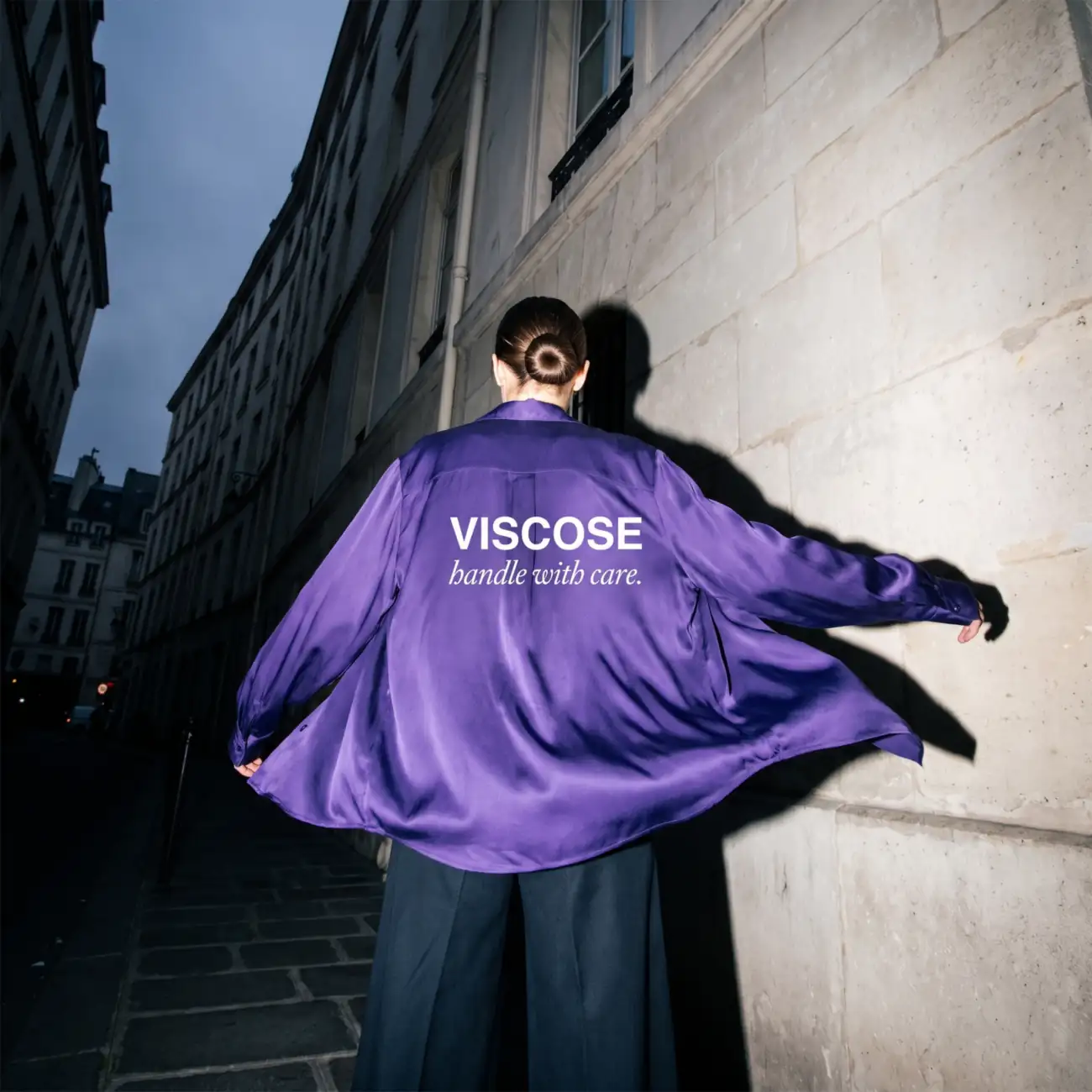
Viscose is an artificial cellulosic fiber: plant-based raw material (wood pulp), chemical process. Soft, breathable, with a remarkable drape, it is however fragile when wet and handles repeated washing poorly: a fabric for image outfits and short uses, not for endurance.
The essentials in 4 points:
- Neither natural nor synthetic: viscose is the third family, artificial, born from wood cellulose transformed chemically.
- Its strengths: the drape, the silky hand feel, breathability and deep colors: the fabric of image outfits.
- Its structural limit: fragile when wet, it handles frequent washing poorly: keep it away from garments washed several times a week.
- For its softness in a durable version: modal and lyocell, its modern heirs, resist far better.
Viscose is everywhere on the racks and nowhere in the certainties: natural for some, synthetic for others, soft but fragile, ecological but chemical. Before keeping it or ruling it out of an order, you need to know what it really is, and above all what it is worth in use.
Here is the honest fabric sheet, the one I would hand a hesitating client: what viscose is, what it does well, what it does badly, and its real place in a team or group order.
What is viscose? The definition in a nutshell
Viscose is neither a natural fiber nor a synthetic one: it is an artificial cellulosic fiber. Its composition starts from a natural material, cellulose extracted from wood pulp (beech, pine, eucalyptus, sometimes bamboo), but that cellulose is dissolved and transformed through a chemical process to become a yarn. Neither cotton nor polyester: a third family, halfway between.
This double nature explains everything else: viscose has the hand feel and breathability of a plant fiber, and the fragilities of a rebuilt material.
Where it comes from
Invented at the end of the 19th century, viscose (also known as "rayon") was first celebrated as "artificial silk": the drape and sheen of silk, for a fraction of the price. It is today one of the most widespread fibers of fluid garments: dresses, blouses, shirts, linings.
A word on ecology, since the question always comes: the raw material is renewable (wood), but the transformation process is chemically heavy. Viscose is therefore neither the scourge it is sometimes described as, nor the green fiber its plant origin suggests. More responsible, certified viscoses exist (the EcoVero type), and its modern heirs do even better, more on that below.
What viscose does well
- The drape. Its signature: a fluid, elegant flow that never stiffens. No fiber at this price drapes so well.
- The hand feel. Silky, soft, pleasant on the skin: viscose is worn close to the body without the "plastic" effect of an entry-level synthetic.
- Breathability. It absorbs moisture and breathes like a plant fiber: comfortable in a heated environment, pleasant in summer.
- Color. It takes dye magnificently: deep, luminous shades, a real asset for an image outfit.
What it does badly, with no detours
This is where the sales sheet usually stops, and where the honest one continues:
- It is fragile when wet. The fiber loses much of its strength in water: THE structural weakness of viscose, and it is not negotiable.
- It handles repeated washing poorly. Shrinking, warping, premature wear: a viscose garment is washed cold, on a delicate cycle, with no tumble dryer. At an intensive pace, it ages fast.
- It wrinkles. The flip side of the drape: viscose creases, and needs regular gentle ironing to stay neat.
- It ages according to its quality. A beautiful dense viscose lasts years when treated well; a thin entry-level viscose pills and warps within a season.
The verdict for a volume order
Let's translate for your order, whether you outfit a team year-round or a group for one event:
Where viscose belongs:
- Image outfits worn with care: the front-desk blouse, the fluid shirt of a reception team or an upscale boutique, worn a few hours and maintained delicately. The drape does exactly the job it is asked: elegance.
- Short events: host and hostess outfits for a trade show, a launch, an evening: a few wears, an elegant look, and the wash fragility never gets the time to become a problem.
- Outfit accessories: scarves and squares of a front-desk uniform, where viscose replaces silk on a controlled budget.
Where to rule it out:
- Any garment washed several times a week: service, counter, field. The fiber will not last the season, and that is the kind of saving that costs a full restock.
- Garments under physical strain: friction, bags, repeated wide movements: the mechanical resistance is not there.
- Any context where nobody will wash delicately: if the outfit ends up in a 40-degree machine with everything else, pick another fabric, you already know it.
The rule in one sentence: viscose is a fabric for show, not a fabric for endurance. Ask yourself how many times the garment will be washed per month: beyond a few delicate cycles, change fiber.
The modern heirs: modal and lyocell
The good news: viscose's fragilities have solutions from the same family. Modal, a new-generation viscose, is markedly more resistant, especially wet, and washes with far more peace of mind. Lyocell (often known under the Tencel brand) goes further: same cellulosic origins, a much cleaner quasi-closed-loop manufacturing process, and a resistance that allows regular use.
For a volume order that wants the hand feel and drape of cellulosic fibers WITHOUT the fragility, these are the two names to look for on the composition label. They cost more than classic viscose; they also last much longer.
What to remember
Viscose is a beautiful fabric in the wrong role as soon as it is treated like a basic. Keep the three-line sheet: an artificial fiber of plant origin, a remarkable drape and hand feel, a fragility to water that reserves it for image outfits and short uses. For endurance, the role goes to cotton, polyester and their blends; for its softness in a durable version, step up to modal or lyocell.
And as always in volume: judge on a sample, after a real wash in the actual conditions of your use (every page of the catalog displays the exact composition). A viscose is chosen with open eyes, and it is precisely your supplier's job to open them.
Frequently asked questions
Is viscose a natural fabric?
No, and it is not synthetic either: it is an artificial fiber. Its raw material is plant-based (wood cellulose), but it is transformed through a chemical process to become a yarn. This double nature explains its natural-fiber hand feel and its rebuilt-material fragilities.
Does viscose shrink in the wash?
Yes, it is a real risk: the fiber loses much of its strength when wet, and a wash that is too hot or a tumble dryer can shrink or warp it. The rule: cold wash on a delicate cycle, air drying, gentle ironing.
Viscose or cotton: which to choose?
Cotton for everything that is washed often and worn intensively: it is far more resistant. Viscose for the drape and elegance of an image outfit worn with care. For a volume order meant for regular use, cotton and its blends win almost every time.
Viscose or lyocell: what is the difference?
Same cellulosic family, two generations. Lyocell (often known under the Tencel brand) is made through a much cleaner quasi-closed-loop process, and it is markedly more resistant, especially wet. More expensive to buy, it lasts much longer: the option to consider as soon as the garment will be washed regularly.
Is viscose warm?
Not very: it is a breathable fabric that absorbs moisture, pleasant in a heated environment and in mild weather. For team warmth, look instead at fleece and dense knits; viscose remains the fabric of fluid, light outfits.
Your project, quoted within 24 hours.
Describe your garments, your decoration and your quantities: you receive a detailed quote, decoration included, within one business day.