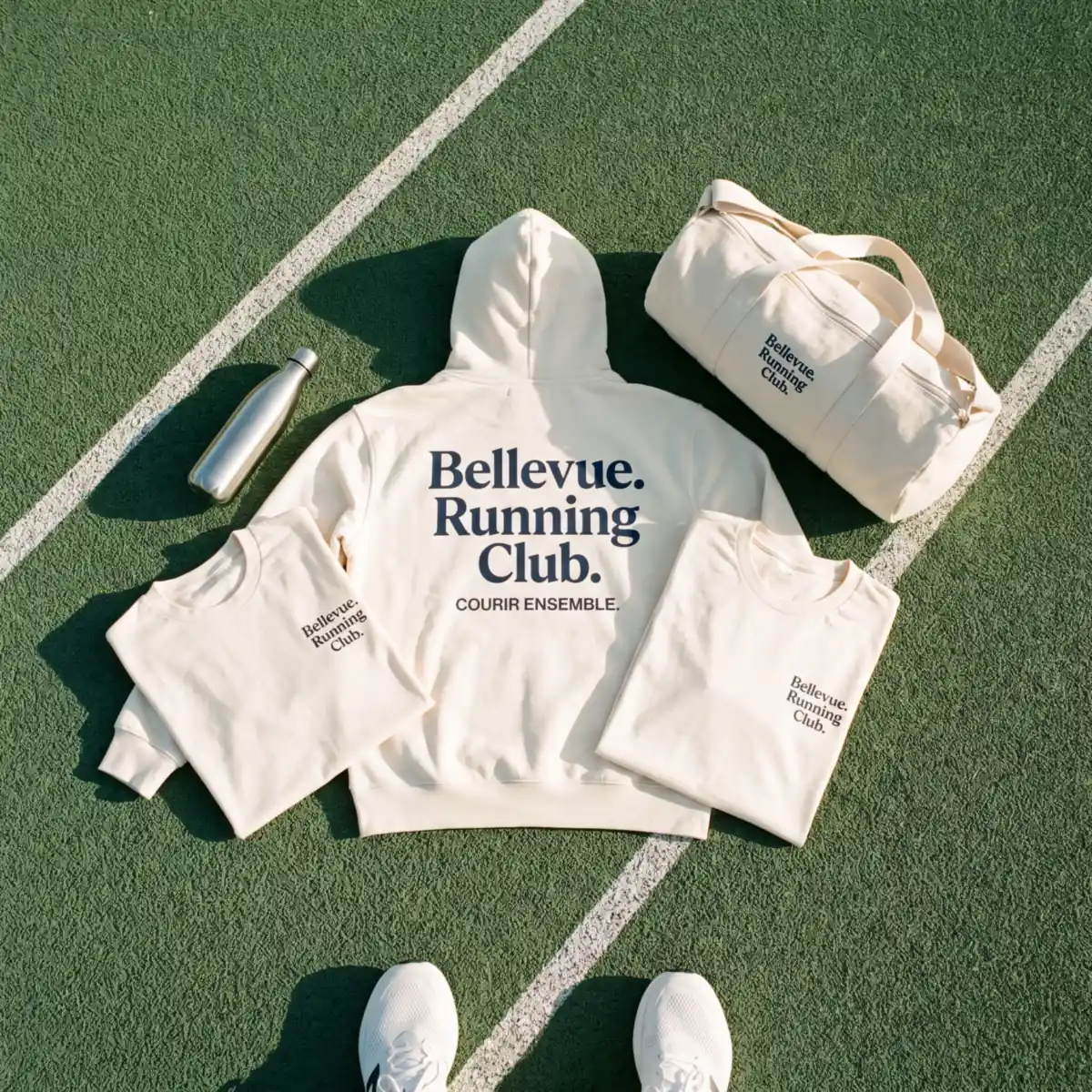
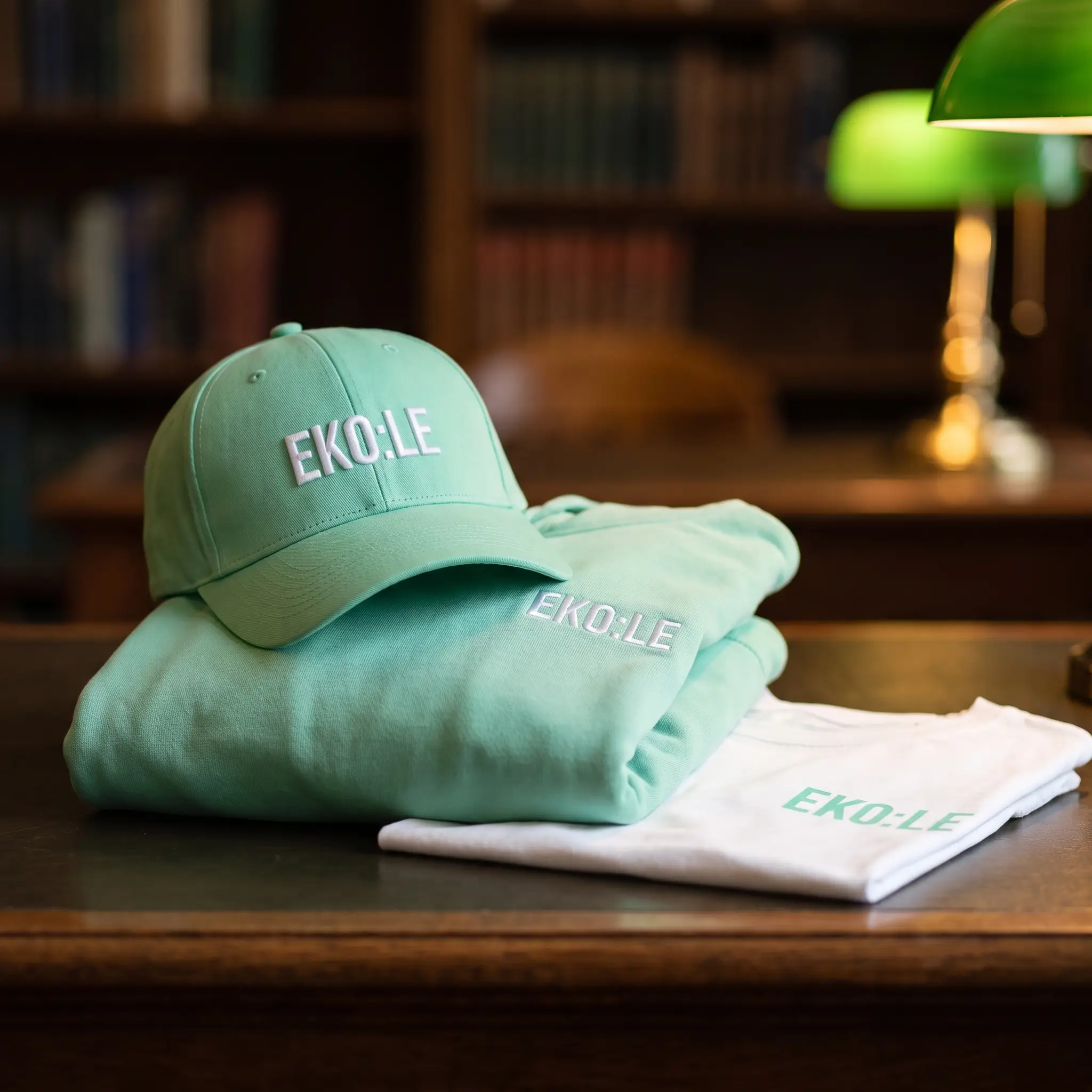
A company welcome pack, or welcome kit, gathers the custom apparel and useful items handed to a new employee: hoodie, t-shirt, water bottle. The simplest method: an internal Store where each employee picks their own size, with every piece produced on demand, no stock and no minimum.
The essentials in 5 points:
- Three great pieces people actually wear beat seven objects they forget: the right question is "would they use it without a logo on it?".
- A welcome pack should be designed like fashion apparel: well cut, great fabric, and a logo that travels because your employees wear it in the street.
- The internal Store removes the admin: each employee picks their own size, every piece is produced one at a time, zero stock in the HR closet.
- Hires throughout the year are handled with the same link: the fiftieth new joiner gets the exact same pack as the first.
- Fabric and cut speak culture: organic cotton, serious labels and dedicated fits turn an HR expense into proof of values.
On a new employee's first day, everything counts. The desk is ready, the team has been told, and there is that detail that is anything but a detail: the welcome pack waiting on the desk. A hoodie in their size, a water bottle, a welcome note. In ten seconds, the person understands they were expected.
A welcome pack, also called a welcome kit or onboarding kit, is the set of pieces handed to a new employee on arrival: custom apparel in the company's colors, plus a few useful everyday items. And then there is the other side of the story, which HR teams and office managers know all too well: quotes to compare, order minimums, a box of sizes stored in a closet, and the stress at every new arrival because only XXL is left. Putting together an onboarding pack for your employees should not be a project in itself.
This guide covers what makes a good company welcome pack (and what ends up in a drawer), the classic organizational traps, and the modern method that makes every arrival handle itself, from the first employee to the fiftieth. With one assumed stance: a welcome pack should be designed like a wardrobe, not like promotional merchandise.
What to put in a welcome pack (and what ends up in a drawer)
Let's start with the content, because that is where everything plays out. The rule fits in one question: would the employee use it if there were no logo on it?
What works, year after year:
- The company hoodie or sweatshirt, the centerpiece of the pack, logo embroidered on the chest. Well cut, in a beautiful fabric, it gets worn at the office, working from home, on weekends. It is the piece teams actually ask for.
- The t-shirt, the natural everyday companion, lighter and easy to wear daily.
- The water bottle or mug, useful from day one at the desk.
- The tote bag, which carries the rest of the pack and lives on long after.
What ends up in a drawer: gadget items, pens by the threes, notebooks nobody opens. A welcome pack is not a trade-show booth: three great pieces that get used beat seven objects that get forgotten.
The typical pack, at a glance:
| Piece | Its role in the pack |
|---|---|
| Hoodie | The centerpiece, the one people actually wear, at the office and around town |
| Crewneck sweatshirt | The hoodless alternative, dressier: the piece for meetings and team photos |
| T-shirt | The everyday companion, easy to wear daily |
| Water bottle or mug | The useful one from day one, visible on every desk |
| Tote bag | The pack's packaging, which keeps on living afterwards |
| The welcome note | The only thing money cannot buy, and the most remembered |
One principle guides the apparel choice: aim for a fashion-grade welcome pack. Well-cut pieces, in beautiful fabrics, that could pass for a ready-to-wear brand: the kind of hoodie an employee picks on a Saturday morning, not the one they wear out of politeness. To set the bar: the Stanley/Stella Cruiser Hoodie, thick organic cotton, the benchmark of premium hoodies. A hoodie that pills after the third wash sends exactly the wrong message to someone who just signed. A desirable piece, on the other hand, gets worn in the street, on the subway, at the gym: your logo travels beyond the office walls, worn by your best ambassadors, and every outing is free visibility for the brand. That is the difference between an HR expense and a brand investment.
Ethics and fit: what the pack says about your culture
A welcome pack speaks on the company's behalf, and it does so in the two
Your organization deserves its official store.
Create, buy and sell premium merch — the account is free, the store opens when you're ready.