Oeko-Tex label
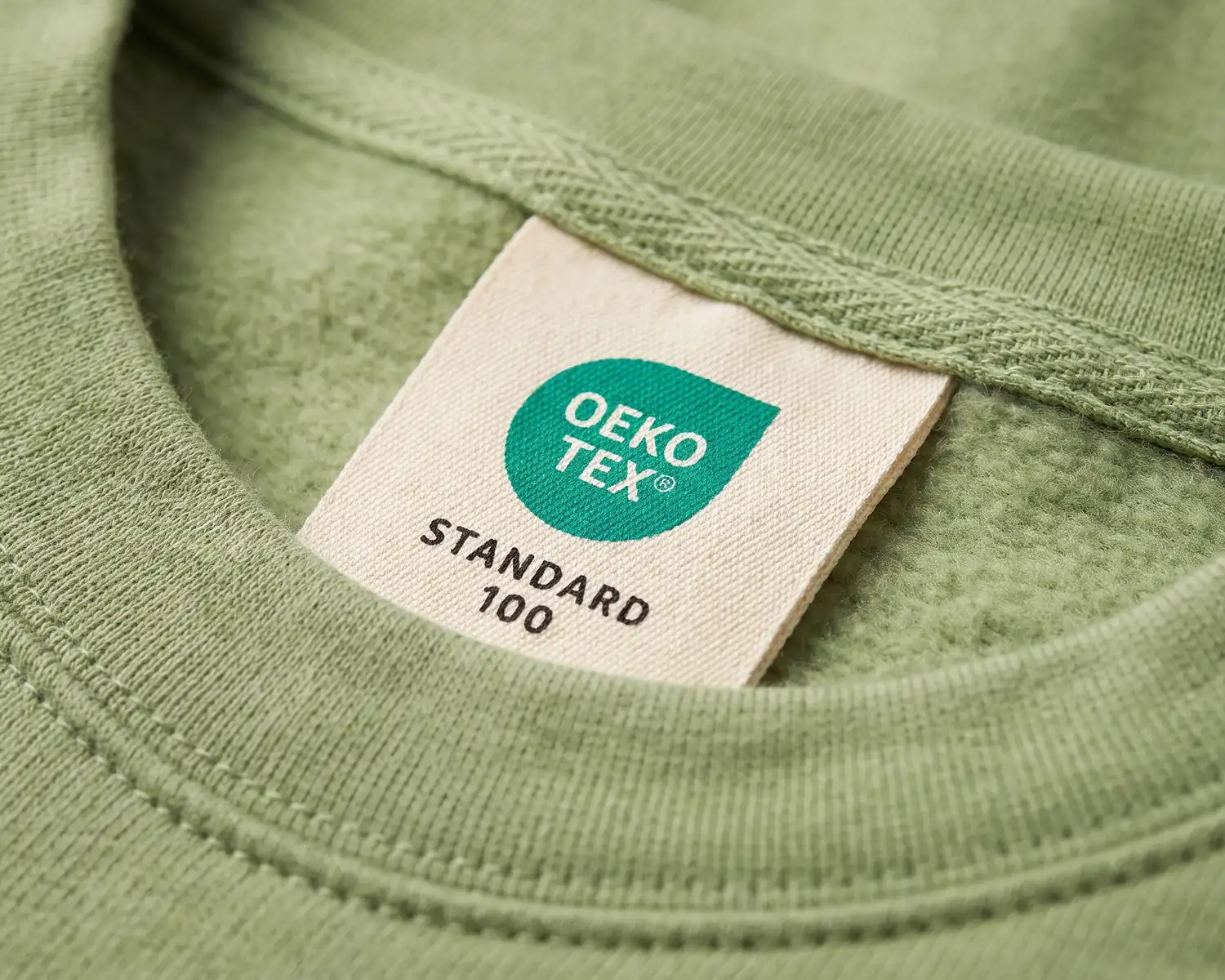
The Oeko-Tex Standard 100 label confirms that a finished garment has passed an independent lab test against chemical substances that are harmful to the skin. The guarantee covers the product's safety, not whether its fiber is organic or its production is environmentally friendly.
The Oeko-Tex label in practice
The test covers the whole finished garment, not just the main fabric: sewing thread, buttons, zippers and the label all get tested too. It's often known by its older nickname, "Confiance Textile" (Textile Trust), in France.
There are several classes depending on skin contact. For team merch worn directly against the skin (t-shirts, polos, underwear), class II is the one that matters: it sets the strictest thresholds. Furniture or decorative textiles don't need the same level.
The point never to mix up: Oeko-Tex says nothing about organic cotton, social conditions, or the environmental footprint of production. That's the territory of a different label, GOTS. A company ordering Oeko-Tex certified polos for its team is buying a safety guarantee, not a sustainability argument.
Every certificate can be verified in a minute with the number the supplier provides, on the official Oeko-Tex verification tool: certificates are valid one year and need renewing.
What to remember
- The test covers the whole finished garment, thread and trims included, never just the main fabric.
- Class II is the one that matters for merch worn directly against the skin.
- It guarantees neither organic sourcing nor environmental practices: that's GOTS's role, not Oeko-Tex's.
To go further: our full guide to what the label actually guarantees, and the definition of GOTS, the label that covers the ground Oeko-Tex doesn't.
Your project, quoted within 24 hours.
Describe your garments, your decoration and your quantities: you receive a detailed quote, decoration included, within one business day.