Pilling: why it happens and how to avoid it?
Pilling is the formation of small fiber balls on a fabric's surface, caused by friction: short fibers work out of the yarn, tangle together and cling to the knit. It depends first on the material and the quality of the yarn, far more than on how you wash it.
The essentials in 4 points:
- Friction pulls the shortest fibers out of the yarn; they tangle at the surface and form pills.
- The longer and more tightly spun the fibers, the less a fabric pills: it's a direct marker of quality.
- The real battle is won at purchase (material, knit density, fabric weight), not at the washing machine.
- A garment that already pills can be rescued: a fabric shaver restores a clean surface in minutes.
A pill never hurt anyone, but it kills an image: the team hoodie that turns into little grey balls after one winter won't be worn again, whatever logo it carries. The good news is that pilling is well understood, can be prevented at purchase, and can even be fixed once it's there.
Why a garment pills
It all starts with friction. A garment rubs constantly: against itself at the sleeves and underarms, against a backpack, a coat, a chair back, then against the rest of the laundry in the machine. That friction pulls the shortest fibers in the yarn up to the surface. Once out, they tangle together into small balls that stay attached to the fabric by a few fibers still caught in the knit.
That's why pilling shows up first in contact zones: inside the sleeves, along the sides, at the lower back. And it's also why it says so much about the yarn itself: a yarn made of long, parallel, tightly twisted fibers has almost nothing to let go. A budget yarn made of short, loosely held fibers starts fuzzing within weeks.
The materials that pill the most (and the least)
Not all materials are equal under friction.
- The most sensitive: wool and soft brushed knits (short fibers at the surface by nature), and more broadly any loose knit built on short-fiber yarn, whatever the material. Cotton-polyester blends have one particularity: synthetic fibers are so strong that they hold pills in place instead of letting them fall off; on a quality yarn the effect stays discreet, on a budget yarn it becomes very visible.
- The most resistant: fabrics with long fibers and a dense knit. Combed cotton (combing removes precisely the short fibers) pills very little. A well-knitted polyester also holds up very well: with that material, everything comes down to knit density.
- The brushed fleece case: brushing deliberately raises a soft nap at the surface, which makes it more exposed than loopback french terry, whose smooth inner face ages better.
Choosing a garment that won't pill
Pilling is won at purchase, and three criteria are enough.
The material and how it's processed. Look for combed cotton or long-staple mentions: that's the process that removes the short fibers responsible for pills from the yarn. On a garment made to be customized, it's one of the most reliable markers separating a premium reference from a bargain one.
Density. A dense fabric leaves fibers less room to escape. Fabric weight is a good indirect indicator: a thick, tight jersey resists pilling better than a thin, loose one, as it does everything else.
The sample. No spec sheet replaces a real test: order one piece, wash it, wear it for a week with a backpack. The friction zones will speak for themselves, before you commit a whole team to a sweatshirt that has to last seasons.
Removing pills from a garment that already has them
A pilling garment is not lost, and the fix takes minutes.
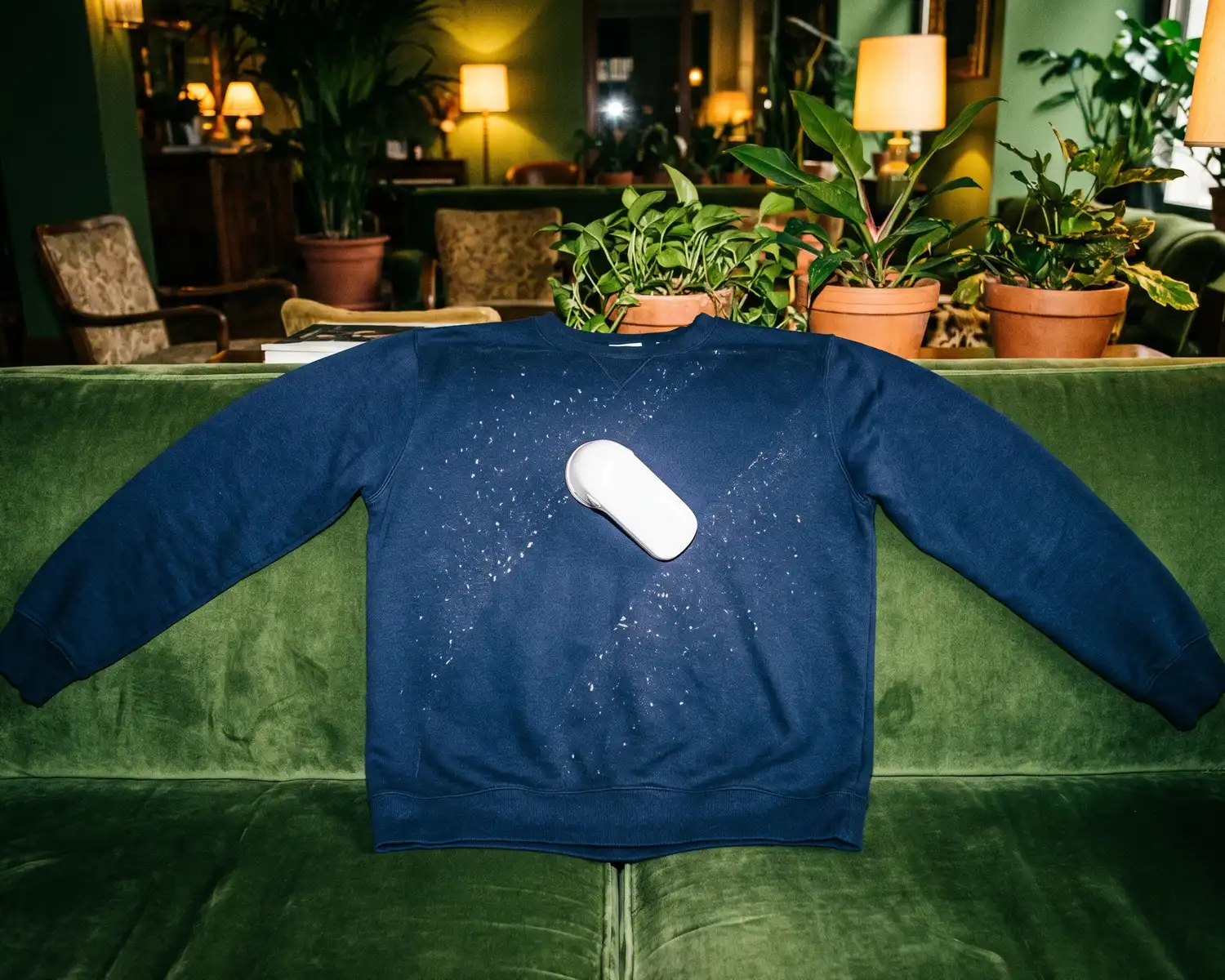
The most effective tool: a fabric shaver, a small device with a grid that cuts the fiber balls without attacking the knit. Run flat over stretched fabric, it restores a clean surface to a sweatshirt that looked ready to give away. A wool comb does the same job on delicate knits.
To slow their return: wash the garment inside out, on a gentle cycle, ideally in a laundry bag, and avoid the dryer, which multiplies hot friction. The care symbols on the label set the frame; inside-out washing and the bag do the rest. One thing treatment will never change, though: a yarn made of short fibers will keep producing pills. On a budget garment, the shaver buys you weeks, not years.
What to remember
Pilling is not a washing accident, it's a property of the yarn: short, loosely held fibers always end up at the surface, however carefully you wash. Choosing the material (combed cotton, dense knit, serious fabric weight) solves the problem before it exists, the sample verifies it, and the fabric shaver rescues what can be rescued. For merch worn all year, it's a selection criterion in its own right: a garment that stays clean is a garment people keep wearing.
Frequently asked questions
Why does a sweater pill?
Because of friction: the shortest fibers in the yarn work their way to the surface, tangle and form small balls attached to the knit. The more short, loosely spun fibers the yarn contains, the faster it happens, which makes pilling a direct indicator of yarn quality.
How do you remove pills from a sweatshirt?
With a fabric shaver: the device cuts the fiber balls without damaging the knit, on fabric laid flat and stretched. A wool comb also works on fragile knits. The result is immediate, but on a short-fiber yarn, pills will eventually come back.
Which materials pill the most?
Wool and fluffy knits, loose knits and short-fiber yarns, whatever the material. Conversely, long-staple combed cotton and dense fabrics resist very well: combing removes precisely the short fibers that form pills.
Is a garment that pills poor quality?
Fast, widespread pilling is a genuine signal of yarn quality, yes. But a few pills in friction zones (sleeves, sides) after months of wear remain normal, even on a fine garment: it's the extent and speed of the phenomenon that make the diagnosis, not its mere presence.
Your project, quoted within 24 hours.
Describe your garments, your decoration and your quantities: you receive a detailed quote, decoration included, within one business day.