Bluesign: definition, criteria and the new bluepass label
Bluesign is a Swiss system that helps textile factories produce with safer chemistry: fewer hazardous substances, fewer discharges into water and air, more safety for workers. It works with more than 850 manufacturers, and its label is now called bluepass.
On a technical jacket or a softshell, the bluesign logo reassures without always saying about what. Here is what the label really checks, what it leaves aside, and what its new name changes for anyone choosing the garments for their custom merch.
What is bluesign?
Bluesign is a textile production system run by the Swiss company Bluesign Technologies. It works directly in factories, on the chemicals they use and on their discharges, with more than 850 manufacturers supported according to the Écosystème Mode directory.
Its principle fits in one idea: act at the source. Rather than only testing the finished garment, bluesign checks the chemicals that go into manufacturing, so that risky substances never get there.
What does the bluesign label check?
The bluesign label checks how a textile is produced: the chemistry used, the resources consumed and working conditions in the factory. According to the official eco-label sheet published by the Government of Québec, it covers resource efficiency (energy, raw materials), consumer health, water pollution, air emissions, and worker health and safety.
On the social side, bluesign follows ILO principles: no forced labour or child labour, freedom of association, safe working conditions. Verification is done through an on-site assessment at the factory.
Bluesign or bluepass: what's the difference?
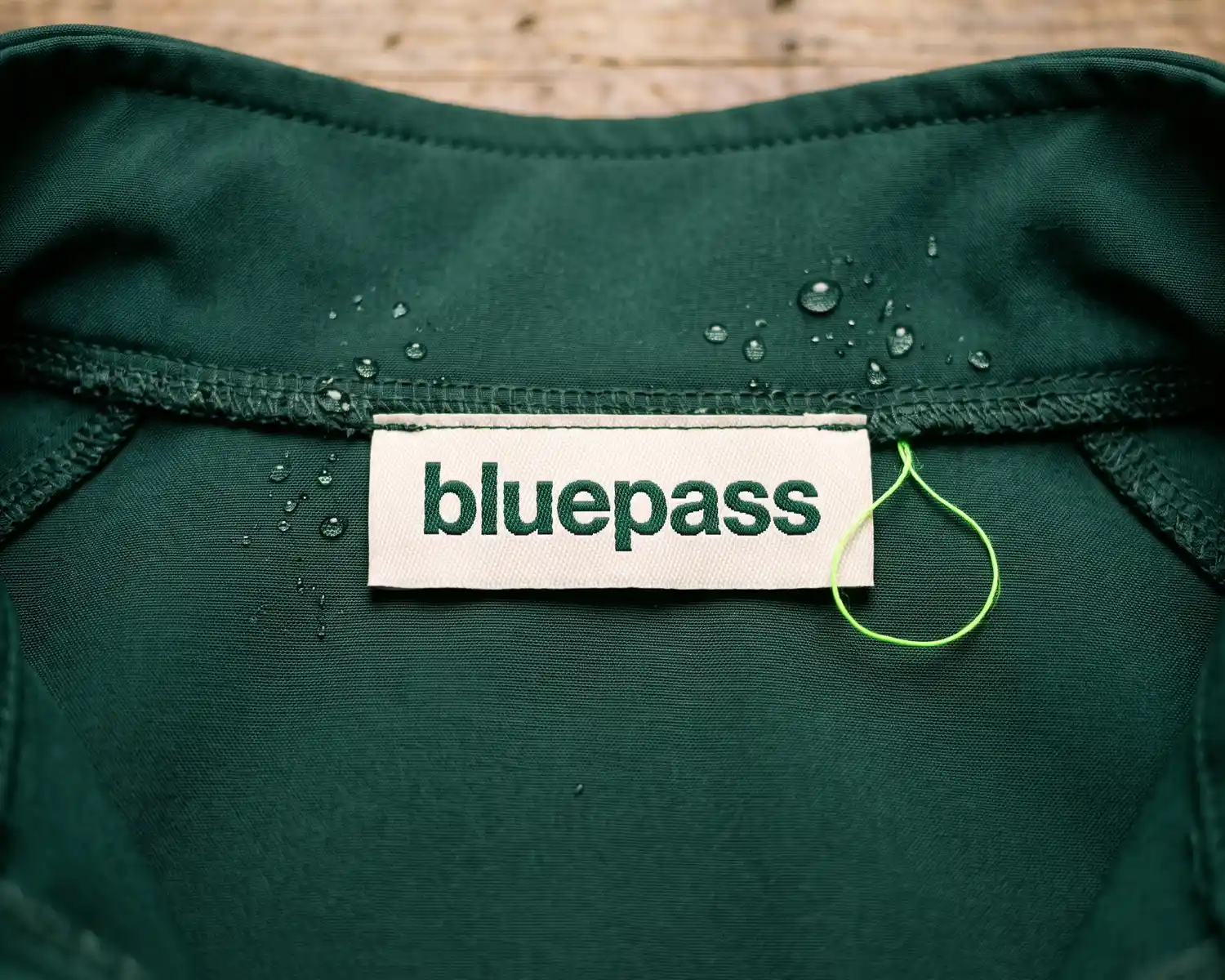
Bluepass is the new name of the bluesign label on products: it replaces the former bluesign APPROVED and bluesign PRODUCT marks. The criteria, the on-site assessment and existing certifications do not change; only the marking evolves.
The change is done: according to bluesign, consumer-facing labels were to switch to bluepass before 27 September 2026, to comply with a European directive on environmental claims. The new label comes in three versions: finished product (apparel, footwear), article (fabrics, accessories, trims) and chemical product.
How do you check a bluesign garment?
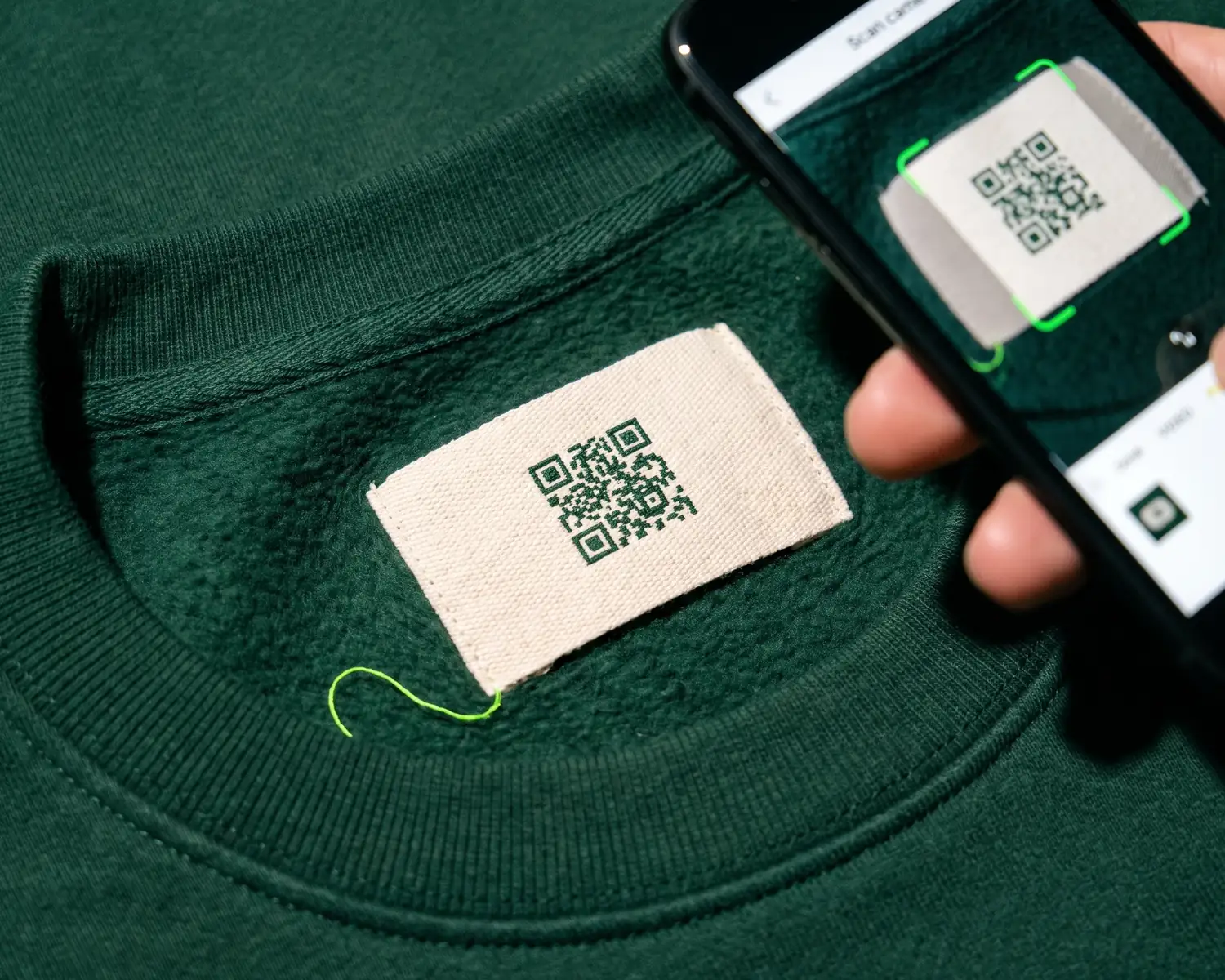
To check a bluesign garment, scan the QR code on the bluepass label: every label carries one, which leads to a verification page controlled by bluesign. It is the most useful part of the name change, as the old logo could not be checked as easily.
On a garment that still carries the old logo, ask the brand for its certification reference. Bluesign also publishes an online guide to certified materials and products.
Bluesign, Oeko-Tex or GOTS: what's the difference?
Bluesign, Oeko-Tex and GOTS look at three different moments in a garment's life. Bluesign acts in the factory, on manufacturing chemistry; the Oeko-Tex label tests the finished product for harmful substances; GOTS certifies an organic fibre and its whole manufacturing chain.
| Bluesign | Oeko-Tex Standard 100 | GOTS | |
|---|---|---|---|
| Where it acts | in the factory, on the chemistry used | on the finished garment | from fibre to garment |
| Organic fibre | not covered | not covered | yes |
| Cotton farming | not assessed | not assessed | yes, organic |
Bluesign therefore says nothing about cotton farming: it does not assess it. For that ground, see Better Cotton or GOTS instead.
Where do you find the bluesign label?
The bluesign label shows up mostly on outdoor gear: technical jackets, softshells, mountain and camping textiles. These garments go through many chemical treatments (waterproofing, dyes, membranes), which is where controlling chemistry matters most.
Bluesign in the TKNP catalogue?
None of the TKNP product pages sampled for this article shows bluesign: on merch textiles it remains rare, and it is up to the garment's brand to display it. If your project is about a jacket, our softshell sheet helps you choose the material, and the brand can tell you whether a model is certified.
For a responsible claim on a t-shirt or a sweatshirt, look at Oeko-Tex and GOTS instead, two labels that the Creator 2.0 t-shirt page shows, for example.
Key takeaways
- Bluesign checks the chemistry and discharges of textile factories, as well as worker safety; it does not assess the fibre or cotton farming.
- Its label is now called bluepass, with a QR code to verify the certification.
- It is found mostly on outdoor gear; for a merch t-shirt or sweatshirt, look at Oeko-Tex and GOTS instead.
Frequently asked questions
Is bluesign an organic label?
No, bluesign is not an organic label: it says nothing about how the fibre is grown. It checks the chemistry used during manufacturing and its discharges.
Who is behind bluesign?
Bluesign is run by Bluesign Technologies, a Swiss company. It sets the label's criteria and assesses factories on site.
Is the bluesign logo still valid?
Yes, according to bluesign, the former APPROVED and PRODUCT labels remain valid where they are already in use. New consumer-facing markings, however, use bluepass.
Your project, quoted within 24 hours.
Describe your garments, your decoration and your quantities: you receive a detailed quote, decoration included, within one business day.