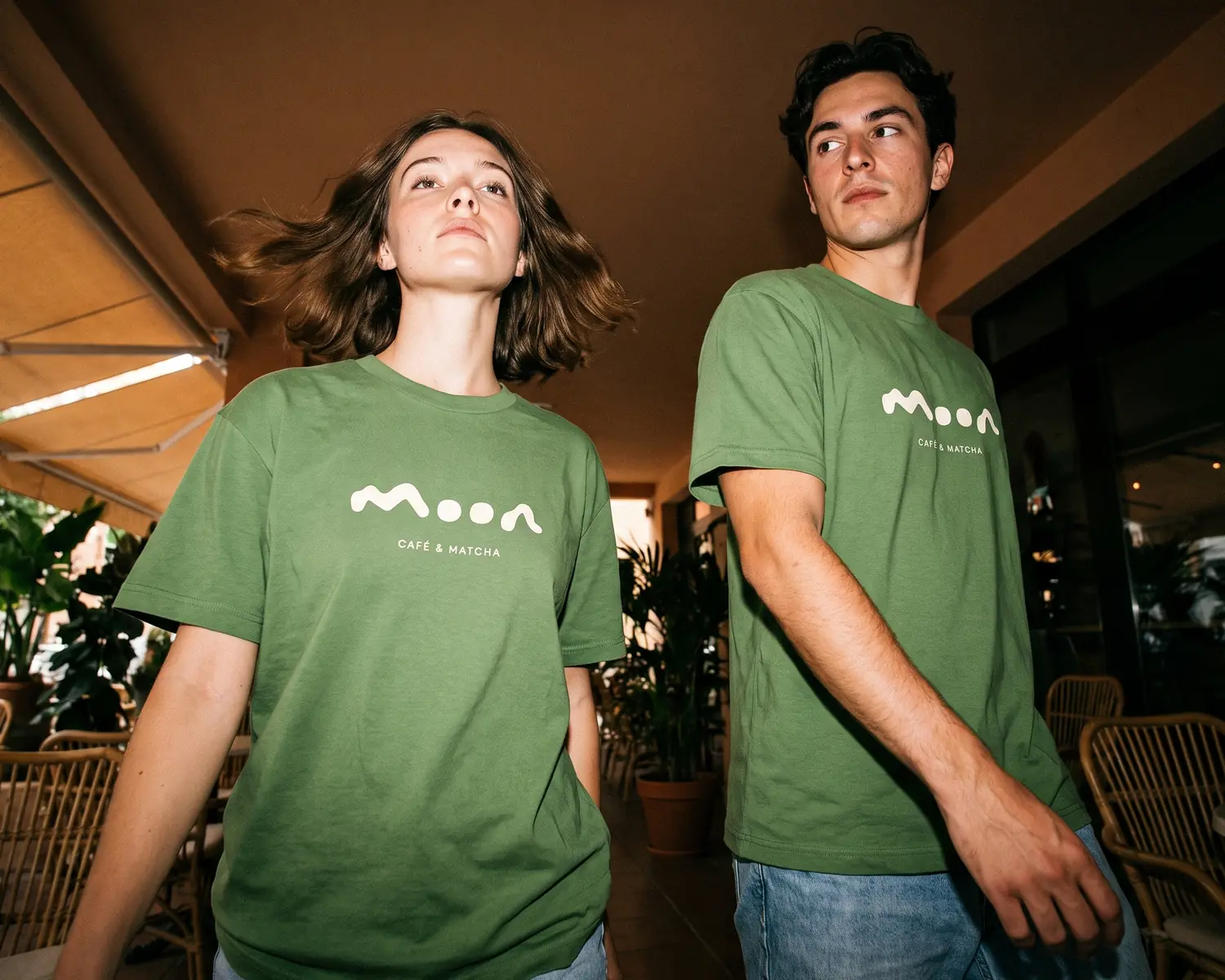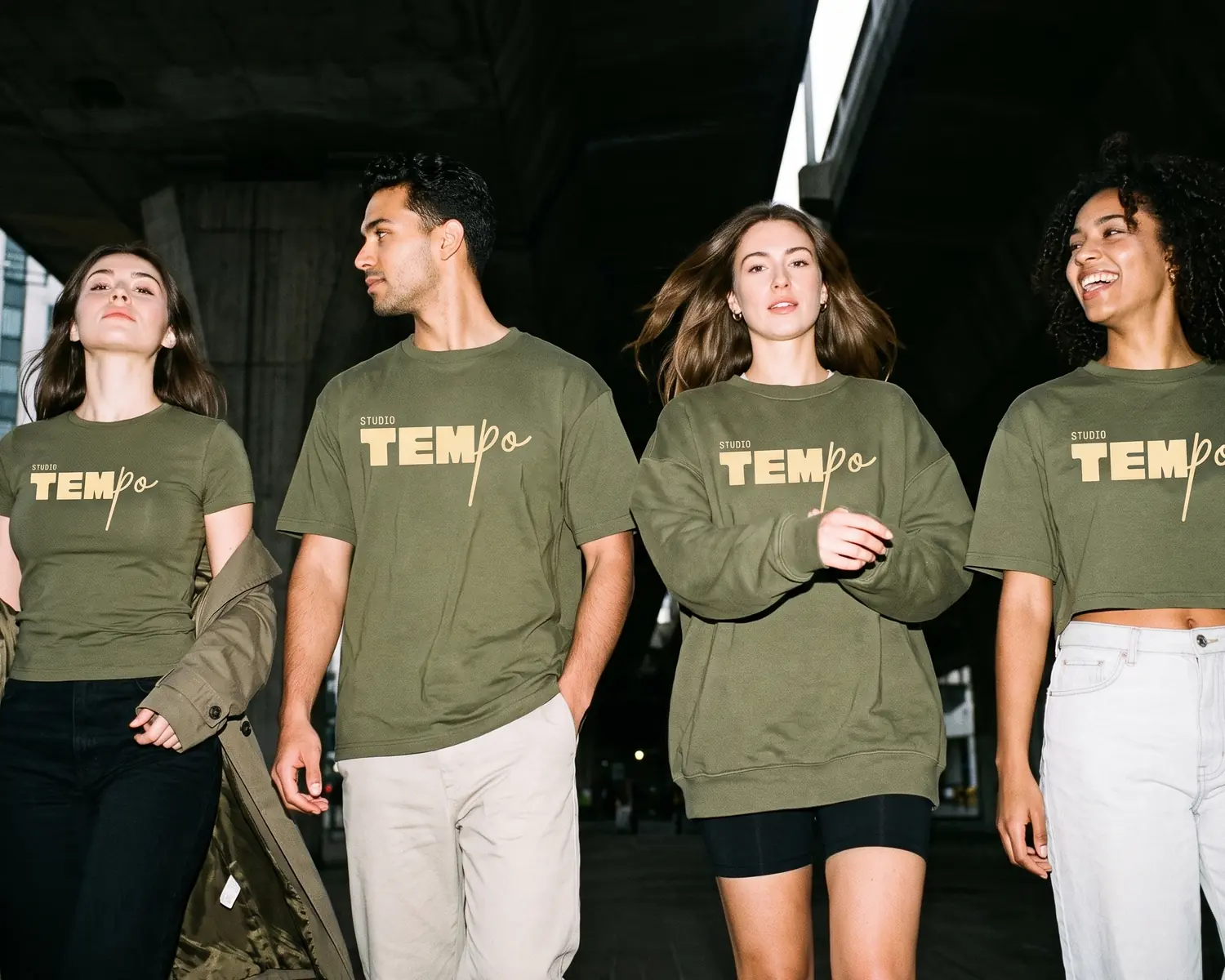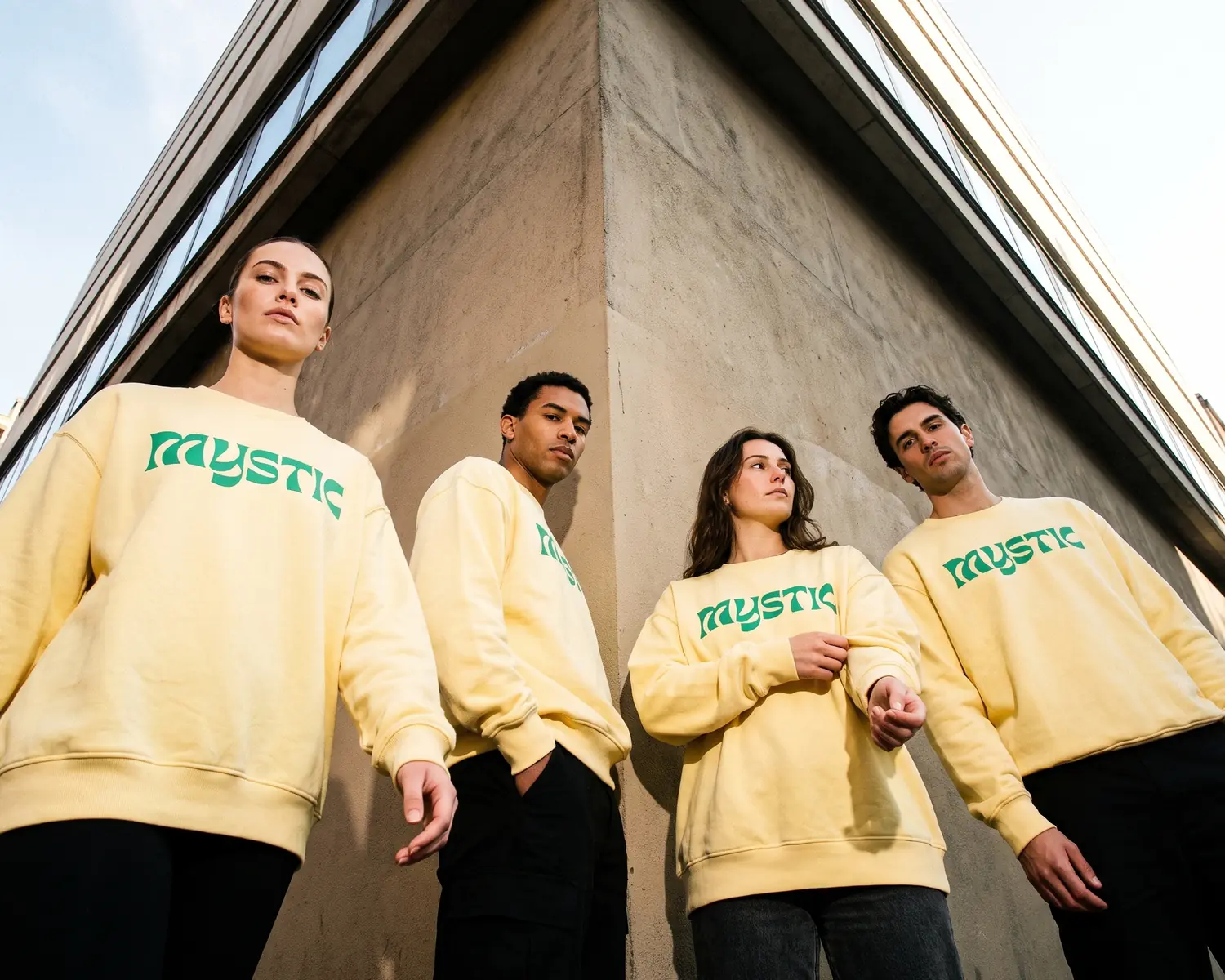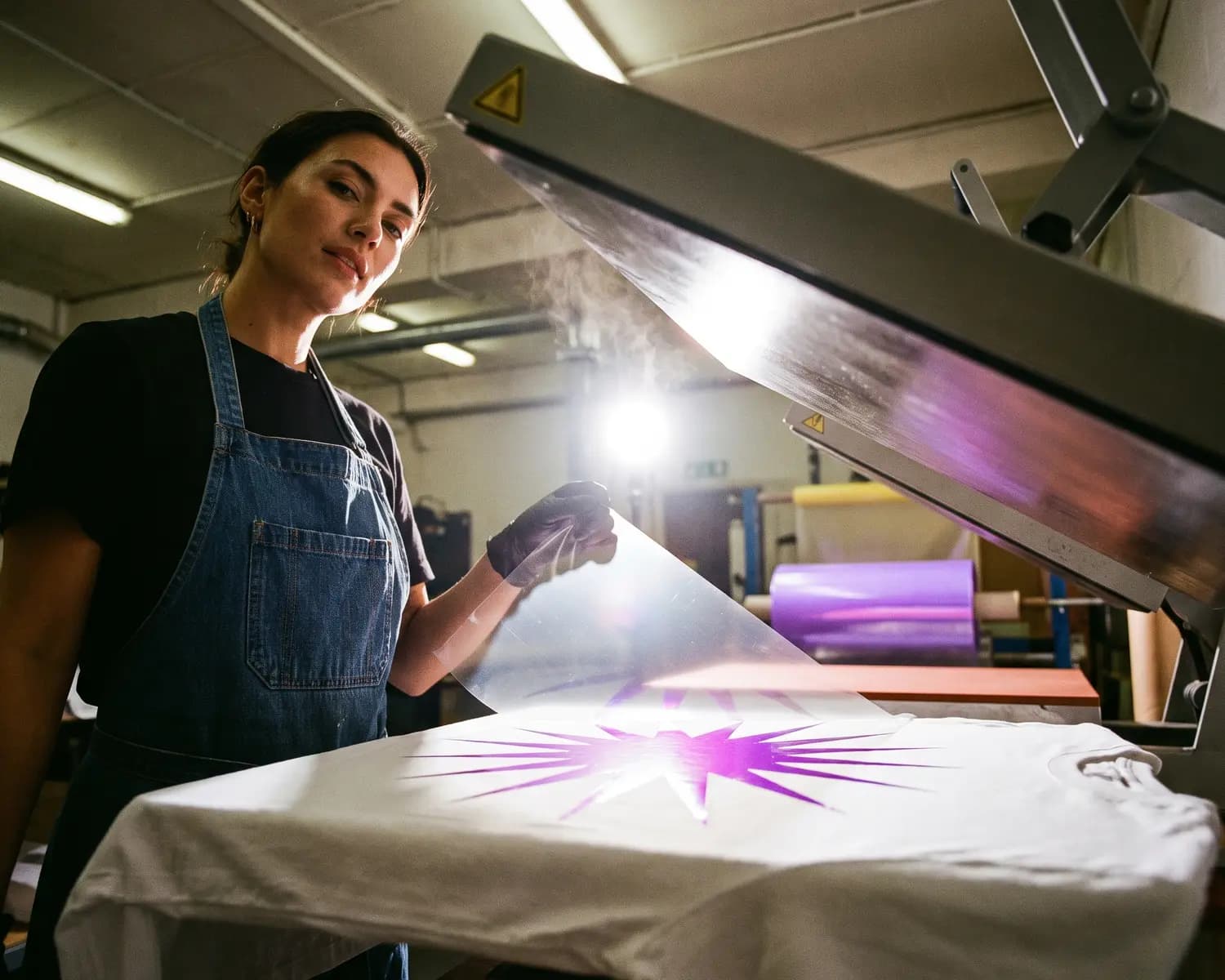
DTF printing (Direct to Film) prints your design onto a film, then heat-presses it onto the fabric: every color at no extra cost, almost every fabric, from a single piece. For a project owner, it is the mid-run technique, between single-piece DTG and large-volume screen printing.
The essentials in 4 points:
- DTF prints the design in full color onto a transfer film: photos, gradients and complex logos come through with no per-color surcharge.
- It applies to cotton, polyester and blends: one single technique can cover an entire uniform program with varied fabrics.
- Its playing field: orders of roughly 10 to 200 pieces, where screen printing has not yet paid off its screens.
- Well pressed, it withstands the repeated washing of team apparel; on very large, intensively worn runs, screen printing keeps the edge.
Open three custom-textile quotes received this year: chances are at least one offers "DTF transfer" without anyone explaining what it is, or why it appears on your quote line rather than another technique. Explanations abound online, but almost all of them address the people who own the machine.
This guide takes the other chair: the person who places the order. What DTF really delivers on team apparel, when it is the right choice for your quantity, and the questions to ask before approving a quote that offers it.
DTF in plain terms, project-owner edition
DTF stands for Direct to Film: the design is printed digitally, in full color, onto a special transfer film. That film is then coated with an adhesive powder, heated, and heat-pressed onto the garment. The design peels off the film and stays bonded to the fabric.
What to remember on the ordering side fits in one sentence: it is a PRINT (so every color, gradients, photos), delivered by TRANSFER (so applicable to almost every fabric, piece by piece). DTF thus combines two qualities that used to be incompatible: the visual richness of digital printing and the application flexibility of transfers.
Why it shows up on more and more quotes
Three reasons explain why DTF became a workshop standard within a few years, and all three serve the project owner:
The design no longer costs extra. In screen printing, every color adds a screen, hence a cost. In DTF, a three-color logo, a gradient or a photo cost the same as a flat shape: the complexity of your brand guidelines is no longer a quote line.
The fabric is no longer an obstacle. Cotton, polyester, blends, softshell: DTF applies to nearly every fabric in a catalog. For a uniform program mixing cotton t-shirts, piqué polos and technical jackets, one technique can cover everything, with a consistent finish.
Quantity is free. No screens to prepare, no heavy fixed fees: DTF is viable from a few pieces, and restocking 5 garments mid-year is no problem at all. For a team with turnover, that is a concrete argument.
Its real playing field: the mid-run
Every technique has a zone where it is unbeatable, and DTF's shows in the quantities.
Below it, on single pieces, DTG (direct-to-garment printing) and flex share the ground. Above it, on large identical runs, screen printing pays off its screens and its per-piece cost becomes very hard to beat, with an in-the-fiber finish that remains the benchmark for high volumes.
Between the two lives the mid-run: the order of roughly 10 to 200 pieces, very common in team programs and one-off event orders alike. That is exactly where DTF shines: flexible enough to impose no minimum, productive enough to hold a serious price on 150 sweatshirts, and indifferent to the fact that your order mixes three fabrics and four logo sizes.
Both purchasing rhythms benefit: the team outfitted year-round (initial program then restocks as hiring goes) and the one-event group (the 150 t-shirts of a trade show, ordered once).
Day-to-day durability: what DTF withstands
It is the question every manager asks, and it deserves an honest answer.
A well-pressed DTF transfer forms a thin, flexible layer that bonds strongly to the fabric. In the real use of team apparel (regular wear, repeated washing), it holds up very well, clearly better than classic flex and its cracking risks. Care instructions remain those of any marked textile: wash at 30 degrees, inside out, no tumble dryer: instructions worth distributing with the program.
Its honest limits, now. The design remains a layer ON the fabric: on a very large format, it is more noticeable to the wearer than screen printing, whose ink penetrates the fiber. And on very large runs worn and washed intensively, screen printing keeps the longevity edge that made its reputation. That is not a DTF flaw: it is the natural border between two techniques that good workshops know and respect.
DTF or screen printing: the match on your quote
The full comparison of techniques lives in our large-run marking guide; here is the express version, read from your quote:
| Your order | The technique expected on the quote |
|---|---|
| 10 to 50 pieces, color logo | DTF: no fixed fees, every color |
| 50 to 200 pieces, complex design or varied fabrics | DTF, or screen printing if the design is simple and the pieces identical |
| 200 pieces and up, simple design, identical pieces | Screen printing: screens pay off, per-piece cost drops |
| Regular restocks through the year | DTF: the single piece stays at the same price |
| Photo or gradient, whatever the quantity | DTF (halftone screen printing remains specialist work) |
A quote offering DTF on an order of 80 multicolor sweatshirts is therefore perfectly coherent. A quote offering DTF on 500 identical t-shirts with a one-color logo deserves a question: screen printing would probably be better placed, in price and in longevity.
The three questions to ask before signing
- "Why DTF rather than another technique on MY order?" A good workshop answers with your quantity, your design and your fabrics, not with its equipment.
- "What wash durability do you guarantee, and with what care instructions?" The answer must be concrete: temperature, drying, and what the guarantee covers.
- "Does the per-piece price stay the same on restocks?" That is DTF's strength: if the answer is yes, your year's hiring is covered without renegotiation.
What to remember before approving your quote
DTF is the technique that made mid-runs simple: every color, every fabric, no quantity constraint, serious durability in team use. If your quote offers it on an order of 10 to 200 pieces with a rich design, that is a good sign. If it offers it where screen printing should prevail, ask the question: that is exactly what our three questions are for, and a serious workshop answers them openly.
Frequently asked questions
What is DTF printing on a textile?
DTF (Direct to Film) prints the design in full color onto a transfer film, coated with an adhesive powder then heat-pressed onto the garment. The result: a rich print, applicable to almost every fabric, from a single piece.
Does DTF withstand washing on apparel worn every week?
Yes, well pressed, it withstands the repeated washing of team use, with the classic instructions: 30 degrees, inside out, no tumble dryer. On very large, intensively used runs, screen printing remains the longevity benchmark.
Does DTF work on polyester and technical jackets?
Yes, it is one of its strengths: cotton, polyester, blends and most technical fabrics accept it. A single order mixing t-shirts, polos and softshells can be marked entirely in DTF, with a consistent finish.
From how many pieces does DTF make sense?
From the very first: it has no fixed fees. Its favorite ground remains the order of roughly 10 to 200 pieces; beyond that, on identical pieces with a simple design, ask for a screen printing quote alongside.
DTF or DTG: what is the difference for the project owner?
DTG prints directly on the garment, ideal for single pieces on light cotton. DTF prints on a film that is then pressed, which makes it applicable to far more fabrics and more productive in runs. For a team order, DTF is most often the one proposed.
Your project, quoted within 24 hours.
Describe your garments, your decoration and your quantities: you receive a detailed quote, decoration included, within one business day.