Your city can become a brand people wear: an official online souvenir shop, opened in minutes, with no stock to pre-finance and no starting budget. You publish a short collection (sweatshirt, t-shirt, cap, tote bag), set your prices, and every sale becomes revenue for your area.
The essentials in 4 points:
- The souvenir has become a fashion garment: people wear their city's sweatshirt like a brand's, and the United States has turned it into a whole section of the wardrobe.
- Print on demand removes the three blockers of a public organization: stock to pre-finance, unsold inventory and the IT project.
- You set the selling price, the difference comes back to you on every sale: the shop becomes a revenue line, open all year round.
- A short, quality capsule collection (4 to 6 references) beats a bazaar of souvenirs: restraint is what makes it premium.
Amsterdam understood it before everyone else: three red and white letters, "I amsterdam", and the city's name became a logo that millions of visitors wear, photograph and bring home. Nantes did it its own way with Le Voyage a Nantes, the city's cultural trail, and its official bazaar. Places, cities, whole regions have stopped selling souvenirs and started building a real city brand.
What about your city? Your museum, your seaside resort, your tourist office? It has an identity, a name that stirs its residents and makes its visitors smile. What it lacks is not the raw material: it is the online souvenir shop. And that is precisely the link that just became simple.
The souvenir has switched sides: it has become fashion
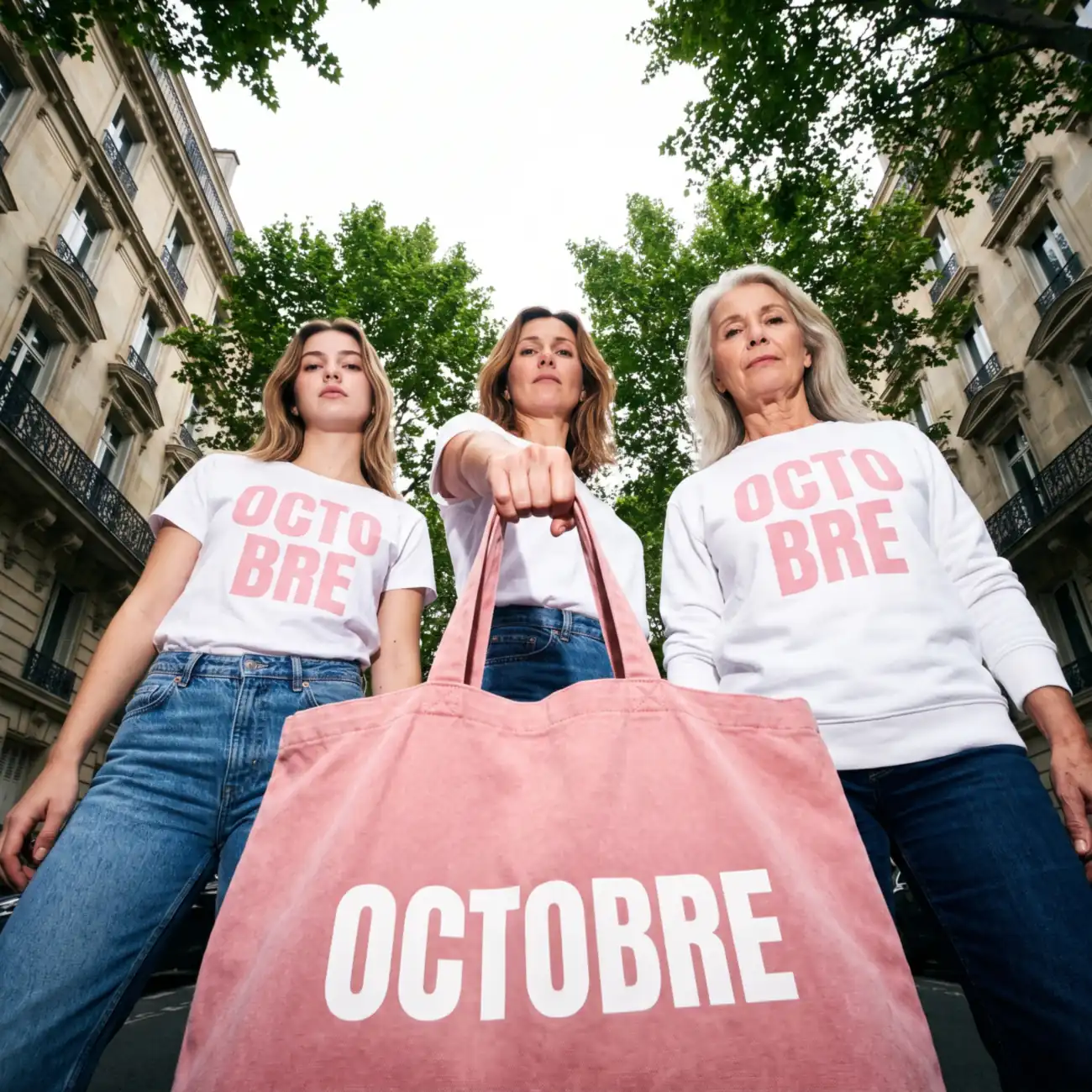
Look at what visitors bring home today. Fewer and fewer figurines and magnets made on the other side of the world. More and more garments people actually wear: a neighborhood's sweatshirt, a cult cafe's t-shirt, a festival's cap. The museum tote bag has become a fully assumed fashion accessory, to the point that some get traded like collectors' items.
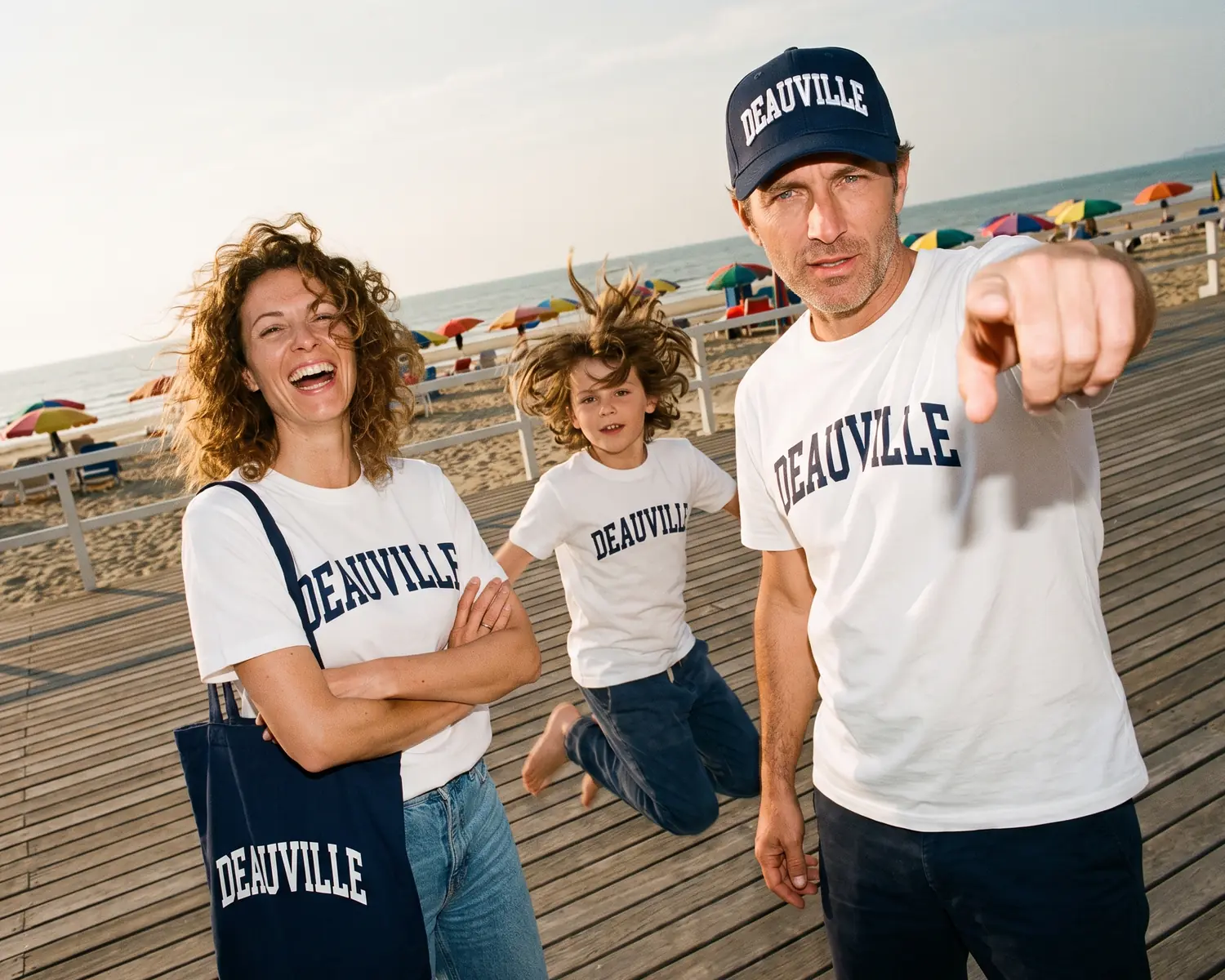
The logic has flipped: a good souvenir is no longer an object you put on a shelf, it is a garment you want to wear in town, months after the trip. And every time it is worn, it does something no magnet ever will: it shows your city's name to everyone who crosses its owner's path. A resident wearing their city's hoodie is local pride. A visitor wearing it 500 miles away is free advertising, for years.
That is exactly what fashion brands do with their logo. There is no reason it should be reserved for brands: a city has more history, more attachment and more natural ambassadors than any young streetwear label.
In the United States, it is already a cultural given. The "I love NY" designed by Milton Glaser in 1977 became one of the most worn logos in the world, a city's cap is worn on the other side of the country by people who have never set foot there, and every small college town, every national park, every neighborhood has its line of sweatshirts and t-shirts that residents wear daily. Over there, place merch is not a souvenir aisle: it is a whole section of the wardrobe. Other countries have the cities, the names and the stories to do the same; all that is missing is the shops.
A city brand starts with three questions
City branding, the discipline that turns an area into a brand, can seem reserved for big cities with agencies and budgets. In reality, to launch your city's collection, three questions are enough:
What makes you recognizable? A name, a nickname, a coat of arms, a date, a silhouette (the bridge, the lighthouse, the belfry). Place merch works when it condenses the identity into one simple sign. "Est. 1154" on a sweatshirt chest tells more than ten lines of text.
Who will wear it? Your visitors, obviously. But never underestimate your residents: they are the first customers of every successful city collection. Local pride is a stronger purchase driver than the holiday souvenir.
Where does the shop live? That is the question that used to block everyone. A physical shop requires premises, staff, stock. An online shop used to require an IT project. Both answers have just changed.
The real blocker was never the desire: it is stock and budget
Let's be frank about the obstacle. If online shops for cities and places are so rare, it is not for lack of ideas. It is because the classic model is a trap for a public or semi-public organization:
- Stock to pre-finance. Ordering 300 sweatshirts hoping to sell them means tying up thousands of euros of public money on a bet. And a box of unsold size S at the back of a storeroom is waste nobody wants to defend before the city council.
- Logistics. Taking payments, shipping, handling returns: no tourist office was created for that.
- The IT project. An online shop to build, maintain and secure: months of delays and a budget that cools everyone down.
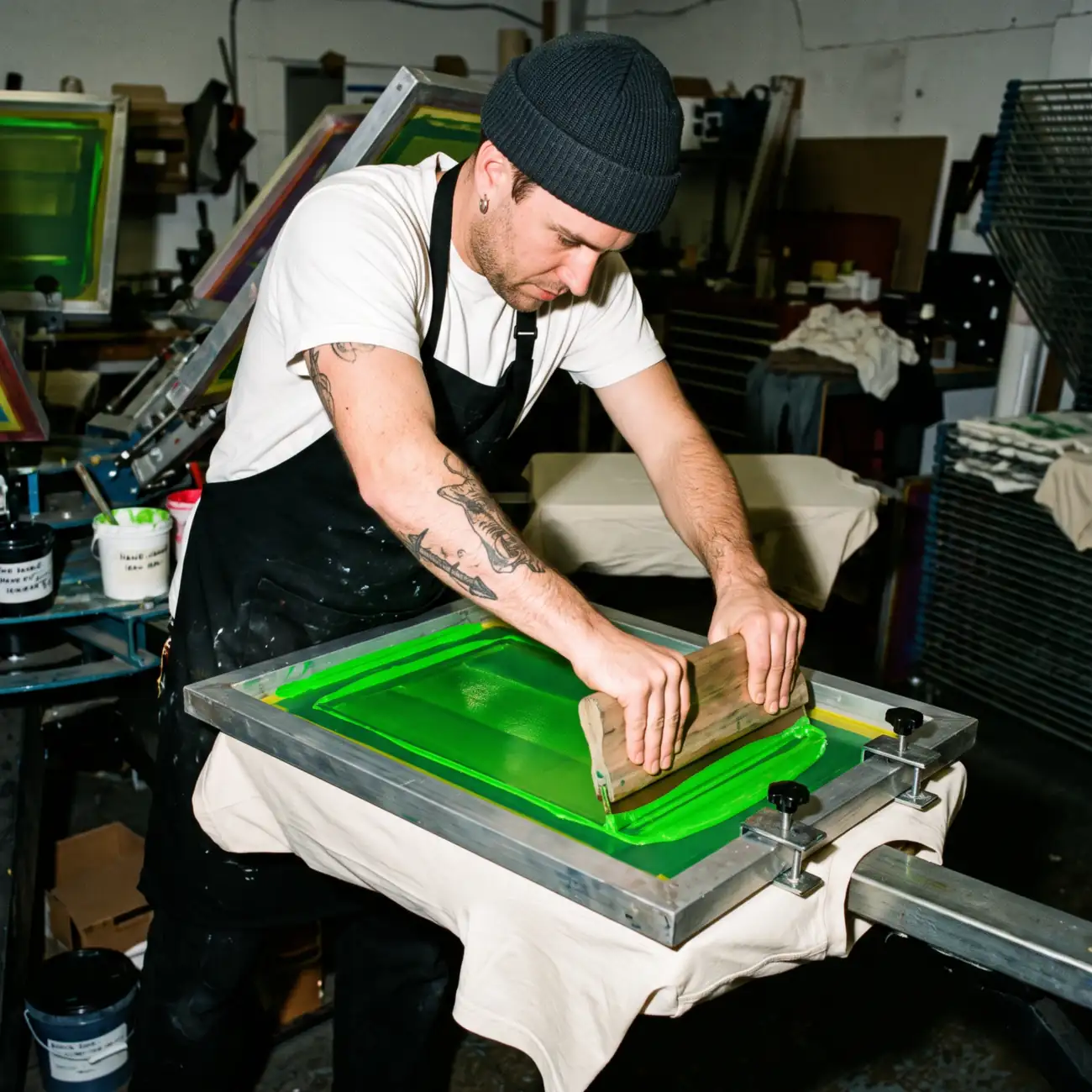
That is the triple lock the Store breaks. The principle: you create the official online shop of your city or place, you publish your customized collection on it, and production only starts when a customer orders: that is print on demand. No stock to pre-finance, production from a single order, and opening costs nothing. The garments are produced in the exact quantity ordered and shipped directly: your team has no boxes and no parcels to handle.
For a local authority or a tourist destination, the equation changes everything: the financial risk disappears, and with it the argument that used to bury the project in meetings.
A revenue stream your city is leaving dormant
The second blind spot of the subject: a shop for your area is not a communication expense, it is revenue.
The way it works is simple: you set the selling price of each garment, and the difference between that price and the production cost comes back to you on every sale. As an order of magnitude, a quality custom sweatshirt costs between 25 and 50 euros to produce depending on the range; sold at the price of a brand sweatshirt, every sale leaves a real margin to your organization. Multiply by a tourist season, add the residents who buy out of local pride, and the shop becomes a revenue line that funds the rest: events, signage, the next project.
Museums understood this long ago: the shop is a pillar of their business model. The difference is that they had to build their physical shops over decades. A city's online shop starts from zero and takes its first sale the week it launches.
And unlike a physical shop, it never closes: the July visitor can order in November, from home, the sweatshirt they hesitated over on site.
What to sell: the capsule collection, not the bazaar
The classic souvenir mistake: trying to cover everything. Forty references is an inventory, not a collection. The city brands that work do the opposite: a short, coherent capsule collection, renewed over time.
The base that works:
- The sweatshirt and the hoodie: the heart of the collection, the garment people keep for years. Aim for quality that gets truly worn (300 gsm and up, organic cotton at the top of the range): a city sweatshirt must be able to be worn in town, that is its whole point.
- The t-shirt: the accessible entry point, the one visitors pick up without thinking.
- The embroidered cap: the most worn accessory outdoors, embroidery is a must for the premium look.
- The tote bag: the companion of markets and museums, the one that circulates most.
On the design side, the brand rule applies to the territory: restraint makes it premium. A well-typeset name, a redrawn coat of arms, tone-on-tone embroidery on a sober color will always get more wear than a visual overloaded with monuments. Two prints maximum per garment: beyond that, the design scatters and the cost climbs.
One last field tip: keep one accessible garment around 20 euros in the collection, and stand by the rest at a higher range. The entry-level souvenir that ends up at the back of a wardrobe serves neither your image nor your revenue: a few euros more buys a garment that lasts and a city name that circulates longer.
Launching your city's shop: the real journey
Concretely, here is the path from the first meeting to the first sale:
- Set the identity. Gather what already exists: logo, coat of arms, typography, the city's nickname, dates, symbols of local heritage. Choose ONE strong sign rather than stacking everything.
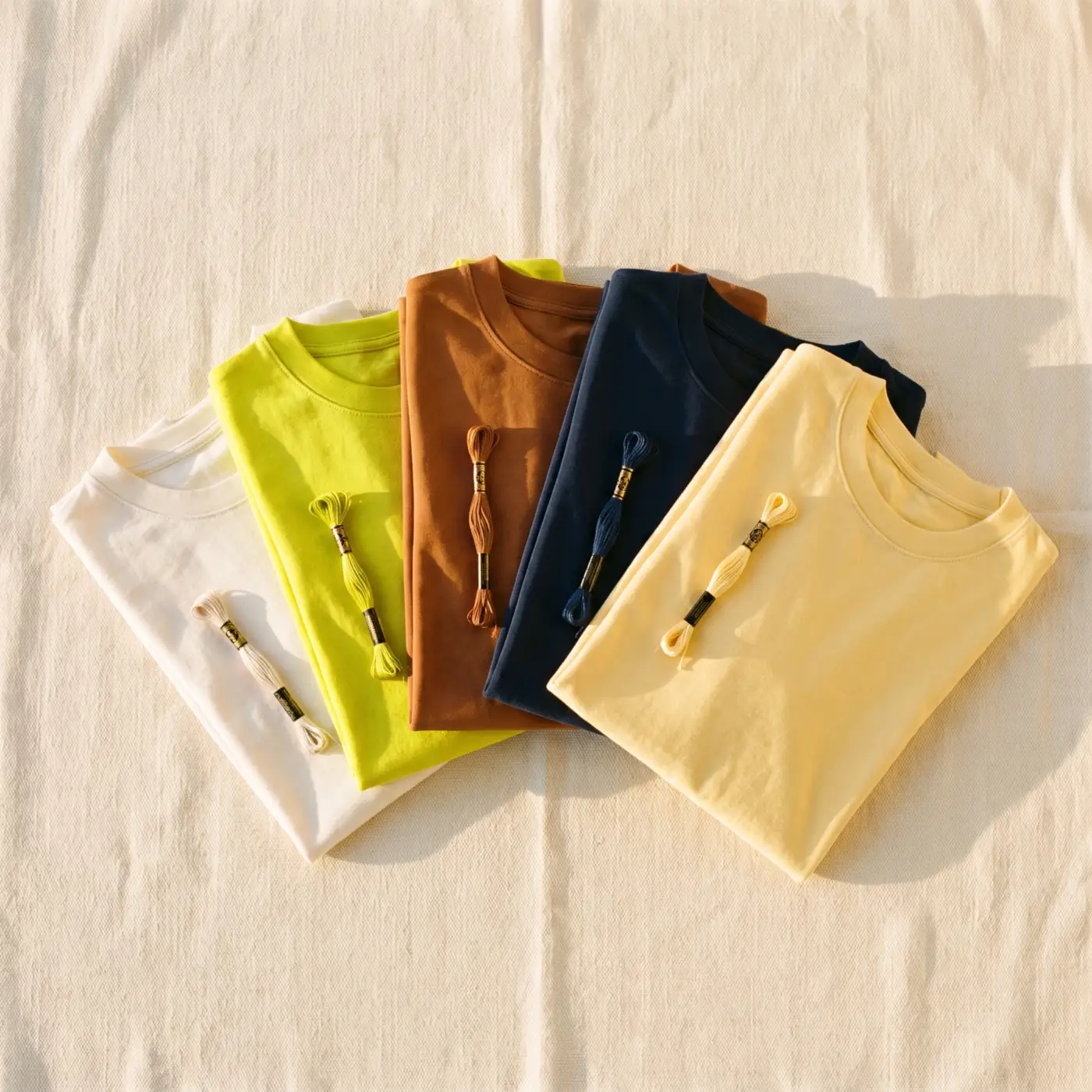
- Build the collection. Four to six references maximum to start, two colors each. Sweatshirt, t-shirt, cap, tote: the base described above.
- Create the Store. The official online shop is generated in minutes: your identity on the chosen products, your prices set with an earnings simulator, and an online address in your name, ready to share. Zero euros to open, no volume commitment.
- Bring it to where your visitors are. A QR code at the tourist office counter, on the maps you hand out, at the museum exit, on the screens of the summer event. The link also travels online: the city's website, the newsletter, social media. The shop works all year round, including off-season.
- Renew with capsules. A summer edition, a Christmas capsule, a limited run for the city's anniversary, launched as a pre-order to produce the exact quantity: scarcity keeps the desire alive, and every capsule is a free communication moment.
The full journey, from creation to delivery of the first orders, is measured in weeks, not months. Short enough to aim for the next tourist season, flexible enough to test without committing a cent of the budget.
Your city already has everything a brand needs
It has a name thousands of people say with attachment. A history, a heritage, colors, symbols. That is the foundation of every destination that matters. Proud residents and visitors who want to leave with a piece of it. The only thing missing was a way to turn that attachment into garments people wear and revenue that comes in, without stock, without risk, without an IT project.
That way now exists. Next time you cross paths with a tourist carrying another city's tote bag, ask yourself: why not yours?
Frequently asked questions
What is a city brand (city branding)?
City branding means managing an area's identity like a brand's: a name, symbols, a coherent visual identity, and products that make it circulate. Textile merch is its most visible expression: a worn garment spreads the city's name everywhere it goes.
Can a city hall or a tourist office sell merch online?
Yes: tourist office and museum shops already sell products bearing their area's identity, on site and online. The exact setup depends on your organization's legal status (tourist office, municipal body, association, local authority): validate it with your administrative services before launching.
What should a city's souvenir shop sell?
A short capsule collection: a quality sweatshirt or hoodie (the heart of the collection), an accessible t-shirt, an embroidered cap and a tote bag. Four to six coherent references, two colors each, renewed through limited editions, beat forty scattered souvenirs.
How much does it cost a city to open an online shop?
With a print-on-demand Store, opening costs nothing: zero stock to pre-finance, no website to develop, production triggered by each order. The only real investment is the work on the identity and the collection; the financial risk of unsold inventory disappears.
Do residents buy their own city's merch?
Yes, and they are often the first customers: local pride is a more regular purchase driver than tourist traffic. A collection designed to be worn daily by residents then works naturally with visitors.
Your organization deserves its official store.
Create, buy and sell premium merch — the account is free, the store opens when you're ready.