Gildan and Stanley/Stella serve two different needs: Gildan is the reliable cotton-poly basic, from around 23 euros with printing included; Stanley/Stella is the organic cotton premium, roughly half again as expensive. Pick Gildan for large runs on a tight budget, Stanley/Stella when the garment has to make people want to wear it.
The essentials in 4 points:
- Gildan: cotton-poly basics, classic unisex fits. Crewneck around 23 euros, hoodie around 27 euros, at catalog unit price, printing included.
- Stanley/Stella: organic cotton, 280 to 350 gsm, ready-to-wear fits. Expect around 34 euros for the crewneck and 41 euros for the hoodie, same conditions.
- Prices drop in tiers from 25 pieces: the exact price for your quantity is shown on the product page.
- The right question is not the brand, it is the use case: who pays, how often the garment will be worn, and what it should say about you.
You are building your Store, scrolling through the catalog, and the question comes fast: why does this Stanley/Stella hoodie cost 14 euros more than the Gildan next to it, when both are black, hooded, and ready for your logo?
The answer comes down to two names: Gildan and Stanley/Stella. The two brands frame the tknp catalog, one at the entry level, the other at the top. They are not two versions of the same garment at two prices: they are two philosophies of custom apparel. I spent eighteen years picking references for thousands of projects, and I have refereed this match hundreds of times. Here is how to settle it for your project, without dogma and without snobbery.
Stanley/Stella and Gildan: who is who?
Gildan is the North American giant of the basic: blank garments, ready to customize, produced in enormous volumes. References that do not change from one year to the next, cotton-poly blends that take anything you throw at them. Its promise: the reliable garment at the tightest possible price. When you spot an event t-shirt or a team sweatshirt somewhere in the world, chances are the label says Gildan.
Stanley/Stella is the European brand that brought custom apparel into the fashion era, and the flagship of responsible textiles. Organic cotton, refined fits, generous fabric weights, colors designed like collections. Its promise: a branded garment indistinguishable from what sells in ready-to-wear stores, except it is waiting for your logo.
So the match is not "good brand versus bad brand". It is "reliable and economical" versus "premium and desirable". The whole point is knowing which of the two serves YOUR project.
Round 1: the fabric
This is where the price gap is made.
At Gildan, the blend rules. Many references pair cotton and polyester, often in equal parts on sweatshirts. That is not a flaw: polyester stabilizes the garment, limits shrinkage in the wash and brings the cost down. Gildan's 50/50 crewneck comes out at around 23 euros at catalog unit price, printing included, as a ballpark, and that is before volume pricing: as quantity goes up, the per-piece price steps down. For a garment worn occasionally, that price-quality ratio is hard to beat.
At Stanley/Stella, organic cotton is the rule, often ring-spun combed, at 280 to 350 gsm for sweatshirts, with a brushed fleece inside depending on the reference. Concretely, in the hand, the difference is immediate: the fabric is denser, softer, the garment drapes better. The Roller Crewneck, 280 gsm brushed inside, is the textbook example. It is also the answer to a question your community will ask more and more: "where does this sweatshirt come from?". Being able to answer organic cotton matters when it is time to sell.
A useful benchmark to compare whatever you like: the fabric weight (gsm), listed on every product page. The higher it is, the thicker and denser the garment. The catalog's sweatshirts range from about 320 to 480 gsm: on one end the light mid-season sweatshirt, on the other the heavy piece you keep for years.
Round 2: the fit
The fabric does half the job. The fit does the other half, and it is what decides whether the garment gets worn or shelved.
Gildan fits are classic, generous, unisex, with wide size ranges (5 to 9 sizes depending on the catalog reference). They fit everyone, which is exactly what you ask of them when you are outfitting fifty people of different builds. They will surprise no one, in both senses.
Stanley/Stella fits are drawn like those of a ready-to-wear brand: dropped or structured shoulders depending on the model, oversized and relaxed versions, dedicated women's fits. It is the kind of garment you choose to wear on a Saturday, without being asked to. And that is precisely the criterion that matters for merch: wanting to wear it. A sweatshirt worn around town is your logo circulating for free; a sweatshirt in the closet is wasted money, whatever its purchase price.
Round 3: the price, and what it pays for
Let's talk numbers, as ballparks, as listed in the catalog. Two important details: the displayed prices include the printing (your logo is included, no surprise extra), and they are unit prices, for a single piece ordered. As quantity rises, volume tiers kick in and the per-piece price drops: check the product page to see the price at your quantity.
| Piece | Gildan (catalog unit price, printing included) | Stanley/Stella (catalog unit price, printing included) |
|---|---|---|
| Crewneck sweatshirt | around 23 euros | around 34 euros |
| Hoodie | around 27 euros | around 41 euros |
The gap is clear: expect about half again as much for premium. But the real question is not "how much does it cost", it is "what does it pay for". The extra euros buy the organic cotton, the fabric weight, the fit, the durability. On a garment washed thirty times, the gap per wash becomes trivial.
And if you sell on your Store rather than hand out, the equation changes again: you set the selling price, guided by the earnings simulator, and the difference comes back to you on every piece. A premium piece sells for more than an entry-level piece, and your community will gladly pay a few euros more for a garment they genuinely want to wear. What those euros buy depends on the project: the souvenir that lasts for a graduating class, a true fashion piece for a brand or a creator, or the onboarding kit sweatshirt an employee wears again on the weekend, your logo circulating around town. Quality is not an extra expense: it is what justifies the price tag, and what turns the garment into a medium.
Round 4: the printing
Your logo does not behave the same on both.
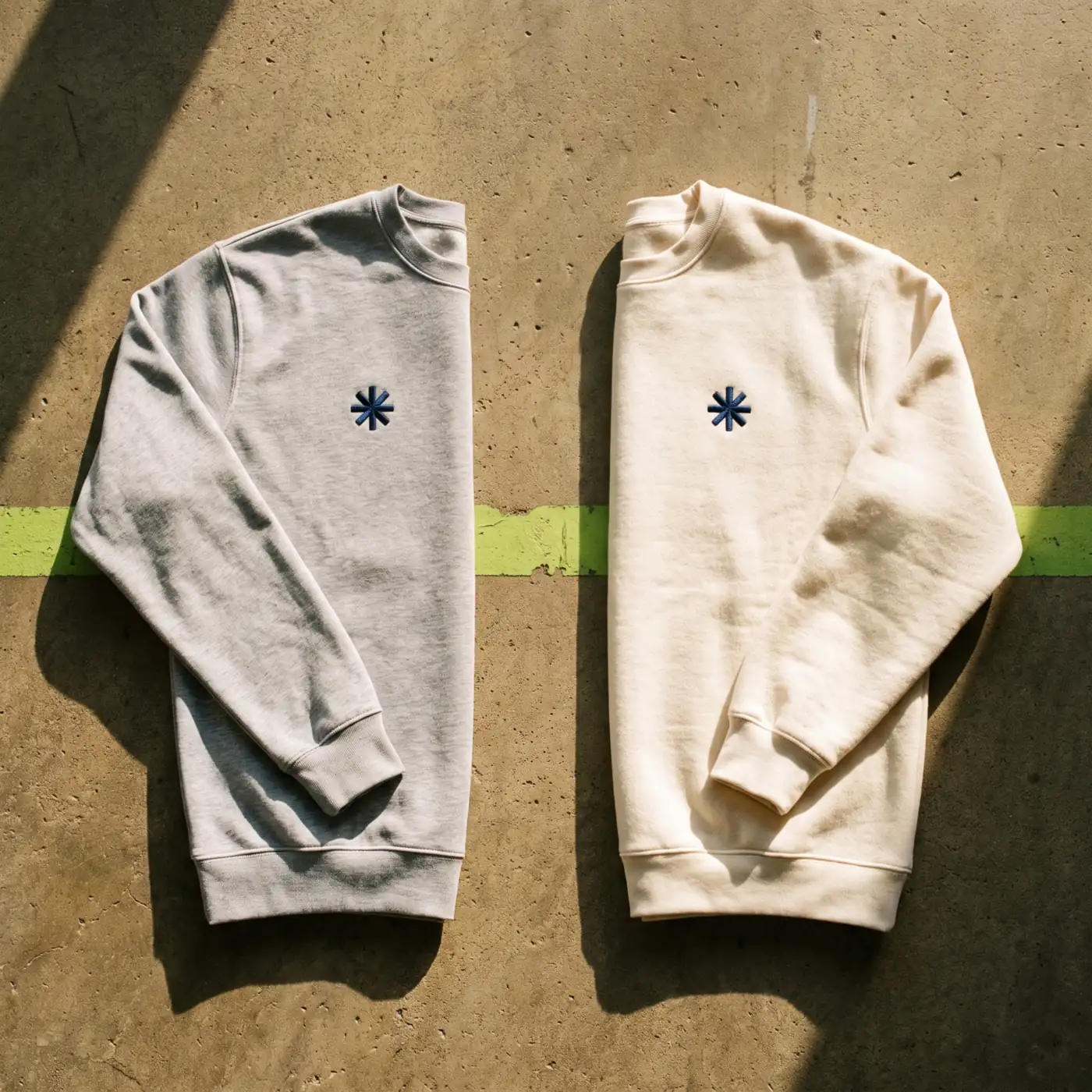
On a dense, smooth fabric like Stanley/Stella's sweatshirts, an embroidery or a print comes out crisp and even. The surface works for you. It is the classic combo for pieces meant to feel premium: discreet embroidery on the chest, thick fabric, a result that reads as a branded garment, not promotional textile.
Gildan references take the common printing techniques very well, print and embroidery alike. Simply, on a lighter fabric or a blend, favor suitable designs: a large, very dense solid print on a thin garment can stiffen the area. The studio guides you as you create, but keep the simple rule: the more ambitious the design, the sturdier the piece needs to be.
On price, printing is included but the chosen technique nudges the price: on the same sweatshirt, expect about 1 euro more for DTF and 2 euros more for embroidery compared with DTG printing, at catalog unit price. The exact price shows on the product page as you pick your technique.
In both cases, the house advice stays the same: two prints maximum per piece, and techniques that stay consistent with each other. Beyond that, you pay more for a more fragile result.
And above all, keep the garment's range and the printing's range consistent. Premium embroidery on an entry-level garment is a formal suit with worn-out shoes: the printing promises a level the piece cannot hold, and the whole thing rings false. The other way round is just as true. The right equation: a piece and a printing of the same level, chosen together for the same use.
Round 5: how it lasts
A price-quality match is also judged after thirty washes, and each brand ages its own way.
The cotton-poly blend of Gildan references exists precisely for this: it limits shrinkage, holds its shape and forgives slightly brutal washing machines. It is the garment you can hand to fifty people without distributing a care manual.
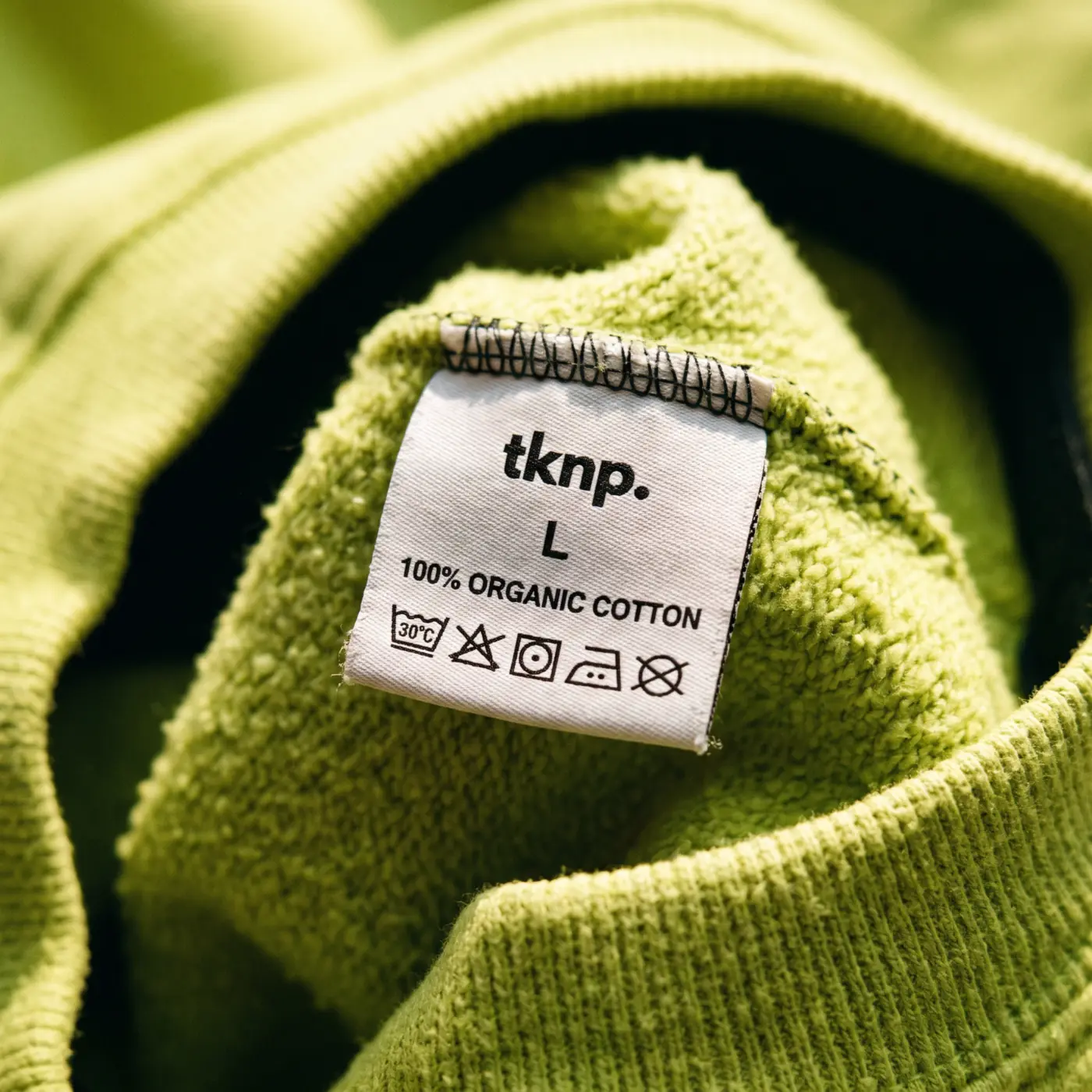
Stanley/Stella's dense cotton ages well on one condition: respect it. Wash at 30 degrees, preferably inside out, air dry rather than tumble dry. Treated that way, a 300 gsm sweatshirt crosses the years getting softer, where a garment too thin loses its shape. And the printing follows the same logic: an embroidery survives almost anything, a print lives better on the back of a gentle wash.
The rule I have repeated for eighteen years: the lifespan of a custom garment is the meeting of the piece's quality and the way it is treated. Badly washed premium will not outlast well-treated basic.
Stanley/Stella or Gildan: the answer by use case
Forget brand loyalty. Choose according to what the garment is going to live through.
Take Gildan when the count matters more than the piece. The volunteers' t-shirt for an event, the sweatshirt handed to a whole graduating class, the run where every euro counts because a shared fund pays for it: the reliable basic is exactly the right tool. No shame in choosing entry level when it matches the use. The only mistake would be going below it, into the disposable: a garment that does not survive ten washes is always too expensive, even at three euros.
Take Stanley/Stella when the garment IS the project. The collection your community will buy on your Store, the flagship piece you want to see worn around town, the merch of a brand, a place, a club that cares about its image: there, premium is not a luxury, it is the product. It is also the natural choice as soon as your community cares about the organic argument, and it increasingly does.
And in between? The catalog has a middle range, SOL'S first among them, organic cotton at around 34 to 49 euros at catalog unit price, printing included (volume pricing there too): the right compromise when you want to step up in quality without moving to premium pricing. But for most projects, the match really plays out between the two ends, and mixing both is a perfectly valid strategy: the flagship piece in Stanley/Stella, the supporting run in Gildan, each at its right price on your Store.
The verdict of the match
There is no absolute winner, and that is the good news: there are two tools, each unbeatable on its own ground. Gildan wins the match of controlled budgets and large runs. Stanley/Stella wins the one of wanting to wear it, of fabric and of image.
The three-question method to settle it in a minute:
- Who pays? A shared fund with tight means leans Gildan; a Store sale where each piece pays for itself opens the premium door wide.
- How many times will it be worn? An event garment lives one weekend; a community garment lives for years. The more it will be worn, the more premium pays off.
- What should it say about you? If the garment carries your image as much as your logo, the fabric and the fit are part of the message.
On your Store, you do not have to choose once and for all anyway: build your collection with both from the sweats and hoodies section of the catalog, let each member of your community pick their range, and watch what sells. That is still the best referee.
Frequently asked questions
What kind of brand is Stanley/Stella?
Stanley/Stella is a European brand of blank garments made to be customized, positioned on premium and responsible textiles: organic cotton, 280 to 350 gsm fabric weights on sweatshirts, fits drawn like ready-to-wear. It is the top-range brand of the tknp catalog.
Is Gildan good quality?
Yes, as long as you judge it for what it is: the reliable basic. Gildan's cotton-poly blends wash well, hold their shape and take collective use in stride. It is not premium, it is the best price-quality ratio for large runs.
Why does a Stanley/Stella garment cost more than a Gildan?
The gap, about half again as much at catalog unit price, pays for the fabric (combed organic cotton), the higher fabric weight, the fit and the durability. On a garment worn for years, the gap per wear becomes minimal.
Is the printing included in the price?
Yes: on the tknp catalog, the displayed price includes the printing of your logo, taxes included. The chosen technique nudges the price slightly: expect about 1 euro more for DTF and 2 euros more for embroidery compared with DTG printing.
Your organization deserves its official store.
Create, buy and sell premium merch — the account is free, the store opens when you're ready.