Garment embroidery is priced in two lines: a logo digitizing file, billed ONCE, then a per-piece price that drops with quantity. It is the premium marking for polos, jackets and team apparel, and it becomes genuinely worthwhile from about twenty pieces.
The essentials in 4 points:
- The cost of embroidery has two components: the logo digitizing (once) and the embroidery of each piece (dropping with quantity).
- The digitizing file is paid a single time: on restocks and later orders, it is already amortized.
- Below about twenty pieces, the fixed fees weigh heavily; beyond that, embroidery becomes the most durable premium in garment marking.
- Its ground: team polos, jackets, fleeces and beanies, wherever the finish has to say quality.
This guide is written for the project owner outfitting a team: if you are looking to hand-embroider a design with needle and thread, you are on the wrong article, and that is deliberate. Here we talk about professional machine embroidery, runs, quotes and finish: the embroidery of 20 pieces and more, the one that dresses teams.
Why embroidery costs what it costs: the mechanics
Embroidery prints nothing: it sews your logo, stitch by stitch, into the fabric. That difference explains its entire cost model.
Digitizing first. Before the first piece, your logo must be converted into an embroidery file: a program that tells the machine every stitch, every thread color, every path. This work (digitizing) is billed once per logo. On the public market price lists surveyed in September 2026, it sits between 40 and 85 euros depending on logo size: an order of magnitude to check on your quote, as every workshop has its own list.
Embroidery next. Every piece goes through the machine, and embroidery time depends on the stitch count: a small chest logo embroiders fast, a large dense design takes time. That is why the unit price of embroidery depends on YOUR logo, far more than in printing.
The golden rule of pricing: everything drops with quantity, EXCEPT the digitizing file, paid once. It is what weighs down a 5-piece order and what vanishes in a 50-piece one. And it is what makes your restocks advantageous: the file already exists, you only pay for the embroidery.
The observed costs, and where to check yours
To get your bearings, the orders of magnitude surveyed in September 2026 on public market price lists: an 8x8 cm embroidered logo around 8 euros per piece in small quantities, dropping toward 2.50 to 3.50 euros in large runs, plus the one-time digitizing. These figures move from workshop to workshop and over time: they are subject to verification, and they do not replace a quote.
The good news: you do not need to wait for a quote to get your bearings. The prices in our catalog are displayed with branding included, reference by reference: an embroidered polo, jacket or beanie can be priced in two clicks in the customization studio, with quantity tiers visible before ordering. It is the fastest way to turn this guide's orders of magnitude into real prices for YOUR order.
The 20-piece threshold: where embroidery becomes obvious
Below about twenty pieces, the digitizing weighs on every garment: embroidery remains possible (it works from a single piece), but you pay the premium comfort at full price.
From about twenty pieces, the mechanics reverse: the digitizing dilutes, the unit price steps down, and embroidery enters the same budget zone as quality printing, with a superior finish and durability. That is the real difference: at this volume, you are no longer buying extra standing, you are simply making the right technical choice for apparel worn all year.
Both purchasing rhythms win: the team program (the file digitized once serves all year, restocks included) and the one-off order of an event that wants to leave a mark.
What embroidery delivers that printing does not
Three things, and they explain why high-end uniforms have always been embroidered.
The relief. An embroidered logo is seen AND felt: the thread catches the light, the material says care. On a polo or a jacket worn in front of clients, that difference shows from two meters away.
The longevity. Thread does not fade, crack or peel: well-made embroidery generally outlives the garment itself. For apparel washed every week for years, it is the most trouble-free marking.
Legitimacy on textured materials. Fleeces, softshells, beanies, polo piqué: where a print fights the texture, embroidery settles in naturally. It is the marking of thick materials and knits.
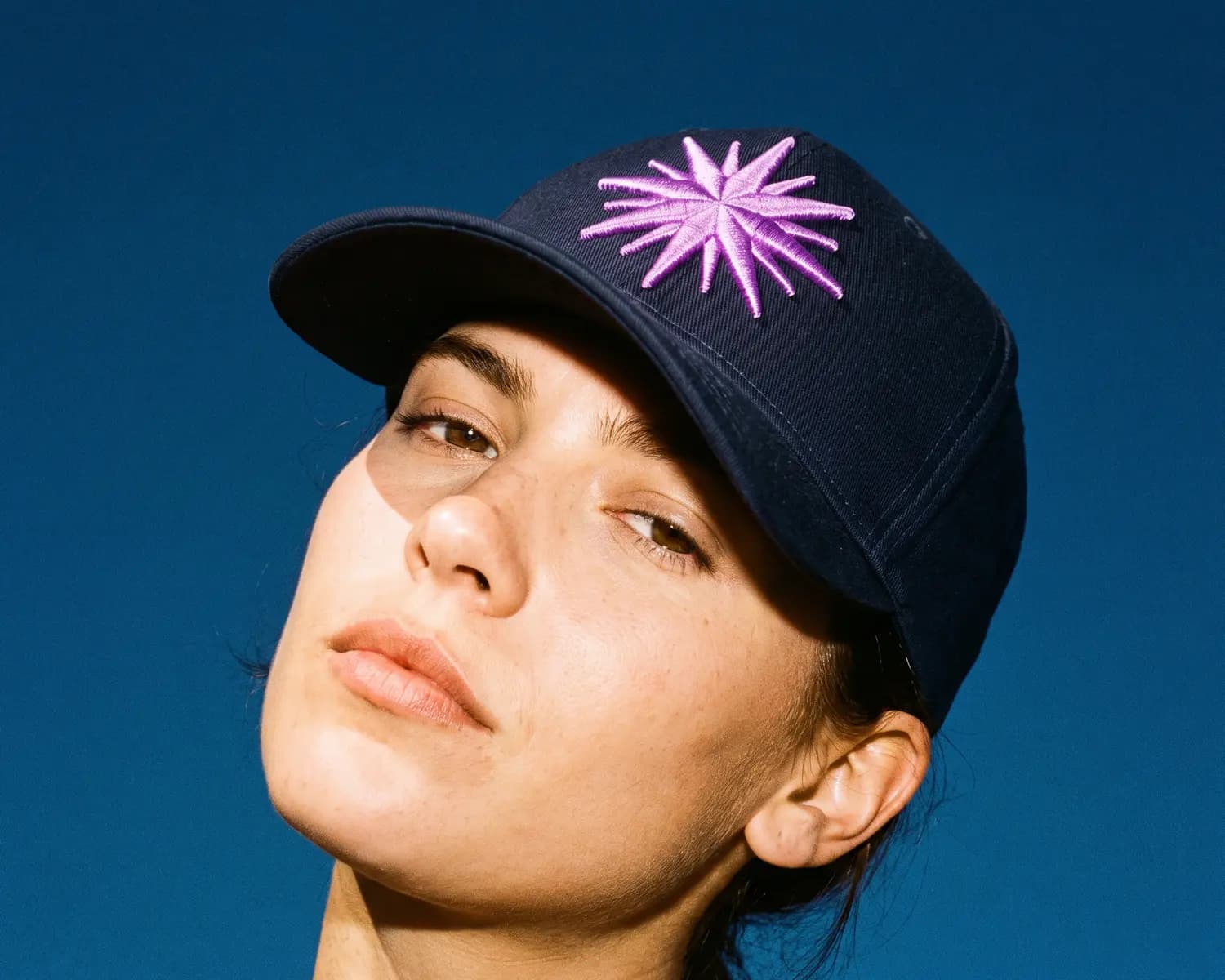
And to push the relief one step further, there is 3D embroidery: foam is placed under the stitches, and the design stands out in volume, as if sculpted. It is the signature finish of premium caps (the raised logo of brand caps), and it requires an adapted logo: simple shapes and thick strokes, no fine details. On a team cap, it is the detail that makes a program look like brand merchandising: ask for it explicitly on the quote, not every workshop offers it.
Its honest limit: embroidery likes neither very large formats (a fully embroidered back becomes heavy and stiff), nor gradients and photos (thread works in solid colors), nor very thin fabrics it can pucker. For those cases, printing does better: it is the natural border between techniques.
Embroidery or printing: the express version
The full comparison lives in our large-run marking guide; the quick read from your project:
| Your case | The right choice |
|---|---|
| Polos, jackets, client-facing apparel | Embroidery: the finish says quality |
| Chest logo on knits, fleece, beanies | Embroidery: it loves textured materials |
| Large colorful design on t-shirts or sweatshirts | Printing (DTF for mid-runs) |
| Very large run with a simple logo | Screen printing: unbeatable unit cost |
| Under about twenty pieces, tight budget | Printing, or embroidery accepting the premium |
Lead times: 5 days to 4 weeks, and why to anticipate
Volume embroidery is delivered between 5 days and 4 weeks depending on the workshop and the season, and the price moves accordingly: express is paid for, a comfortable lead time can be negotiated. The most coherent benchmark for a team order: allow 2 weeks, digitizing and production included.
The point of vigilance is seasonality: winter concentrates demand (back-to-season programs, jackets and fleeces, year-end gifts), and workshop schedules fill up fast. An embroidered order for December is decided in autumn: every week of anticipation gained means more choice and less express to pay.
The three questions to ask before signing
- "Does the digitizing file belong to me, and will it be reused for my next orders?" That is THE question: a digitized file must serve your restocks without being re-billed.
- "How many stitches does my logo have, and what does that change to the price?" The answer reveals whether the workshop prices seriously: the stitch count IS the cost of embroidery.
- "What do you suggest if my logo has details too fine for thread?" A good workshop proposes an adaptation (simplification, minimum text size) rather than embroidering an illegible logo.
What to remember before pricing
Embroidery reads in two quote lines: a one-time digitizing, a dropping per-piece price. Below about twenty pieces, you pay the premium; beyond, you make the best longevity choice in garment marking. Price your real case in the catalog, branding included, and keep the first question for your workshop: the digitizing file should serve you for years.
Frequently asked questions
How much does garment embroidery cost?
Two components: the logo digitizing, billed once (40 to 85 euros on the public price lists surveyed in September 2026, to be verified), then the per-piece embroidery, dropping with quantity (around 8 euros per piece in small quantities down to 2.50-3.50 in large runs for an 8x8 cm logo). The branding-included prices in our catalog give the exact figure per reference.
From how many pieces is embroidery worthwhile?
It works from a single piece, but the real tipping point sits around twenty pieces: the one-time digitizing dilutes and the per-piece price joins that of quality printing, for a superior finish.
Does embroidery hold up better than printing in the wash?
Yes, that is its great strength: thread does not fade or crack, and well-made embroidery generally lasts as long as the garment itself. It is the benchmark marking for apparel worn and washed every week.
Can you embroider a logo with gradients or a photo?
Not faithfully: thread works in solid colors and flat shapes. A gradient logo gets adapted (color simplification) or moves to a print like DTF, which reproduces everything.
What lead times should I plan for volume embroidery?
From 5 days to 4 weeks depending on the workshop and the season, with a price that follows the lead time: the coherent benchmark is 2 weeks for a team order. Winter concentrates demand: for a year-end delivery, decide in autumn.
On which garments does embroidery work best?
Polos, jackets, fleeces, softshells, beanies and caps: all thick or textured materials, where it settles in naturally. On very thin fabrics, it can pucker the material: ask for advice when ordering.
Your project, quoted within 24 hours.
Describe your garments, your decoration and your quantities: you receive a detailed quote, decoration included, within one business day.