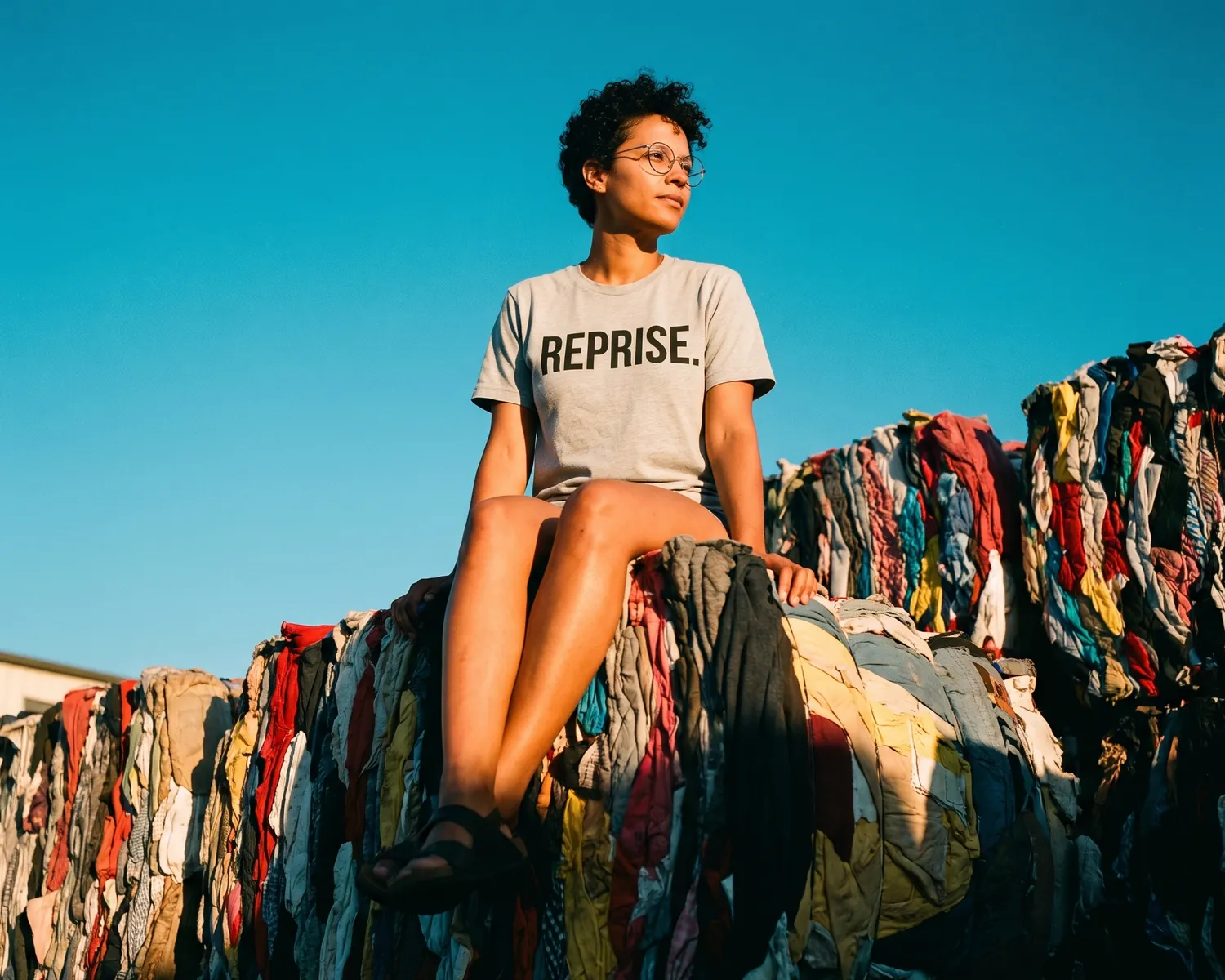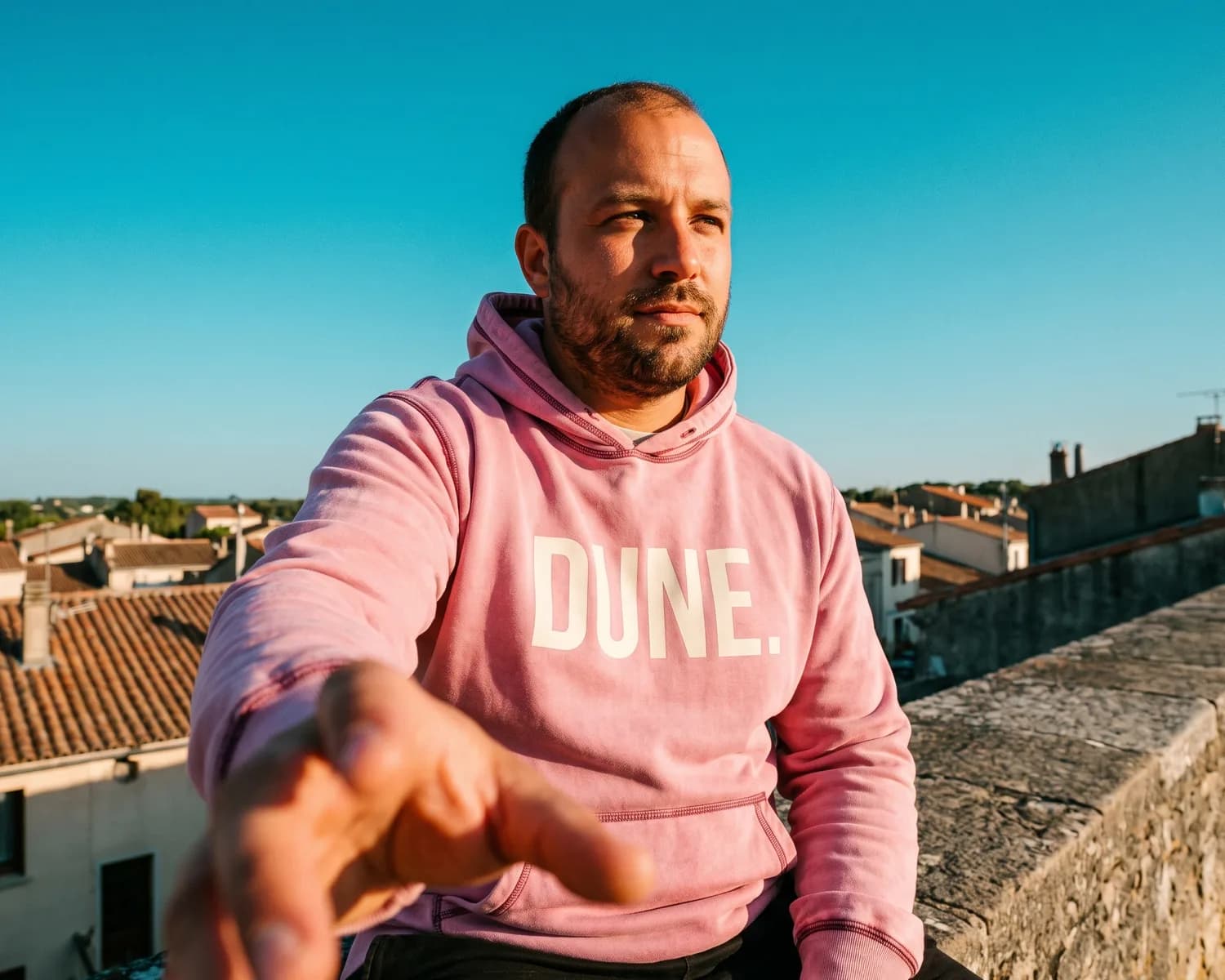
Garment dyed: definition, washed-out look and reorders
Garment dyed means a garment dyed once it has been sewn, not before. The dyeing softens the fabric and gives it a washed-out, already-worn look from day one, with slight colour variations that make each t-shirt or sweatshirt unique.
The essentials in 4 points:
- Garment-dyed clothing is sewn from undyed fabric, then dropped whole into the dye bath: its seams and trims do not take the colour exactly like the rest.
- No two units are ever quite identical, and a reorder may differ slightly from the first order: for a consistent run, it is better to order everything at once.
- Acid wash and stonewash are not garment dyeing: they bleach or wear down a garment that is already dyed.
- At TKNP, the Stanley/Stella Crafter t-shirt comes to about €12 excluding VAT in its garment-dyed version with a logo in A6 DTF transfer, against about €7.50 in its classic version (for 50 units; our rates of 2 October 2026, as a benchmark, shipping excluded).
A brand-new t-shirt that looks like it has already lived: softened colour, seams that stand out, a supple feel from the very first day. This is the look sought by streetwear brands, campus heritage collections and artist drops. Behind this look lies a manufacturing choice: the dye comes last, on the garment that is already sewn.
Here is what garment dyeing covers, what it changes to your merch, to a reorder and to the price, and how to tell it apart from other washed-out garments.
What is garment dyed?
Garment dyed (also called garment dyeing, or dyed after sewing) describes a garment dyed once it is sewn. In standard manufacturing, the colour is given to the yarn or the fabric before cutting; here, the t-shirt or sweatshirt is assembled from undyed fabric, then dropped whole into the dye bath.
Italians call it "tinto in capo". The technique was popularised from 1979 by the designer Massimo Osti at C.P. Company, who dyed finished garments to take away the stiffness of new clothes and give them an already-worn look.
Where does the washed-out look come from?
The washed-out look of garment dyeing comes from the dye bath itself: not every part of the garment absorbs the colour in the same way. The designer Massimo Osti described it: two materials dyed together do not react the same, which creates tone-on-tone effects. On a t-shirt or a sweatshirt, it is the seams and trims that stand out, slightly lighter or darker than the fabric: our product pages mention a washed effect on the seams, or worn-effect seams.
Going through the bath also softens the fabric: the garment arrives without the stiffness of new clothes, with the look of something worn for years.
Is each garment-dyed t-shirt unique?
Yes: garment-dyed clothing shows slight colour variations from one unit to the next. The product pages of the Stanley/Stella Vintage line all say so, and our Heritage Arc collection, a hoodie and a t-shirt dyed after making, makes the same point: these nuances are part of the vintage look and are not a flaw.
Can you reorder an identical shade?
A garment-dyed reorder does not guarantee the same shade as the first order: each unit already varies a little, and a batch dyed later may drift slightly from the first. For merch that must stay consistent, two reflexes:
- order the whole run at once, planning every size;
- add a few spare units to that first order, for newcomers and last-minute omissions.
Garment dyed, acid wash, stonewash: the difference
Garment dyeing brings the colour to the finished garment; acid wash and stonewash work on a garment that is already dyed, one by bleaching it, the other by wearing it down.
| Garment dyed | Acid wash | Stonewash | |
|---|---|---|---|
| The process | the sewn garment is dyed whole | a dyed garment is bleached with acid | a dyed garment tumbles in a machine with large stones |
| The look | nuanced colour, seams that stand out, softened feel | a bleaching unique to each unit | worn look, softened fabric |
| An example in our catalogue | Stanley/Stella Crafter Vintage | Build Your Brand Acid Washed Heavy Oversize Tee | Build Your Brand Stonewash Heavy Loose Tee |
All three give a vintage feel by different routes: dyeing for garment dyed, bleaching for acid wash, wear for stonewash.
How much does a garment-dyed t-shirt cost?
At TKNP, a garment-dyed t-shirt comes to about €12 excluding VAT, printed with a logo in A6 DTF, for the Stanley/Stella Crafter Vintage, and about €18 for the Freestyler Vintage, for 50 units: about €2.50 to €4.50 more than the same models in their classic version. The comparison is direct, because Stanley/Stella offers these t-shirts in a Vintage version, dyed after making: same cut, same fabric weight, only the dyeing changes.
| T-shirt | Fabric weight | Classic version | Garment-dyed version |
|---|---|---|---|
| Stanley/Stella Crafter | 155 g/m² | about €7.50 | about €12 |
| Stanley/Stella Freestyler | 240 g/m² | about €15.50 | about €18 |
Figures per t-shirt, before VAT and shipping, for a logo in A6 DTF transfer in one position, 50 units, cheapest colour, taken from our product pages (2 October 2026). They are benchmarks that may change; technical fees come on top, waived for verified business accounts. For sweatshirts, the Radder 2.0 Vintage crew neck comes to about €33, the Archer Vintage and Slammer 2.0 vintage hoodies to about €37 and €42.
Which garment-dyed models do we offer?
The TKNP catalogue offers the Stanley/Stella Vintage line, in organic cotton dyed after making:
- T-shirts: the Crafter Vintage, a 155 g/m² medium fit in combed organic cotton; the Freestyler Vintage and the Freestyler Super Vintage, heavier (240 g/m²); the Stella Nova Vintage, a 155 g/m² women's boxy fit.
- Sweatshirts: the Radder 2.0 Vintage, a 380 g/m² oversized crew neck; the Slammer 2.0 vintage (380 g/m²) and the Archer Vintage (300 g/m²), both hooded.
Can you customise garment-dyed clothing?
Yes: garment-dyed clothing is customised like any other, the print going onto the garment that is already dyed. On our Vintage models, DTF transfer, screen printing and embroidery can be ordered online, DTG printing and patches on quote. A crisp logo on a washed-out fabric is precisely the contrast of the heritage style, like the embroidered arc of the Heritage Arc collection. Our guide to garment printing compares these techniques.
Which merch is garment dyeing for?
Garment dyeing suits merch where style matters more than uniformity: a capsule collection sold to your fans, a limited drop, a heritage hoodie. The test is simple: if everyone must wear exactly the same shade as the person next to them, from one order to the next, choose a classic dye; if a nuance from one unit to the next is part of the charm, garment dyeing is made for your project.
A vintage capsule, from template to drop
To get started, our Heritage Arc collection already puts together a capsule dyed after making: an Archer Vintage hoodie and a Freestyler Vintage t-shirt, where your logo takes the place of the embroidered arc. What comes next is the Store, in preparation: it will soon let you sell this kind of drop directly to your community.
Frequently asked questions
What does "G. Dyed" mean in a colour name?
G. Dyed is short for garment dyed: the colour refers to a garment dyed after making. On our product pages, you will find it for instance in "G. Dyed Bubble Pink" for the Crafter Vintage, or in "G. Dyed Misty Grey", the washed-out grey of the Heritage Arc collection.
What is tinto in capo?
Tinto in capo is the Italian name for garment dyeing: a garment dyed as a whole, once it has been made. It is under this name that C.P. Company developed the technique with the designer Massimo Osti.
Yarn-dyed or garment-dyed: what is the difference?
A yarn-dyed garment is knitted or woven with yarns that are already coloured, which makes stripes and patterns possible; a garment-dyed one is dyed once it has been made, in a single colour, with the washed-out nuances typical of garment dyeing.
Why does garment dyeing cost more?
Garment dyeing costs more because it adds a step to manufacturing: each garment, once sewn, goes through a dye bath. On our product pages, the gap shows directly between a t-shirt and its Vintage version.
Your project, quoted within 24 hours.
Describe your garments, your decoration and your quantities: you receive a detailed quote, decoration included, within one business day.