Merch: definition and difference from merchandising
Merch (short for "merchandise") refers to branded goods, most often clothing, that a brand, an artist, an association, or a company makes for its community: t-shirts, hoodies, caps printed or embroidered with its logo or visual identity. Not to be confused with merchandising, which in French refers to store layout and retail display techniques.
The essentials in 4 points:
- Merch is the products (mostly textile) a brand or a community wears and circulates.
- In French, "merchandising" means something else: store layout, not branded goods.
- A brand, an artist, an association or a company does merch for the same reason: a worn garment is seen, shared, and signals belonging.
- Textile dominates merch because it's what people wear the most, and for the longest.
Where the word comes from, and why it gets confused with merchandising
"Merch" is short for "merchandise". In everyday French usage, it refers to a brand's or an artist's branded goods: a tour t-shirt, a brand hoodie, an association cap.
The trap comes from the neighboring word, "merchandising". In English, it covers roughly the same meaning as "merch". But in French, "merchandising" took on a different meaning, inherited from retail: the set of techniques used to present products in a store and drive purchases (shelf layout, product placement, window displays). A job description or a marketing definition using "merchandising" in French is almost always talking about that, not t-shirts. The two words look alike, but they don't answer the same question.
Why brands, artists and organizations do merch
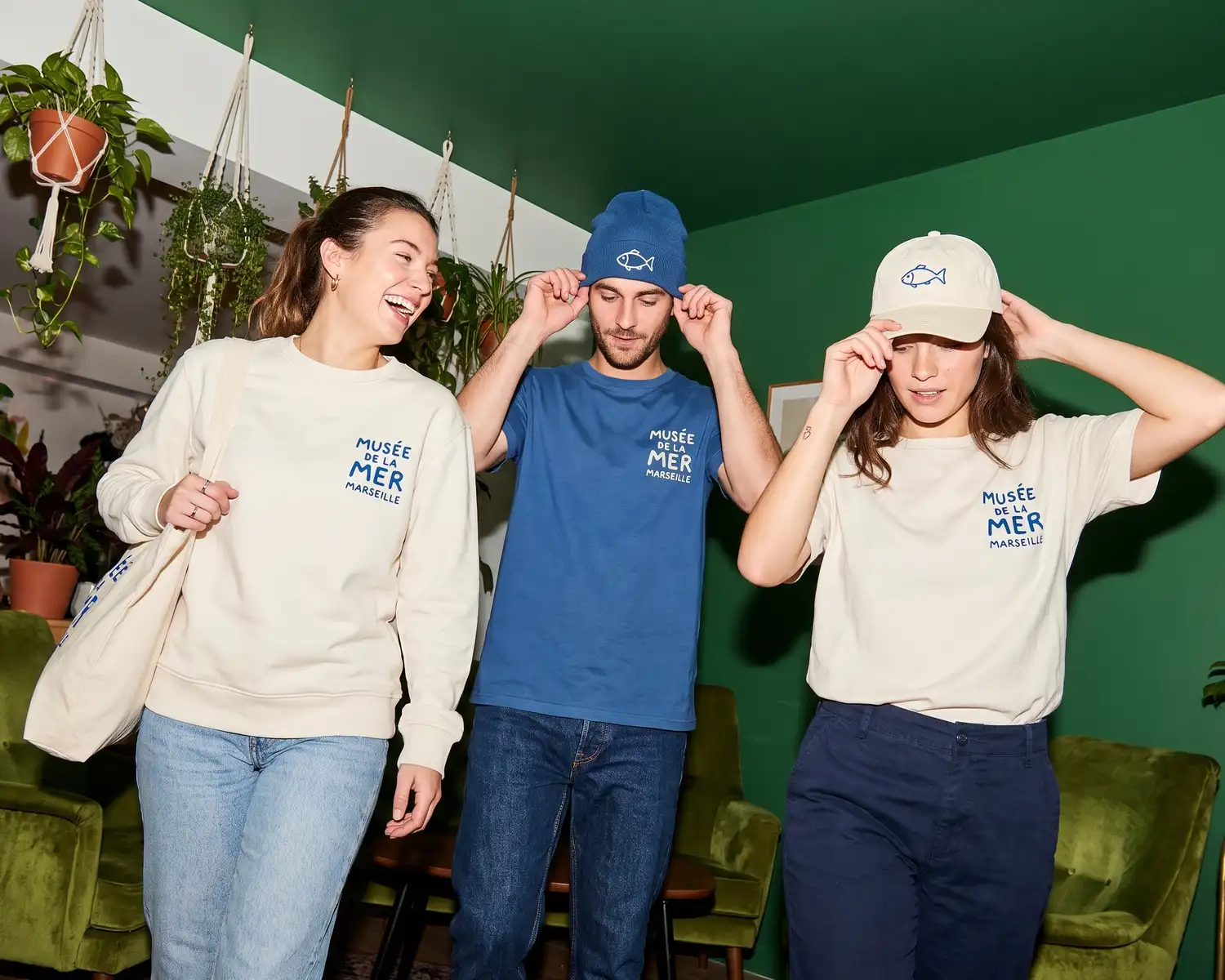
The reason is the same regardless of the structure: a worn garment is seen. A festival t-shirt, a student association hoodie, or a company polo circulates on the street, at work, in the evening, long after the purchase. It's a medium that keeps existing once the campaign, the event, or the launch month is over.
Three reasons come up most often:
- Visibility that lasts. An ad stops when the budget runs out. A worn garment keeps circulating as long as it stays in a wardrobe.
- A sense of belonging. Wearing the merch of a club, an association, or a company signals that you're part of it. This is especially strong for communities (student associations, sports clubs, associations) where the garment becomes a sign of recognition among members.
- Direct revenue, for brands and artists. Merch sells, and it complements other revenue sources (music, events, a company's main activity).
Textile merch versus other branded goods
A large share of what sells under the name "merch" isn't textile: mugs, pins, stickers, water bottles. These products have their place, but textile holds a spot apart for a simple reason: it's what gets worn the most, and for the longest. A mug stays on a desk; a hoodie leaves the house. A logo on a garment is seen dozens of times by the people wearing it, and by everyone who crosses paths with them.
That's also why a badly chosen personalized textile merch item costs you in image: a t-shirt that's too thin, a print that cracks after three washes, or a cut nobody wants to wear ends up at the back of a closet instead of out on the street.
Doing merch, in practice
Doing merch doesn't necessarily mean investing in stock before selling anything. On your TKNP Store, you choose your products and your logo, and the studio handles all the rendering work, product after product, while your community orders directly online. It's a Store that runs with no stock to advance: nothing gets printed before it's sold, your merch never sits waiting in a box.
Frequently asked questions
Are merch and merchandising really different?
Yes, in French. "Merch" refers to branded goods, most often textile, that people wear. "Merchandising" refers to store layout: two similar-looking words in English, but two different meanings in everyday French.
Who can do merch, not just artists?
Any brand, association, club, or company can do merch. The principle stays the same: products, most often textile, worn by a community that identifies with them.
Why textile merch rather than an item like a mug or a pen?
Because a garment gets worn, gets seen, and circulates well beyond the purchase. An object sitting on a desk doesn't get the same visibility as a logo worn on the street, day to day.
How do you launch a merch line without advancing stock?
A print on demand Store makes each item only after it's sold: no upfront investment, no unsold stock. That's the principle behind a TKNP Store.
Your project, quoted within 24 hours.
Describe your garments, your decoration and your quantities: you receive a detailed quote, decoration included, within one business day.