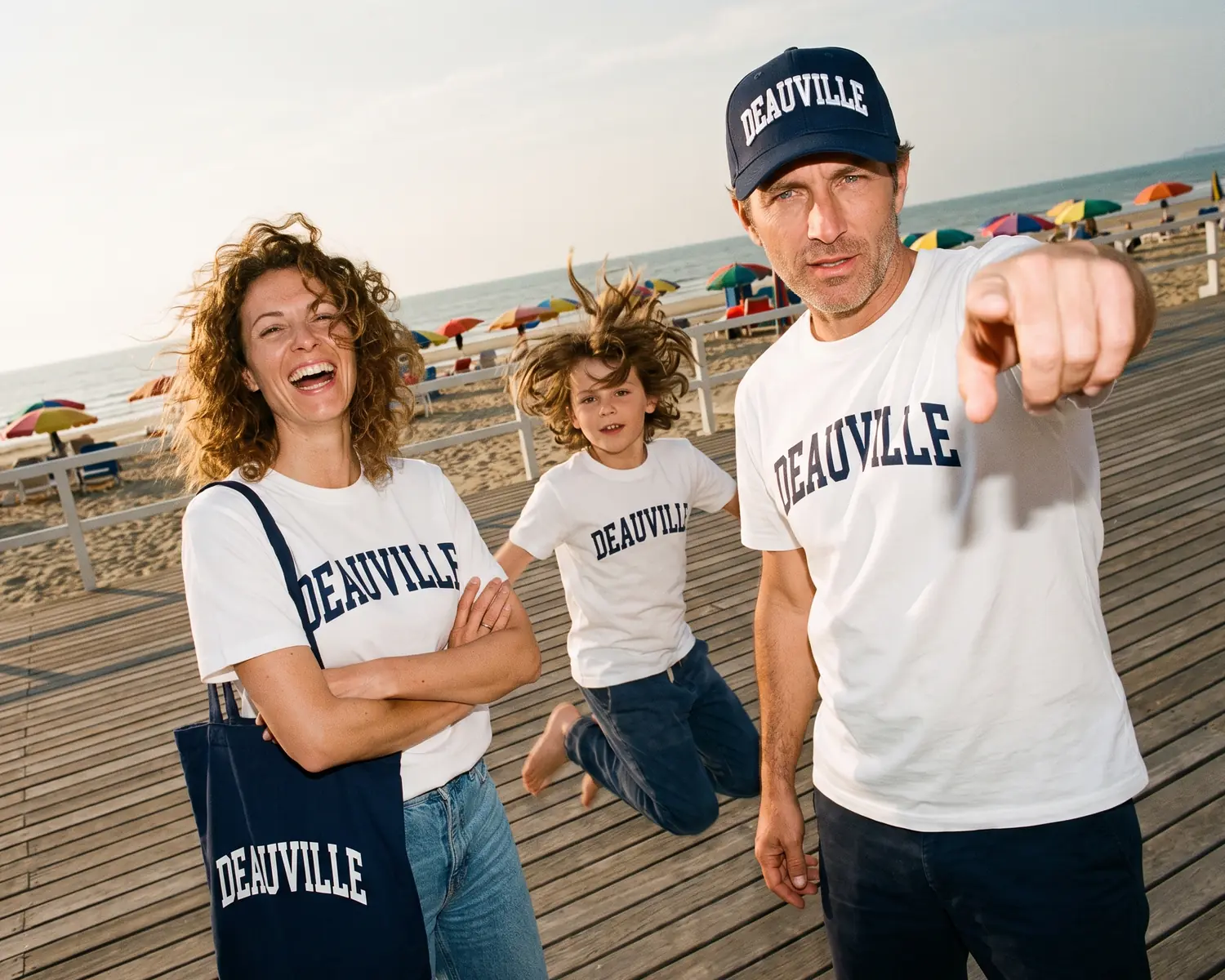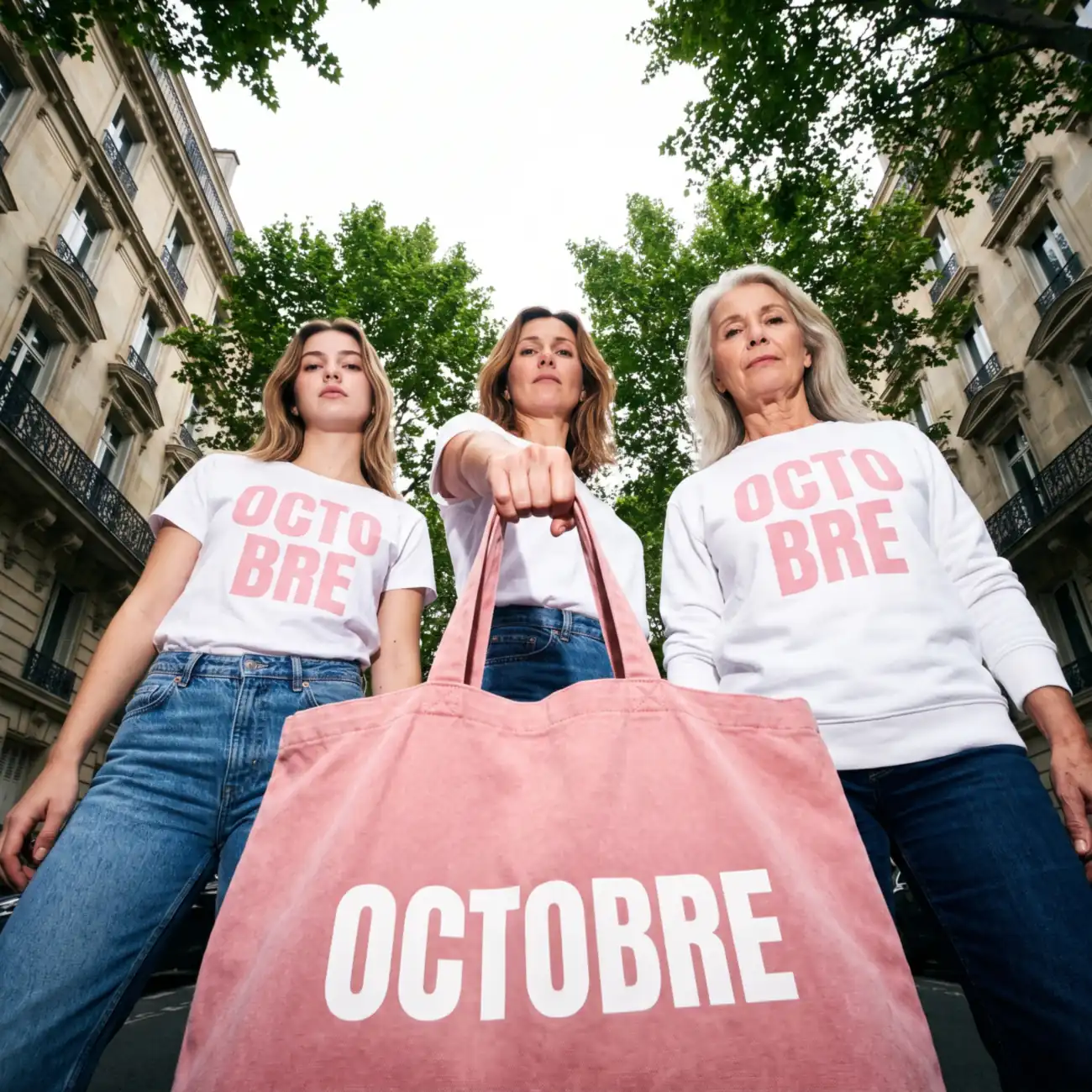

The best end-of-year company gift is the one your employees will actually wear: a good hoodie, sweatshirt or t-shirt, chosen by the person and discreetly marked. Budget 20 to 35 euros per head, and start the project in early November for a December handover.
The essentials in 4 points:
- A gift ends up in a drawer for three reasons: no use, no choice, and a logo that talks about the company instead of talking to the person.
- A garment ticks all three boxes, and it travels: the mug stays at the office, the sweatshirt goes away for the weekend.
- Count roughly two weeks between production and delivery: the decision has to be made in early November for a handover on 20 December.
- Opening an internal Store at this occasion saves you from starting over next year: new hires, restocks and sizes take care of themselves the rest of the year.
Look at last year's end-of-year gift. If you can't remember it, that's already an answer. If it's in a desk drawer, that's another one.
Every December, the same reflex: thousands of companies look for a company gift idea for the end of the year and walk away with the same trio: a mug, a hamper, an engraved pen. It gives well, it photographs well, and six months later nothing is left. Meanwhile, the colleague who got a good sweatshirt still wears it at weekends, two years on, with your logo on it.
This guide starts there: what merch to give so the gift survives January, what a quality personalized garment really costs, and above all when to order it so you're not scrambling in mid-December.
Why the end-of-year gift so often ends up in a drawer
Three reasons, and none of them is the budget.
The gift has no use. One more mug in a kitchen that already holds twelve has no chance. The object has to fit into an existing habit, otherwise it occupies a drawer.
The gift isn't chosen. Receiving a size someone else decided on, in a colour you'd never have picked, gets a polite thank you and gets put away.
The gift talks about the company, not about the person. An object plastered with an oversized logo is an advertising medium, not a gift. The difference is subtle and everyone feels it.
What the three have in common: they manufacture politeness, not pleasure. A successful gift is a gift the person could have bought for themselves.
The simple rule: give something that gets worn
A garment ticks all three boxes at once. It has an obvious use, it can be chosen (size, colour, cut), and done well, it doesn't look like an advertising item but like a real piece of clothing.
It also has an advantage no other gift has: it travels. The personalized mug stays at the office. The sweatshirt goes away for the weekend, to the gym, to the parents' place at Christmas.
And that's where the cut changes everything. A badly cut sweatshirt with a big logo in the middle never leaves the wardrobe: it stays a company garment. A well cut sweatshirt, in the right colour, with a discreet embroidered logo, gets worn around town without a second thought. Same budget, same logo, and yet one never comes out while the other is seen a hundred times a year. Your logo goes where your communication never will, worn by someone who chose to put it on: that's the difference between a gift that costs and a gift that pays.
One condition, though: quality is not negotiable. A mediocre garment is worse than a mug, because it gets worn twice and ends up as a rag. It's the one line you shouldn't economize on.
What end-of-year gift to give: the garments that work, by budget
Here are some ballpark figures at catalogue unit price, marking included, to help you place yourself. Prices come down in quantity brackets (from 25, 50 and 100 pieces), which matters when you're dressing a whole team.
Under 20 euros per head: the accessory that travels The cotton tote bag, the embroidered cap, the beanie, socks. At this budget you don't make a memorable gift on its own, but you make a very good add-on, or a light collective gift for a large team. The beanie in December has one unbeatable advantage: it gets worn the same day.
Between 20 and 35 euros: the heart of the matter This is where most successful end-of-year gifts happen. A classic crew neck sweatshirt (crewneck) runs around 23 euros, a fleece-backed hoodie around 27, a premium combed cotton sweatshirt around 31. These are garments people genuinely wear, not communication objects. For a team of twenty to fifty, this is the bracket that makes the most impact for the budget.
Between 35 and 55 euros: the garment people remember An organic cotton hoodie around 34 euros, a good thick hoodie (300 g/m²) around 41, a genuinely heavy, warm hoodie (350 g/m²) around 51, and beyond that you get into real knitted jumpers. At this level the garment competes with what the person would buy in a shop. It's the budget for smaller teams, for end-of-year gifts after a year that went well, or for thank yous that need to land.
The rule of thumb: one beautiful sweatshirt beats three average objects. A 40-euro budget spent on a hoodie that gets worn always beats the same budget split between a mug, a pen and a notebook.
The timeline: decide in early November, not mid-December
This is the advice nobody gives and it's the one that saves the project.
Count roughly two weeks between the start of production and delivery, on top of the time needed to choose the models, approve the artwork and gather the sizes. Work backwards: for a handover on 20 December, the decision has to be made in early November, and you receive between mid-November and early December. Every week of delay narrows your options, first on colours and sizes, then on models, and finally on quality, because only what's immediately available will be left.
The reverse schedule:
- Late October: you choose the models from the catalogue and approve the artwork.
- Early November: sizes are gathered, the order goes out.
- Mid-November to early December: production and delivery, roughly two weeks.
- Before the handover: the margin to prepare the distribution without stress.
A project launched in late November is still possible, but you lose the comfort. A project launched on 10 December isn't a project any more, it's a rescue operation.
Sizes: the question that blocks everything
This is where most textile gifts get stuck. Collecting forty sizes by email, chasing the eight people who didn't reply, sorting out the two who got it wrong: the project often dies in that spreadsheet.
The way out is simple: don't collect the sizes, let everyone choose their own. That's exactly the internal Store mechanism detailed in our welcome pack guide: each person gets a link to the company Store, chooses their size and colour, and you arbitrate nothing. The principle works for onboarding all year round as much as for the December gift, and it turns the spreadsheet chore into two clicks.
The hidden benefit: someone who chose their sweatshirt wears it far more than someone who simply received it.
The December gift can be the start of something
This is the point most companies discover after the fact. An end-of-year order is a project that is born in October, delivered in December and dies on the 25th. The following year, everything has to be redone: find a supplier, choose, collect sizes again, chase people.
There is another way: open an internal Store for the company, and use the end-of-year gift as its first occasion. The Store then stays open all year, and it takes care of the situations that eat your time today:
- The new hire in February gets the link in their welcome email and chooses their size: no stock to keep for "when someone shows up".
- The person who wore out their sweatshirt orders another one, as a single item, without anyone organizing anything.
- The one who also wanted the cap takes it, on her own budget if you set it up that way.
- The growing team gets kitted out as it goes, with no group order to set up each time.
You manage no stock, no sizes, no chasing: you open the Store, you share the link, and it works for you between two Decembers. The end-of-year gift then becomes the launch of a company wardrobe, rather than a one-off operation to start again from scratch in eleven months.
Same gift for all, or let people choose
Two schools, and they don't suit the same teams.
The identical gift for everyone creates a collective moment: everyone opens the same thing, the team shares something. That's powerful for a small structure, or when the garment is genuinely beautiful. The risk: it won't please everyone.
The gift chosen from a selection (two or three models, several colours) removes that risk almost entirely, at the cost of the collective moment. It's the right call beyond thirty people, where tastes and sizes are inevitably too varied.
One useful clarification: the choice covers the model, the colour and the size, not individual personalization. A different first name embroidered on every garment turns a simple order into an administrative headache, for very little real benefit.
Employees or clients: not the same gift
The phrase "company end-of-year gift" actually covers two different projects, and mixing them is the surest way to fail at both.
For employees, the gift is a mark of internal recognition. The garment can carry the logo without hesitation: it says belonging, and that's exactly what we ask of it. This is where team merch makes full sense, and where quality matters most, because these people already wear your colours all year.
For clients and partners, the logic reverses. Nobody wears a garment covered in their supplier's logo. If you give a personalized garment to clients, the marking has to be discreet enough to pass for a styling detail: a tone-on-tone embroidered logo, a small embroidery behind the collar, a label stitched in your name. The garment has to be beautiful first, the brand comes to mind afterwards.
The budget differs too: on the employee side, you know how many you are; on the client side, you target a few dozen chosen people, with a higher-end garment. Both cases run from the same company Store.
Three mistakes that cost you
The oversized logo. A big logo in the middle of the chest makes a company garment nobody will wear outside. A small logo on the heart, or a tone-on-tone embroidery, makes a garment that leaves the office. Two markings maximum, that's our constant advice.
Ordering roughly. Planning "a few extra just in case" produces a box of unsold items in a cupboard. Start from the number of people, add a small reserve for January arrivals, and nothing more.
Choosing the price before choosing the garment. Setting a per-head budget before seeing the products almost always leads to the entry-level sweatshirt that misses its target. Look first at what gets worn, then adjust the quantity or the range.
What to remember
The best end-of-year company gift is the one your employees could have bought for themselves. Concretely: a good sweatshirt, hoodie or t-shirt, chosen by the person, discreetly marked, ordered in time. Budget 20 to 35 euros per head for most of the market, go up to 35 to 55 for a hoodie that lands, and above all, start the project in early November. The rest is a matter of taste, and on that ground, your team knows itself better than anyone.
Frequently asked questions
What budget should you plan per employee for an end-of-year gift?
For a sweatshirt or hoodie that will genuinely be worn, count 20 to 35 euros per head at catalogue unit price, marking included. Below that, you stay in accessory territory (beanie, tote bag, cap); above 35 euros, you enter the premium garment people remember. Prices come down in brackets from 25, 50 and 100 pieces.
When should you order end-of-year gifts?
Early November for a handover around 20 December. Count roughly two weeks between production and delivery, plus the time needed to choose the models, approve the artwork and gather the sizes. A project launched in late November is still possible but narrows your options on colours, sizes and models; launched in mid-December, it becomes a rescue operation.
Is it better to give everyone the same garment or let them choose?
The identical garment creates a strong collective moment, suited to small teams or when the garment is genuinely beautiful. Beyond thirty or so people, let them choose from a selection of two or three models: tastes and sizes are too varied for a single choice to suit everyone.
How do you handle sizes without sending a questionnaire to the whole team?
By not handling them yourself: with an internal Store, each person gets a link, chooses their size and colour, and the order consolidates itself. It's the same mechanism as for a welcome pack, and it's what spares you the chasing spreadsheet.
Can you give a personalized garment to clients?
Yes, provided you reverse the marking rule. A client won't wear a garment covered in their supplier's logo: go for a tone-on-tone embroidered logo, a discreet signature on the collar or a stitched label. The garment has to be beautiful first, the brand comes to mind afterwards.
What happens to the Store after the holidays?
It stays open. That's the whole point of using it as a starting point: the new hire in February picks their size from the welcome link, the person who wore out their sweatshirt orders another one as a single item, and the growing team gets kitted out without you setting up a new group order. The December gift becomes the launch of a company wardrobe.
Your organization deserves its official store.
Create, buy and sell premium merch — the account is free, the store opens when you're ready.